
— Chelsea advice
When to Turn the Heating On, and What to Check the First Time
There is no official date to put the heating on in the UK. Most households switch it on when indoor temperatures start dropping below about 18°C, which in London usually falls somewhere between late September and mid October. Health guidance puts 18°C as the minimum for a living space, and higher for older people, babies or anyone unwell, so turn it on sooner rather than later if someone in the home is vulnerable. More important than the date is what you do the first time: run the heating for an hour on a mild day, check the boiler pressure, bleed any radiators that are cold at the top and free any stuck radiator valves, so you find faults now rather than on the first frosty night. If the boiler will not start, call Emergency Plumber Chelsea on 020 3002 6667.
Updated July 2026 · Emergency Plumber Chelsea
Go by temperature rather than the calendar. A simple rule is to switch on when the rooms you use most are below about 18°C for much of the day. A cheap room thermometer tells you more than the weather forecast, because Chelsea's housing varies so much: a top-floor mansion flat with neighbours on three sides can stay comfortable well into October, while a tall Victorian terrace with single glazing, high ceilings and a basement can feel cold by the middle of September. For households with a baby, an older person or someone with a heart or breathing condition, keep living rooms warmer and bedrooms no colder than about 18°C at night.
Do a test run before you actually need it. The best time to find a heating fault is on a mild afternoon in September or early October, not on the first cold weekend in November when every engineer in London is busy. Set the heating to on or boost, turn the room thermostat up above the current temperature, and let it run for an hour. Walk round every room and feel each radiator from top to bottom. Listen to the boiler and the pipes. Then turn it back down to your normal settings. If everything heats evenly and quietly, you are ready for winter.
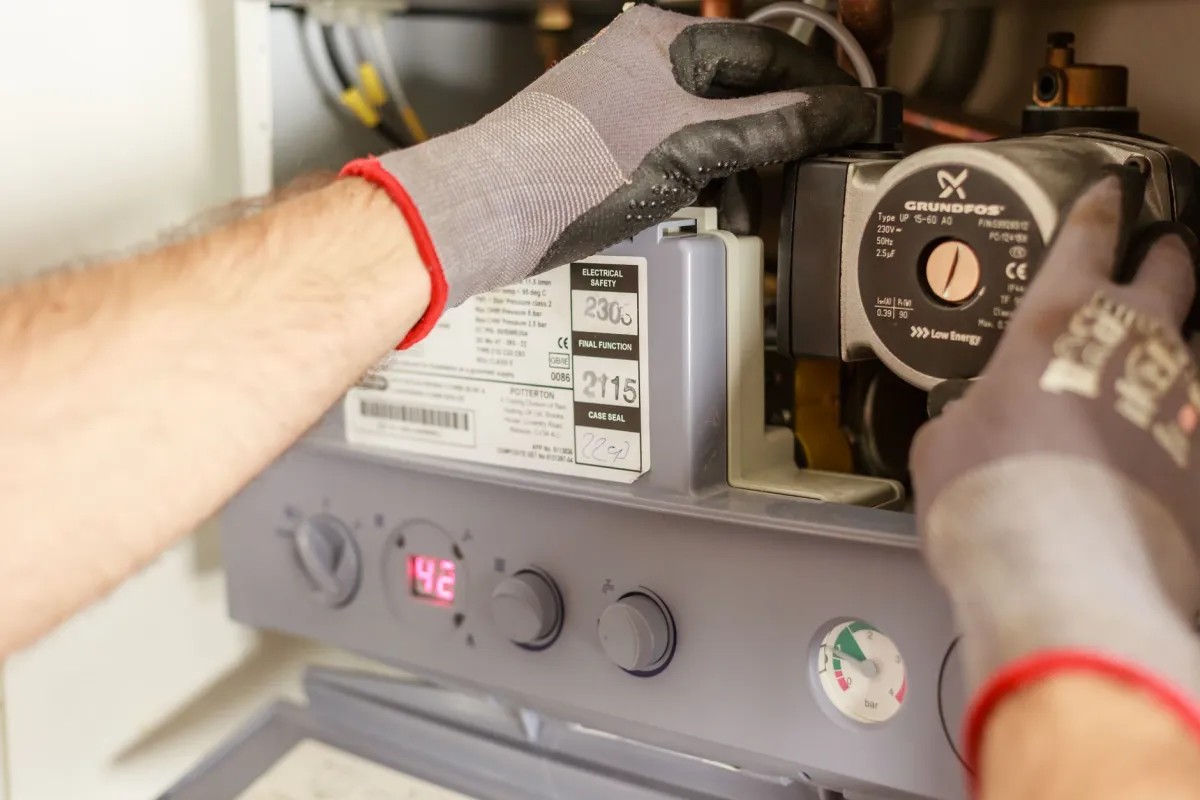
Check the boiler pressure first. On a combi or system boiler, the gauge should read around 1 to 1.5 bar when the system is cold, and it will rise a little once the water is hot. Pressure often drifts down over the summer, and it drops again after you bleed radiators. If it is below about 1 bar, top it up through the filling loop to about 1.2 bar. If it was fine in spring and is very low now, or you find yourself topping it up every few weeks, there is a leak somewhere; our guide on a boiler losing pressure explains the usual culprits.
Free any stuck radiator valves. Thermostatic radiator valves that have sat closed all summer often seize. The small pin under the head sticks in the down position and the radiator stays cold even with the valve turned right up. Turning each TRV to maximum and back a few times at the end of the heating season helps, but if one is already stuck, take the head off and gently work the pin up and down. Our guide to a thermostatic radiator valve not working shows how, and when the valve needs replacing instead.
Bleed radiators that are cold at the top. Air collects in the system over the summer, and it sits at the top of the radiators, most of all on the upper floors of a tall house. A radiator that is hot at the bottom and cold across the top needs bleeding. Turn the heating off, let it cool, and release the air with a radiator key, then recheck the pressure. Our step-by-step guide on how to bleed a radiator covers the order to work in. A radiator cold at the bottom is a different problem, usually sludge, which bleeding will not fix.
Listen to the system. Some noise on the first run is normal as the metal expands and air moves through, and it should settle within minutes. A rumbling or kettling sound from the boiler, loud banging in the pipes, or a pump that whines or hums without the radiators warming are all worth reporting. They often point to limescale on the heat exchanger, air or sludge in the system, or a pump that has seized after months of standing idle. Our guide to plumbing noises helps you tell which is which.
Get the controls right. Check the programmer shows the correct time and day, especially after a power cut, and set heating periods that match when you are actually at home. The room thermostat is the main control for comfort; around 18 to 21°C suits most homes. Turning it higher does not heat the house any faster, it just keeps the boiler running for longer once you reach a comfortable temperature. Our guide to how a room thermostat works explains the difference between the thermostat, the programmer and the radiator valves, and why the thermostat should not sit next to a radiator. For a plain explanation of how the boiler, pump, radiators and controls work together, see our guide on how central heating works.
Look after safety at the same time. Test your carbon monoxide alarm when you switch the heating on for the season; every room with a gas boiler, fire or cooker should have one. Check that nothing has been stacked against the boiler, the flue terminal outside is not blocked by plants or bags, and there is no sooty staining on or around the casing. If the boiler flame is yellow or orange instead of blue, or you notice headaches or dizziness that clear when you go outside, switch it off and read our guide to the signs of carbon monoxide from a boiler. If you smell gas, leave and call 0800 111 999.
Book the service before the rush. Most manufacturers need an annual service to keep the warranty valid, and autumn is the sensible time to do it, before the boiler starts working hard. A service checks combustion, gas pressures, seals, the flue and the safety devices, and it catches worn parts before they fail on a cold night. Our guide on how often to service a boiler explains what is involved, and you can book a Gas Safe registered engineer through our boiler service page.
If you live in a mansion block with communal heating, the date is usually not up to you. The building's heating is switched on by the managing agent or porter, often on a fixed date or once temperatures fall past a set point. If your flat is cold and the rest of the building seems warm, check your own radiator valves and bleed the radiators before contacting the agent. If your radiators are cold and your neighbours' are too, it is a building issue for the managing agent rather than for you.
Know when to call someone. If the boiler will not fire at all, locks out repeatedly, loses pressure within days, or leaves several radiators cold after you have bled them and freed the valves, it is time for an engineer. Our guide on what to check when a boiler is not working covers the other simple fixes first. Emergency Plumber Chelsea carries out central heating repairs across Chelsea, Knightsbridge, South Kensington, Sloane Square and Fulham, and explains the fault and the options before any work starts. There is no call-out fee on jobs over 3 hours. Call 020 3002 6667.
Quick tips
- Switch on when the rooms you use are below about 18°C, not on a set date.
- Run the heating for an hour on a mild day in September or early October to find faults early.
- Check the boiler pressure reads 1 to 1.5 bar cold, and top up to about 1.2 bar if it has dropped.
- Bleed radiators that are cold at the top and free any TRV pins that have stuck over the summer.
- Test the carbon monoxide alarm and book the annual boiler service before the cold weather arrives.
FAQs
What month should you turn the heating on in the UK?
There is no set month. Most homes switch on somewhere between late September and mid October, once indoor temperatures regularly fall below about 18°C. Homes with babies, older people or anyone unwell may need it earlier.
What temperature should I set my heating to?
Around 18 to 21°C on the room thermostat suits most homes. Aim for no lower than about 18°C in living spaces and bedrooms if someone in the home is older, very young or unwell. Setting the thermostat higher does not warm the house faster.
Why is my heating not working after the summer?
The usual reasons are low boiler pressure, a programmer that has lost its settings, a seized radiator valve, air in the radiators, or a pump that has stuck after months without use. Check the pressure and controls, bleed the radiators and free the valves. If it still will not heat, call an engineer.
Should I service my boiler before turning the heating on?
Autumn is the best time for an annual service, before the boiler is working hard and before engineers are at their busiest. You do not need to wait for the service to switch the heating on, but book it early in the season.
Need an engineer in Chelsea?
Call 020 3002 6667 for 24/7 emergency dispatch across SW3, SW10 and nearby postcodes.