
— Chelsea plumbing services
Central Heating in Chelsea
Comfortable Chelsea homes need balanced, well controlled central heating — not cold bedrooms and roaring boilers. We design fixes and upgrades for radiators, pumps, controls and system pipework across SW3 and SW10.
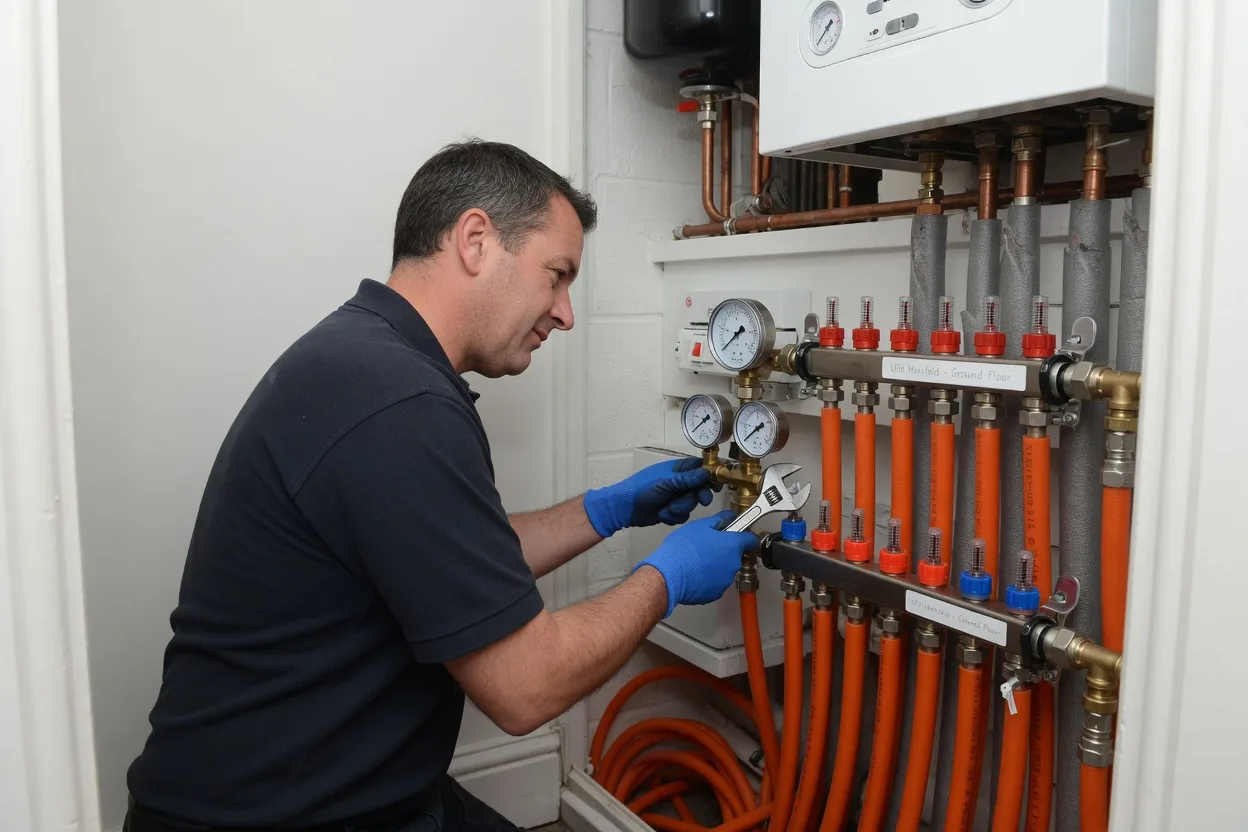
Central heating is the whole system that moves heat around your home, not just the boiler that generates it. It takes in the pump that circulates hot water, the radiators that give the heat off, the valves and thermostatic radiator valves that control each room, the pipework threaded through floors and walls, and the controls that decide when it all runs. Emergency Plumber Chelsea works on every part of that system across SW3, SW10 and the neighbouring postcodes, on 020 3002 6667, with call-outs starting from £69 in the day and from £89 at nights, weekends and bank holidays, priced clearly before any major work begins.
Cold radiators are the complaint we hear most, and the cause depends on where the cold is. A radiator that is warm at the bottom but cold across the top is almost always trapped air, and bleeding it usually restores full output in minutes. A radiator that is warm at the top but cold at the bottom is the opposite problem: sludge and corrosion debris have settled and are blocking flow through the panel. One or two rooms staying cold while the rest of the house heats up often points to balancing, a seized valve or a stuck thermostatic radiator valve rather than anything wrong with the boiler. We check the pattern first, because it tells us whether the fix is a five minute bleed or a wider system job.
Cold spots in a home usually mean the heat is not being shared evenly, and that is a distribution fault rather than a heat-production fault. A large Chelsea house or a converted flat with a long run of radiators will often warm the rooms nearest the boiler quickly and leave the far bedrooms lukewarm. This is what balancing corrects: adjusting the lockshield valve on each radiator so that water is not allowed to race through the nearest panels and starve the furthest ones. Done properly, balancing makes an existing system feel far more even without touching the boiler at all.
No heat at all is a system that has stopped circulating, and there are several honest causes. The boiler itself may be locked out, but just as often the pump has failed, a motorised valve has seized, the system pressure has dropped too low to run, or a control or timer has failed and is simply not calling for heat. We diagnose in order rather than assuming the worst: check the controls and pressure, confirm the pump is turning and moving water, test the valves, and only then look at the boiler. That approach avoids the expensive mistake of condemning a boiler when a stuck valve or a failed pump was the real fault.
Noisy pipes and radiators tell you something specific about the system, so the noise is a clue rather than a nuisance. Banging or knocking when the heating fires up, often called kettling or water hammer, points to trapped air, restricted flow or sludge building up where water is forced through a narrowing. A humming or vibrating pump usually means it is struggling, running at the wrong speed or beginning to fail. Ticking and creaking as pipes expand against joists is common in older Chelsea houses and is usually about how the pipework is clipped rather than a fault. We listen to what the system is doing and match the fix to the sound.
Leaks on a heating system need finding precisely, because the damage is slow and the water is dirty. A weeping radiator valve, a failed compression joint under a floor or a pinhole in old pipework can stain ceilings and rot timber long before anyone sees standing water, and heating water carries inhibitor and corrosion that marks decorations badly. Where the source is hidden we trace it rather than lifting every board on a guess, which keeps the repair small in homes with period floors and fine plaster. A system that keeps losing pressure with no obvious puddle almost always has a leak somewhere, and finding it is what stops the pressure gauge dropping every week.
Low pressure is one of the most common calls, and it is a symptom rather than a diagnosis. A sealed system should hold steady pressure, so if you are topping up the filling loop again and again, water is escaping somewhere: a small leak on the pipework or a radiator, a failed pressure relief valve discharging outside, or a waterlogged expansion vessel that can no longer absorb the swing as the water heats. Repeatedly refilling a leaking system also pulls fresh, oxygenated water in, which accelerates corrosion and sludge. We find why the pressure is dropping instead of just topping it up and sending you a bill for the same fault next month.
Thermostat and timer faults leave a system that is mechanically fine but simply is not being told to run, and the fix is often small. A room thermostat that reads the wrong temperature, a programmer stuck on the wrong schedule, or a wiring centre fault can all leave you cold while every pump, valve and radiator is in perfect working order. Older mechanical controls drift and stick with age. We test the controls as part of any no-heat diagnosis and can replace a failed thermostat or timer, or fit a modern control that gives you accurate, reliable scheduling.
Airlocks and sludge are the two internal problems that quietly wreck heating performance, and they are worth understanding because they are fixable. An airlock is trapped air blocking a section of pipe or a radiator, which is why a system that needs bleeding again and again is telling you air is getting in and something, often a leak or a failing part, is letting it. Sludge is the black iron-oxide debris that builds up as steel radiators corrode from the inside; it settles in the bottom of panels and in the pipework, cold to the touch, slowing flow and making the boiler and pump work harder than they should. Left alone, sludge shortens the life of the whole system.
Power flushing is the deep clean that clears sludge and corrosion out of the system, and it is often the difference between a tired system and a responsive one. The engineer connects a pump to the pipework and drives a cleaning solution through every radiator and the boiler at high flow, breaking up the sludge and flushing it out until the water runs clear. Radiators that were cold at the bottom come back to full output, circulation improves, and the boiler stops labouring against blocked pipework. We finish by dosing the system with a corrosion inhibitor and, where it helps, fitting a magnetic filter that catches iron debris before it can settle again, which protects the work you have just paid for.
Upgrading the controls is usually the cheapest way to get more comfort and lower running costs from a system you already own. A smart thermostat gives you accurate scheduling, room-by-room awareness and control from your phone, which matters in Chelsea homes that sit empty during the week or run to different patterns across floors. Thermostatic radiator valves let each room settle at its own temperature, so you are not heating a spare bedroom to the same level as the living room. Better zoning, splitting a large house or a maisonette so upstairs and downstairs run independently, stops you paying to heat rooms nobody is using. None of these need a new boiler, and all of them make an existing system work harder for you.
Period Chelsea homes and mansion blocks bring particular heating challenges, and they reward an engineer who has worked on them before. Victorian and Georgian houses around the Cadogan Estate and off King's Road often carry decades of pipework, some of it concealed behind panelling and original floors, mixing older and newer materials that need careful, sympathetic work rather than a forced modern layout. Large houses run long circuits that are prone to imbalance and cold far rooms. In mansion blocks near Sloane Square and along Chelsea Embankment the systems are bigger and older still, and some blocks run communal heating where the boiler plant and risers are shared, so work has to respect what belongs to the flat and what belongs to the building. We adapt the fix to the property instead of imposing a template that ignores how it was built.
Winter is when heating faults become urgent, and demand across Chelsea rises sharply the moment the cold sets in. A system that limped through autumn with a cold radiator or a slow warm-up will often fail properly on the first hard frost, and that is exactly when engineers are busiest and elderly residents, young children and anyone with health needs are most at risk from a cold home. Getting a marginal system looked at before winter, or acting quickly at the first sign of trouble, avoids waiting for heat during the coldest week of the year. Most winter breakdowns are foreseeable rather than sudden: bleeding radiators at the start of the season, checking system pressure, keeping a corrosion inhibitor topped up, emptying a magnetic filter and having the controls and pump checked all catch small faults before they strand you. Where gas work is involved our engineers are Gas Safe registered, and we work to the relevant water and building regulations throughout. If gas is ever suspected, safety comes first: leave the property and call the National Gas Emergency Service on 0800 111 999 before anything else, then call us for the heating follow-up once it is safe.
Pricing on heating work is kept transparent, because the thing customers dread is an open-ended bill. Daytime call-outs start from £69, and nights, weekends and bank holidays start from £89. On arrival the engineer diagnoses the fault and gives you a price, whether that is an itemised rate for a bleed and balance or a fixed quote for a power flush or a control upgrade, before any major work starts. Agreed non-emergency and scheduled jobs carry no call-out fee. You always see the cost before you commit to it, and where a repair genuinely will not last we will tell you rather than charge you twice.
Our coverage is properly local, so an engineer who knows the buildings is not routing in from miles away. We serve the full Chelsea core, SW3 1 through SW3 6 and all of SW10, including Chelsea Harbour, Worlds End, Lots Road and West Brompton, along with the neighbouring SW1W, SW1X, SW5 and SW7 streets. That takes in King's Road, Sloane Square, the Royal Hospital Chelsea, Brompton, the Cadogan Estate streets and the riverside blocks along Chelsea Embankment and Imperial Wharf. Knowing the streets, the parking and the way these systems are built into period and mansion-block properties is part of diagnosing quickly and fixing it first time.
If your central heating is leaving rooms cold, making noise, losing pressure or refusing to run, call Emergency Plumber Chelsea on 020 3002 6667. We answer 24 hours a day, diagnose the whole system rather than guessing at the boiler, and send a qualified, insured engineer, Gas Safe registered where gas work is involved, to put it right across SW3, SW10 and the surrounding postcodes, with clear pricing before the work starts.
Common symptoms
- Some rooms cold while others overheat
- Heating slow to warm up
- Noisy pipes or radiators
- Thermostat not matching room temperature
- Pump humming or not circulating
- System needs constant bleeding
What's included
- System diagnosis and balancing advice
- Pump, valve and control work
- Radiator and TRV upgrades
- Filtration and sludge mitigation options
- Integration with boiler repair or install
How central heating works in Chelsea
- 01
Call us
Speak to a real person on 020 3002 6667, day or night. Tell us the fault and your postcode.
- 02
Get an ETA
We give you an honest arrival time — 45 to 90 minutes for genuine emergencies across SW3 and SW10.
- 03
Assess & make safe
A Gas Safe registered engineer arrives, isolates the fault and stops the damage, then quotes before major work.
- 04
Fixed & tidy
We complete the repair, test it, and leave your property clean — with an itemised invoice for your records.
Transparent pricing
FAQs
Can you improve heating without a new boiler?
Often yes — controls, pumps, balancing and power flush address many complaints before a boiler swap is justified.
Do you work on older Chelsea heating systems?
Yes. Period houses and mansion flats often need careful adaptation rather than forced modern layouts that ignore the building.
Are your central heating engineers Gas Safe registered?
Yes. Where the work involves gas, it is carried out only by Gas Safe registered engineers, and all our engineers are fully qualified and insured.
How quickly can you attend a heating failure in cold weather?
We target a 45 to 90 minute response for genuine no-heat emergencies across SW3 and SW10, subject to traffic and availability. Call 020 3002 6667 for an honest arrival time.
What does a central heating call-out cost?
Emergency call-outs start from £69 daytime and from £89 nights, weekends and bank holidays, with the price agreed before major work. Planned upgrade or balancing work is an agreed job with no call-out fee.
Which Chelsea postcodes do you cover?
We cover SW3 (SW3 1 to 6) and SW10 including Chelsea Harbour, Worlds End, Lots Road and West Brompton, plus SW1W, SW1X, SW5 and SW7.
Can you upgrade heating in a leasehold flat with a shared plant room?
We work on in-flat circuits, radiators and controls, and can advise where shared plant or a freeholder's access is involved. We provide itemised invoices for managing agents where needed.
Also see our other Chelsea services: Emergency Plumber Chelsea, 24 Hour Plumber Chelsea, Plumbing Repairs, Plumbing Installation.
Book central heating in Chelsea
Call 020 3002 6667 — 24/7 dispatch across SW3, SW10 and nearby postcodes.