
— Chelsea plumbing services
Gas Leak Detection in Chelsea
If you smell gas, open windows, avoid switches and flames, leave the property if needed and call the National Gas Emergency Service on 0800 111 999 first. After the immediate emergency is handled, Emergency Plumber Chelsea provides Gas Safe follow-up investigation and appliance checks across SW3 and SW10.
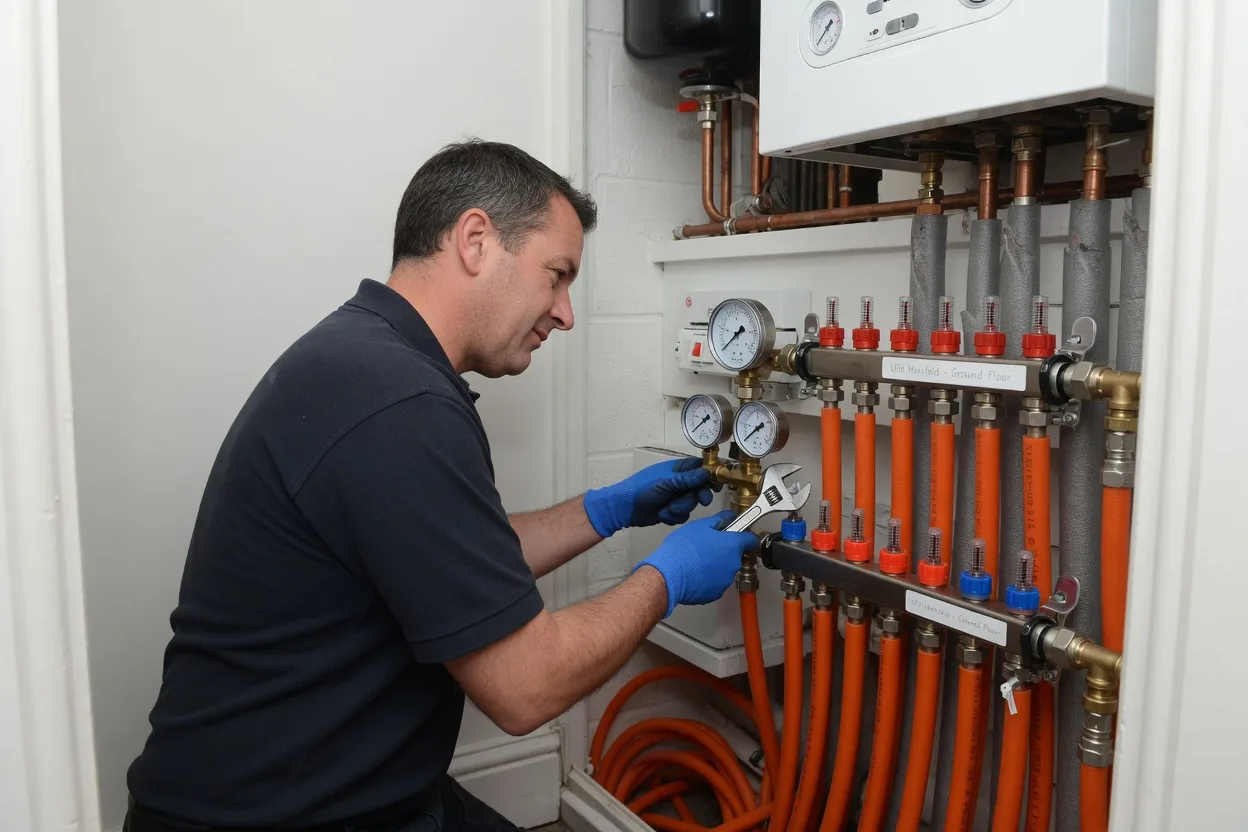
If you smell gas in your Chelsea home, treat it as an emergency and act before you do anything else. Leave the property, get everyone out, and once you are outside in fresh air call the National Gas Emergency Service on 0800 111 999. That free line runs 24 hours a day, and the network engineer they send has priority for a suspected gas escape. Do not switch anything on or off, do not strike a match or light a hob, and do not use your phone inside the building, and make the 0800 111 999 call from the street or a neighbour's. Emergency Plumber Chelsea sends Gas Safe registered engineers for the follow-up work once the immediate danger is dealt with, and you can reach us on 020 3002 6667.
The reason the emergency call comes first is simple: a gas leak is a fire and explosion risk, and only the emergency service can safely isolate a live escape at the network side. Their job is to make the situation safe fast. A private plumber, however qualified, is not a substitute for that first response when gas is actively escaping. Once the National Gas Emergency Service has attended, capped or isolated the supply and confirmed the property is safe to re-enter, there is usually further work to do: finding exactly where the leak came from, repairing pipework or an appliance, and getting your gas back on. That is where a Gas Safe engineer comes in, and it is the part we handle across SW3, SW10 and the surrounding Chelsea postcodes.
Knowing the signs of a gas leak is what turns a near miss into a safe evacuation. The classic warning is smell: natural gas is odourless, so suppliers add a chemical called mercaptan that gives it the sharp stench of rotten eggs or sulphur. If you notice that smell, act on it. Other signs are quieter. A hissing or whistling sound near a pipe, meter or appliance can mean gas is escaping under pressure. A pilot light that keeps going out, or a gas flame that burns lazy orange or yellow instead of crisp blue, points to a combustion problem. A gas bill that climbs for no obvious reason can mean gas is leaking somewhere between the meter and the appliances. Dead or dying houseplants near a pipe run and sooty marks around a boiler or hob are further clues.
Your own body can be an early warning system, and physical symptoms should never be ignored. Exposure to leaking gas, or to the carbon monoxide produced by an appliance burning badly, can cause headaches, dizziness, nausea, tiredness and breathing difficulty. A tell-tale pattern is symptoms that ease when you leave the house and return when you come home, or several people and even pets in the same property feeling unwell at once. If anyone is drowsy, confused or losing consciousness, treat it as a medical emergency, get them into fresh air and call 999. Carbon monoxide is the danger people underestimate most, because unlike a gas leak it gives you no smell to react to.
Carbon monoxide deserves its own attention because you cannot see, smell or taste it. It is produced when a gas appliance such as a boiler, hob, gas fire or water heater burns fuel without enough air, or when a flue is blocked so the fumes cannot escape. That can happen with no gas smell at all, which is why every home with a gas appliance should have an audible carbon monoxide alarm fitted to the British standard, sited according to the maker's instructions and tested regularly. An alarm is a backstop, not a substitute for servicing: it warns you when something has already gone wrong. If a CO alarm sounds, open windows, turn off the appliance if you can reach it safely, leave the property and call 0800 111 999.
When a Gas Safe engineer attends after the emergency has been made safe, the work follows a clear order. The first step is usually a tightness test, also called a pressure test, where the engineer isolates the gas installation at the meter and watches a gauge to see whether pressure holds or drops. A falling reading confirms gas is escaping somewhere in the pipework or at an appliance. From there the engineer traces the leak, using leak-detection fluid on joints, electronic gas detectors and a methodical check of each run and connection until the source is pinpointed. The priority throughout is to make safe: isolating or capping the faulty section so nothing dangerous is left live.
Once the leak is located and the installation is safe, the engineer can repair it. That might mean remaking a failed joint, replacing a corroded length of pipe, renewing a worn appliance connection or condemning an appliance that is no longer safe to use. Nothing is turned back on until the repair passes a fresh tightness test and the engineer is satisfied the whole installation holds pressure. This staged approach of test, trace, make safe, repair and re-test is how gas work is done properly, and it is why gas must only ever be handled by a Gas Safe registered engineer. DIY gas work is illegal for good reason, and we never encourage it.
Leaks tend to appear at predictable weak points, and Chelsea's older housing has more than its share of them. Appliance connections are a common culprit: the flexible hose behind a gas cooker, the union at a boiler, the fitting on a gas fire. Joints in the pipework are another, especially where old compression fittings or aged threaded connections have loosened over decades of small movement and temperature change. Period homes often still carry runs of ageing steel or early copper pipe that corrodes from the outside in, and pipes buried in walls or under floors during past renovations can be disturbed by later building work. A leak that follows recent DIY, a new kitchen or structural work near a pipe run is worth investigating carefully.
It helps to be clear about who does what, because the two roles are different and both matter. The National Gas Emergency Service, run through the gas networks, is the blue-light response for a live escape: they attend fast, isolate the supply and make the property safe, but they do not carry out your repairs or reinstate an appliance. Your Gas Safe registered plumber or heating engineer picks up from there: the detective work, the pipe or appliance repair, and safely restoring your gas. Calling 0800 111 999 first and then calling us on 020 3002 6667 is the correct sequence, and it means the dangerous part is handled by the right team before any repair work begins.
Chelsea's building stock shapes how these jobs run. We work in Victorian and Georgian period houses with concealed pipe routes behind panelling and skirting, in red-brick mansion blocks where a gas riser is shared and a fault in one flat has implications for others, in mews cottages with tight plant cupboards, and in modern riverside apartments at Chelsea Harbour and Imperial Wharf with newer but densely packed installations. Basement boilers and cupboard installations are common here, and they need careful, unhurried testing because access and ventilation are rarely generous. An engineer who knows these buildings works faster and disturbs the finishes less, which matters in homes with fine plaster and period joinery.
There are sensible things to do in the minutes after you suspect a leak, and getting them right reduces the danger. Once you are outside and have called 0800 111 999, do not go back in for belongings and do not let anyone else enter. If you can turn off the gas at the meter's emergency control valve on your way out and it is safe to reach, do so, but never at the cost of staying inside longer. Leave doors and windows as they are rather than fiddling with switches or extractor fans, since anything electrical can create a spark. Keep well back from the property, keep others away, and wait for the network engineer. These are small actions, but they are the difference between a controlled response and a serious incident.
When the source of a leak is not obvious, careful detection keeps the disruption small, which matters enormously in a Chelsea home with period floors and fine finishes. Rather than opening up walls and floors on guesswork, a Gas Safe engineer works methodically from the meter outward, using leak-detection fluid to reveal escaping gas at joints as tell-tale bubbles, and electronic detectors to sniff out gas along concealed runs. Combined with the tightness test that confirms whether the installation holds pressure, this lets the engineer narrow the fault to a specific joint, fitting or appliance before lifting a single board. Precise detection is what keeps a gas repair contained rather than turning it into a building job.
For landlords, gas safety is a legal duty as well as a moral one. Anyone letting a property with gas appliances or pipework must have them checked every year by a Gas Safe registered engineer and must give tenants a record of that check. A leak investigation and any repair that follows should be documented so it can sit in your compliance file alongside the annual gas safety record. We provide notes suitable for that purpose after an investigation, so managing agents and freeholders across Chelsea's large leasehold stock have the paperwork they need. Keeping appliances serviced and pipework sound is also the single best way to reduce the odds of a leak or a carbon monoxide problem in the first place.
Pricing for the follow-up work is kept transparent, because no one wants a surprise bill on top of a gas scare. Daytime call-outs start from £69, and nights, weekends and bank holidays start from £89. On arrival the engineer assesses the installation and gives you a price before any major work begins, whether that is an hourly rate for a small repair or a fixed quote for a larger job. Agreed non-emergency visits carry no call-out fee. You will always see the cost before we proceed, and the tightness testing and tracing that locate the fault are explained as we go so you understand what you are paying for.
Our coverage is properly local. We serve the full Chelsea core, SW3 1 through SW3 6 and all of SW10, taking in Chelsea Harbour, Worlds End, Lots Road and West Brompton, along with the neighbouring SW1W, SW1X, SW5 and SW7 streets. That reaches King's Road, Sloane Square, the Royal Hospital Chelsea, Brompton, the Cadogan Estate streets and the riverside blocks along Chelsea Embankment. Knowing the area, the mansion-block layouts and the parking means an engineer reaches you and gets into the plant cupboard without wasting your time, which counts when you have been left without gas or heating.
Every engineer we send for gas work is fully qualified, insured and Gas Safe registered, and that registration is not a formality; it is the legal proof that they are competent and permitted to work on your gas installation. You are entitled to check any engineer's Gas Safe registration, and a responsible tradesperson will never object to that. We work strictly within the rules: if an appliance or installation is unsafe, we make it safe and tell you plainly rather than patching over a hazard. The aim is a lasting, correctly tested repair and a home where the gas is sound, not a quick reconnection that leaves a risk in place.
To recap the order that keeps you safe: if you suspect a gas leak, leave the property, avoid switches, flames and phones indoors, and call the National Gas Emergency Service on 0800 111 999 first. Once the emergency team has made the supply safe, call Emergency Plumber Chelsea on 020 3002 6667 for Gas Safe follow-up: tracing the fault, repairing the pipework or appliance, and safely restoring your gas across SW3, SW10 and the surrounding postcodes. We answer 24 hours a day, quote clearly before the work starts, and leave you with a repair you can trust and the records to prove it.
Common symptoms
- Smell of gas near an appliance or meter
- Pilot light repeatedly going out
- CO or gas alarm activation
- Hissing near gas pipework
- Boiler or hob performance suddenly changed
- Concern after recent DIY or building work
What's included
- Gas Safe registered engineer attendance
- Appliance and joint investigation
- Isolation of unsafe sections
- Repair or recommendation for replacement
- Safety advice for occupants and agents
How gas leak detection works in Chelsea
- 01
Call us
Speak to a real person on 020 3002 6667, day or night. Tell us the fault and your postcode.
- 02
Get an ETA
We give you an honest arrival time — 45 to 90 minutes for genuine emergencies across SW3 and SW10.
- 03
Assess & make safe
A Gas Safe registered engineer arrives, isolates the fault and stops the damage, then quotes before major work.
- 04
Fixed & tidy
We complete the repair, test it, and leave your property clean — with an itemised invoice for your records.
Transparent pricing
FAQs
What should I do if I smell gas right now?
Do not use electrical switches or naked flames. Ventilate, evacuate if needed, and call 0800 111 999 immediately. Call us on 020 3002 6667 for Gas Safe follow-up after the emergency service has advised.
Are you Gas Safe registered?
Yes. All gas work is carried out by Gas Safe registered engineers only.
How fast can a Gas Safe engineer follow up in Chelsea?
Once the National Gas Emergency Service on 0800 111 999 has made the supply safe, we aim to attend for follow-up investigation within 45 to 90 minutes across SW3 and SW10, subject to traffic. Call 020 3002 6667 for an honest arrival time.
Are you available for gas concerns at night and weekends?
Yes, our line is answered 24 hours a day on 020 3002 6667. Always contact the National Gas Emergency Service on 0800 111 999 first for a live gas smell, then call us for Gas Safe follow-up once the supply is made safe.
What does a gas leak investigation cost?
Emergency call-outs start from 69 pounds daytime and 89 pounds nights, weekends and bank holidays, with the price for any repair agreed before major work starts. There is no call-out fee at all if the job runs over 3 hours.
What should I do while I wait for the engineer?
Keep windows open to ventilate, avoid electrical switches and naked flames, and do not attempt any DIY gas work. If advised by the emergency service, leave the property until it is confirmed safe to return.
Do you cover my Chelsea postcode for gas investigations?
Yes. We cover SW3 1 to 6 and all of SW10, including Chelsea Harbour, Worlds End, Lots Road and West Brompton, plus SW1W, SW1X, SW5 and SW7, and we provide notes suitable for landlord compliance files.
Also see our other Chelsea services: Emergency Plumber Chelsea, 24 Hour Plumber Chelsea, Plumbing Repairs, Plumbing Installation.
Book gas leak detection in Chelsea
Call 020 3002 6667 — 24/7 dispatch across SW3, SW10 and nearby postcodes.