
— Chelsea plumbing services
Blocked Drains and Drain Unblocking in Chelsea
Blocked drain in Chelsea? It will not clear itself, and in multi-storey Chelsea buildings it quickly becomes a neighbour problem. We unblock toilets, sinks, baths and external drains with the right tools for the job.
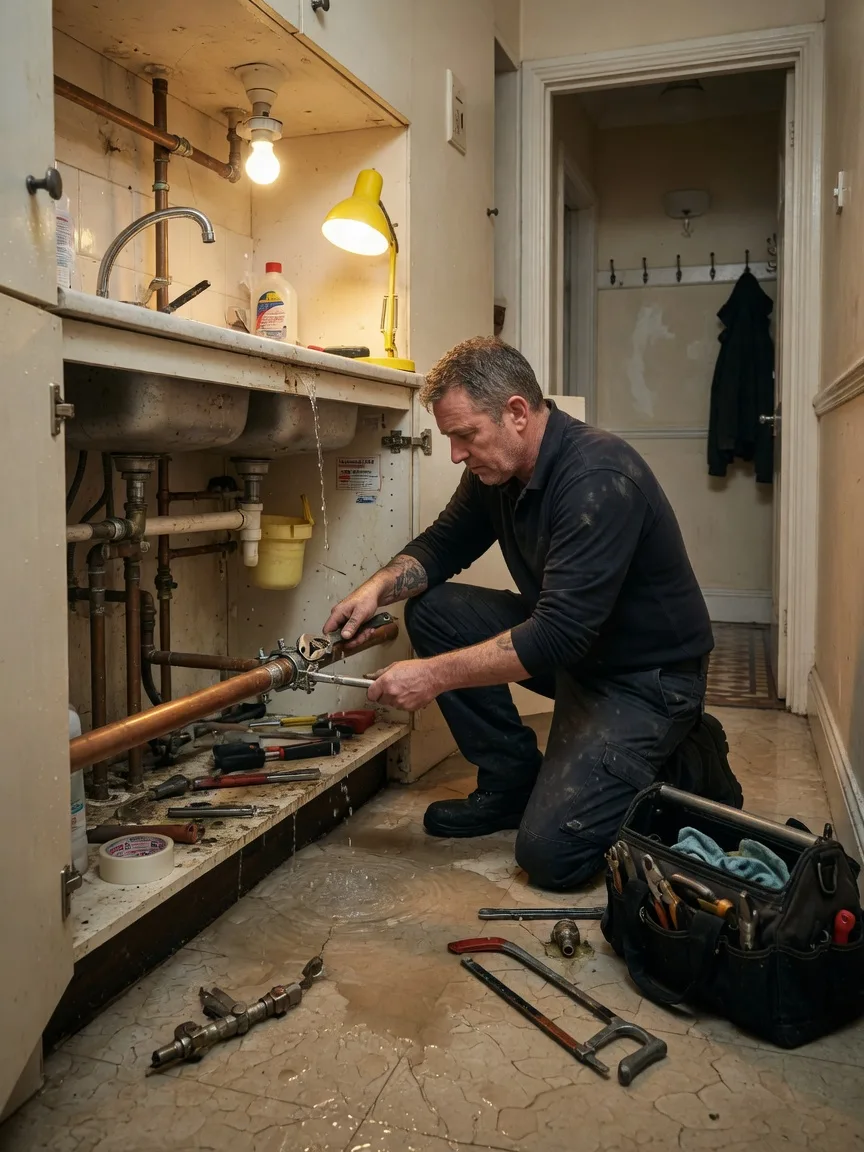
Drain unblocking is the work of clearing a waste line that has stopped carrying water away properly, whether that is a single slow basin or a soil stack backing up across a whole mansion block. Emergency Plumber Chelsea unblocks internal wastes, toilets, baths, showers, kitchen lines and external drains across SW3, SW10 and the surrounding postcodes, 24 hours a day, on 020 3002 6667. Blocked drain clearance commonly starts from around £95, and we agree the price with you before any major work begins.
The first sign of a blocked drain is usually slow drainage: water that lingers in the basin, pools around your feet in the shower, or takes far longer than it should to disappear from the sink. On its own a single slow fitting often points to a local blockage in that trap or waste. The warning worth acting on is when the slowness spreads. If the bath, the basin and the shower all drain badly at once, or the ground floor toilet struggles while an upstairs one is fine, the blockage has moved further down the system into shared pipework, and that is a bigger job left unattended.
Gurgling and bad smells are the other early signals, and they tell you something specific. Gurgling happens when a blockage traps air in the pipe and water forces past it, so a toilet that bubbles when the basin empties, or a plughole that glugs when the washing machine drains, means the blockage sits below the point where those two lines meet. A foul, drain-like smell drifting up through a plughole or from an external gully points to standing waste that has stopped moving. Neither should be ignored, because both usually come before the overflow rather than after it.
An overflow is the emergency stage, and in Chelsea it rarely stays in one flat. Foul water rising in a downstairs shower tray, a toilet that fills to the brim instead of flushing, or waste welling up out of an external gully means the line is fully blocked and has nowhere to go. In a mansion block or a converted period house the same shared stack serves the flats above and below, so a blockage low in the stack can push waste back into whichever fitting sits lowest, which is often not the flat that caused it. That is why a backing-up drain needs prompt attention rather than a wait-and-see approach, and why our emergency drainage line runs 24 hours a day. If waste is coming up through a floor drain, shower or gully, read sewage coming up through a drain for what to do in the meantime.
The causes of blocked drains in Chelsea follow the buildings and how they are used. Kitchen lines block on fat and grease that pours down warm as a liquid and sets hard as it cools, gradually narrowing the pipe until food debris bridges the gap. Bathroom wastes block on hair and soap scale. Toilets and soil stacks block on wet wipes, which do not break down the way paper does, along with sanitary items and the occasional cotton bud. Hard water across this part of London leaves scale that roughens pipe walls and gives everything else something to catch on.
Older properties add their own causes on top of everyday misuse. Much of Chelsea's drainage runs through Victorian and Georgian pipework, and period drains suffer from problems that newer plastic runs do not. Clay and cast-iron pipes crack and lose their fall as the ground shifts, joints open up, and tree roots from the mature planting along the garden squares and side streets find their way into those joints looking for water. A root mass in an old drain snags wipes and grease until the line blocks solid. In the worst cases a section has partly collapsed, and no amount of clearing will keep it clear for long.
Plunging is the first method and the right one for many local blockages. A good plunger over a basin, bath or toilet builds pressure that can shift a soft blockage close to the fitting, and it is often all a single slow drain needs. It works when the obstruction is near the trap and has not compacted. When plunging moves the water briefly and the drain slows again within a day, the real blockage is further down the line and needs a tool that reaches it, which is where we come in rather than repeated attempts with a plunger that only push the problem along.
Drain augers and rods reach the blockages a plunger cannot. An auger, or drain snake, is a flexible cable fed down the waste to break through or hook out an obstruction several metres in, and it is the standard tool for blocked toilets, kitchen wastes and branch lines. Drain rods screw together in sections to work along external drains and longer underground runs from an inspection chamber. Both are mechanical and physical: they clear the specific blockage where it sits, which is exactly what a compacted mass of wipes or a hair-and-scale plug in a bathroom waste needs.
High-pressure water jetting is the method for the heavy, recurring and greasy blockages. A jetting hose delivers water at high pressure through a nozzle that cuts through fat deposits, flushes out silt and scale, and scours the pipe wall back towards its original bore rather than just punching a hole through the middle of the blockage. It is the most thorough clearance available for kitchen soil lines caked in grease, for external drains full of debris, and for lines that have blocked more than once. We assess the pipe and the access before jetting, because on fragile old pipework the right approach is sometimes gentler.
A CCTV drain survey is how we find the cause when clearing alone is not enough. A small waterproof camera on a flexible rod is fed along the drain, and the footage shows exactly what is happening inside: a root intrusion at a joint, a cracked or displaced section, a belly where the pipe has lost its fall and holds water, or simply a build-up that clearance will fix for good. For a drain that blocks again and again, a survey turns guesswork into a clear picture, and it gives you evidence you can put in front of a managing agent, a freeholder or an insurer when the problem is structural.
Shared soil stacks and communal drains are a defining feature of drainage work in Chelsea, and they change how a blockage is handled. In the red-brick mansion blocks around Sloane Square and the Cadogan Estate, and in the harbour and riverside apartments at Chelsea Harbour and Imperial Wharf, one vertical stack carries waste from a column of flats. A blockage in that stack is a communal problem, not a private one, so before doing chargeable work we help you establish whether the fault sits on your private branch or on shared pipework that is the freeholder's or managing agent's responsibility. We coordinate access with porters and agents and keep the paperwork clear.
External drains and gullies are the other half of the picture and the part most people forget until they overflow. The gully outside a kitchen or below a downpipe catches waste and rainwater, and it silts up with leaves, grease and grit until it surcharges and spills across the paving. Inspection chambers and manholes in gardens, lightwells and the basement vaults common along Chelsea Embankment and the Worlds End streets show you where a blockage sits: if the chamber is full, the blockage is downstream towards the sewer; if it is empty, the problem is back towards the house. We lift, inspect and clear these as part of tracing a blockage properly. Our guide to a blocked outside drain explains how to read a chamber safely, and if the full chamber turns out to be on the public sewer side, whether a blocked drain is Thames Water's job or yours sets out where their responsibility begins.
Recurring blockages are the clearest signal that clearance alone has stopped being the answer. A drain that blocks once and stays clear was a one-off. A drain that blocks every few weeks, or every time it rains hard, has an underlying cause that keeps catching debris: root ingress at a joint, a partial collapse, a section laid with too little fall, or fat that has built up faster than it can be flushed. That is the point to survey rather than keep clearing, because a CCTV inspection identifies the fault and lets us quote a lasting repair instead of billing you for the same call-out again and again. See our CCTV drain survey service for how the inspection works, and drain repairs for what follows when it finds a defect.
Blocked drains are a hygiene issue as much as a plumbing one, which is why we treat foul flooding as urgent. Waste backing up into a home carries bacteria, and standing sewage in a shower tray or across a bathroom floor is a genuine health risk to a household, particularly where there are children or elderly residents. We work hygienically, contain the mess, protect floors, timber and finishes while we clear the line, and clean down the affected area afterwards. If foul water is rising, stop using every toilet, sink and appliance on that line straight away, because each flush adds to what has nowhere to go. For a single slow sink or basin, the steps in how to unblock a drain are safe to try first, and what blocked drain clearance costs explains how the price is worked out.
Drain cleaning and drain unblocking overlap, but they are not quite the same job. Unblocking clears a line that has stopped; drain cleaning is planned maintenance on a line that still flows but is narrowing with grease, scale or silt, usually by high-pressure jetting, so it does not block at the worst moment. Busy kitchen runs and shared stacks in mansion blocks benefit most from a periodic clean. If a line needs cleaning more than once or twice a year, a CCTV drain survey is the cheaper next step, because it shows whether a defect is catching the debris. Larger external and shared runs come under drain clearance, and our guide on how to prevent blocked drains covers the habits that keep them clear between visits.
A little prevention keeps most drains clear between visits. Never pour fat, oil or grease down a kitchen sink; let it set and bin it. Keep wipes, cotton buds and sanitary items out of the toilet, whatever the packet claims about flushability. Fit simple strainers over plugholes to catch hair and food, and run the kitchen tap hot for a moment after washing up to move any grease along while it is still liquid. In older Chelsea properties, clearing external gullies of leaves before autumn saves a surcharge when the first heavy rain arrives.
Pricing is transparent because a blocked drain is stressful enough without a surprise bill. Blocked drain clearance commonly starts from around £95, daytime call-outs start from £69, and nights, weekends and bank holidays start from £89. On arrival the engineer assesses the blockage and gives you a price before any major work begins, whether that is a straightforward clearance or a larger job needing jetting or a survey. Agreed non-emergency drainage work carries no call-out fee. You are never committed to a cost you have not seen and approved.
Our coverage is properly local across the Chelsea drainage network. We serve SW3 1 through SW3 6 and all of SW10, including Chelsea Harbour, Worlds End, Lots Road and West Brompton, along with the neighbouring SW1W, SW1X, SW5 and SW7 streets. That takes in King's Road, Sloane Square, the Royal Hospital Chelsea, Brompton, the Cadogan Estate streets and the riverside blocks along Chelsea Embankment and Imperial Wharf. Knowing the buildings, the shared stacks and the awkward vault and basement drains is part of clearing a blockage first time rather than guessing.
Every engineer we send is fully qualified and insured, and Gas Safe registered where any gas work is involved. If a drainage problem ever coincides with a suspected gas escape, deal with the gas first: leave the property if needed and call the National Gas Emergency Service on 0800 111 999 before anything else. For a blocked drain in Chelsea right now, call Emergency Plumber Chelsea on 020 3002 6667. We answer 24 hours a day, give you a real arrival time, and send an engineer with the tools to clear the line, find the cause and leave your drains flowing properly. Not sure whether your problem needs a plumber or a drainage engineer? Our guide on whether you need a plumber or a drainage specialist helps you decide, and our advice on what to do for a blocked drain covers the first steps.
Common symptoms
- Toilet not flushing or water rising
- Water rising in shower when basin drains
- Gurgling wastes and air locks
- External gully overflowing
- Slow drainage throughout the property
- Foul odour from drains or stacks
What's included
- On-site diagnosis of the blockage
- Mechanical or high-pressure clearance as appropriate
- Hygiene-conscious working practices
- Advice on recurring faults
- Referral to CCTV survey when needed
How drain unblocking works in Chelsea
- 01
Call us
Speak to a real person on 020 3002 6667, day or night. Tell us the fault and your postcode.
- 02
Get an ETA
We give you an honest arrival time — 45 to 90 minutes for genuine emergencies across SW3 and SW10.
- 03
Assess & make safe
A Gas Safe registered engineer arrives, isolates the fault and stops the damage, then quotes before major work.
- 04
Fixed & tidy
We complete the repair, test it, and leave your property clean — with an itemised invoice for your records.
Transparent pricing
FAQs
Do you jet external drains?
Where appropriate and accessible, yes — confirmed on site after assessing the run and access points.
Is drain unblocking available out of hours?
Yes. Foul flooding and unusable toilets are treated as emergencies on 020 3002 6667.
How quickly can you attend a blocked drain in Chelsea?
We target a 45 to 90 minute response for genuine emergencies such as an overflowing toilet or foul flooding across SW3 and SW10, subject to traffic and engineer availability. Call 020 3002 6667 for an honest arrival time.
How much does drain unblocking cost?
Emergency call-outs start from £69 in the day and from £89 at nights, weekends and bank holidays, with the price agreed before any major work begins. There is no call-out fee at all if the job runs over 3 hours, and no call-out fee on agreed non-emergency jobs.
Which Chelsea postcodes do you cover?
We cover SW3 (SW3 1 to 6) and SW10 including Chelsea Harbour, Worlds End, Lots Road and West Brompton, plus SW1W, SW1X, SW5 and SW7.
Can you unblock drains in a mansion block or leasehold flat?
Yes. We regularly work in Chelsea mansion blocks and leasehold conversions with shared soil stacks, coordinating access with porters and managing agents where a blockage affects more than one flat.
Do you provide an invoice for my managing agent or insurer?
Yes. We can supply an itemised invoice, along with notes on what we found, suitable for managing agents, landlords and insurance claims.
Do you offer drain cleaning as well as unblocking?
Yes. Alongside clearing blockages we carry out planned drain cleaning, usually high-pressure jetting, for lines that still flow but are narrowing with grease, scale or silt. If a line needs cleaning repeatedly, we recommend a CCTV survey to find out why.
Also see our other Chelsea services: Emergency Plumber Chelsea, 24 Hour Plumber Chelsea, Plumbing Repairs, Plumbing Installation.
Book drain unblocking in Chelsea
Call 020 3002 6667 — 24/7 dispatch across SW3, SW10 and nearby postcodes.