
— Chelsea plumbing services
Gas Safety Certificates and Landlord Safety Checks in Chelsea
Landlords must have every gas appliance, flue and pipe checked by a Gas Safe engineer each year and hold the CP12 certificate. Emergency Plumber Chelsea carries out these landlord safety checks across SW3, SW10 and nearby postcodes, with practical scheduling for agents and portfolio owners.
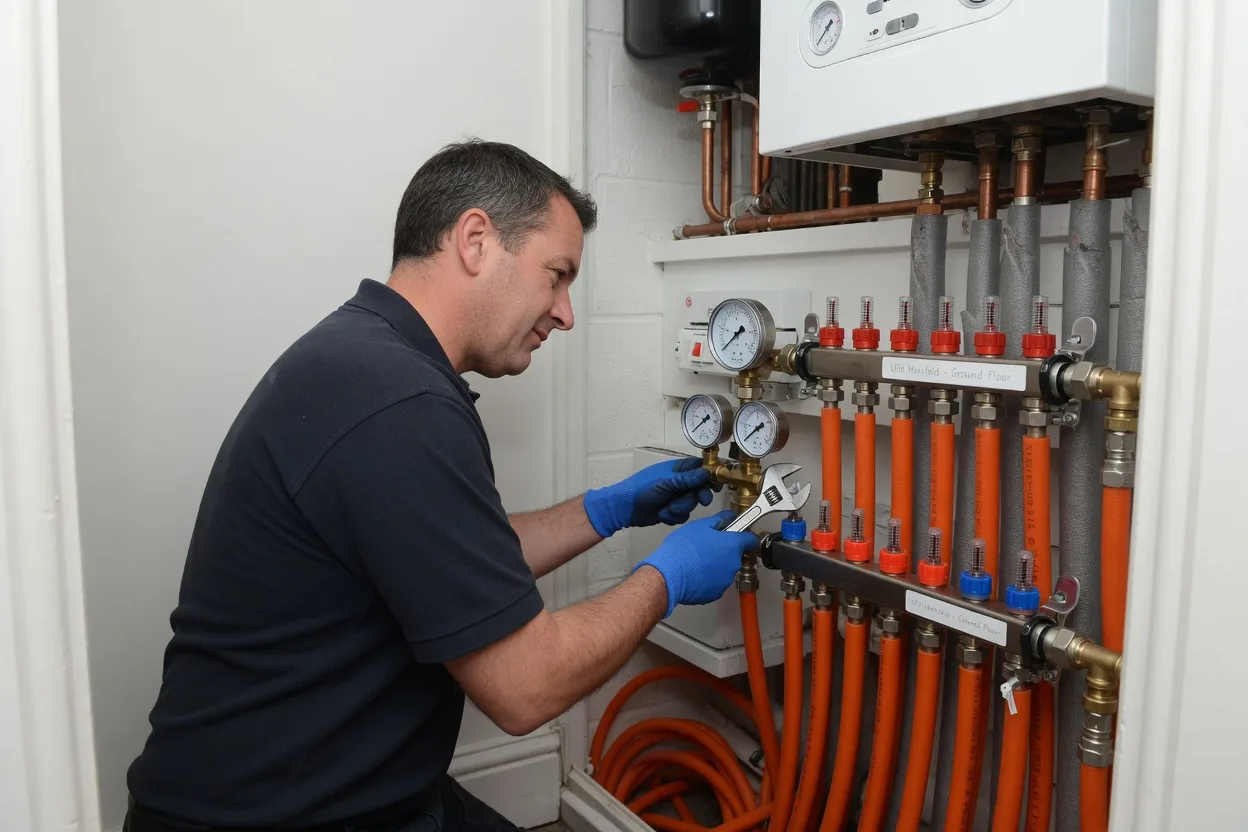
A gas safety certificate, still widely called a CP12 or a Landlord Gas Safety Record, is the document that proves a Gas Safe registered engineer has checked the gas appliances, fittings and flues in a rented property within the last twelve months. If you let a flat or house anywhere in Chelsea, the law puts that annual duty on you as the landlord, and Emergency Plumber Chelsea carries out the check and issues the record across SW3, SW10 and the surrounding postcodes. Call 020 3002 6667 to book. This is a compliance and safety inspection, not a repair or a service, and it is worth understanding what it does and does not cover before your renewal falls due.
The certificate exists because unsafe gas kills quietly, and a rented home puts a tenant at the mercy of appliances they did not choose or install. An annual check catches the faults that cause carbon monoxide poisoning, gas leaks and fires before a tenant is harmed: a blocked flue venting fumes back into a bedroom, a cooker with a lifting flame, a boiler burning incompletely because it has never been serviced. In Chelsea's dense mansion blocks and converted period houses, where flats share walls, risers and sometimes flue routes, one neglected appliance is not only the tenant's problem. The certificate is the paperwork, but the inspection behind it is what keeps people safe.
The check covers every fixed gas appliance the landlord is responsible for, plus the pipework and flues that serve them. That typically means the boiler, any gas hob or cooker, a gas fire or decorative fuel-effect fire, and a water heater, along with the flue or chimney that carries combustion products out of the building. For each appliance the engineer confirms it is correctly set, burning safely and adequately ventilated, that the flue is clearing products of combustion properly, and that safety devices operate. The gas installation pipework condition is assessed too. Tenant-owned appliances, such as a portable heater a tenant brought in, sit outside the landlord's certificate, though the connection point may still be checked.
The engineer works through a defined set of safety checks on each appliance rather than a vague once-over. Gas tightness of the installation, standing and working pressure where it can be read, burner pressure or gas rate against the maker's data, the effectiveness of the flue, the provision of combustion air, and the correct operation of flame supervision and other safety devices all form part of the inspection. Each appliance is recorded on the certificate with its make, model and location and marked as passed, or as failed with the reason. That itemised record is what a managing agent, an incoming tenant or a local authority will expect to see, and it is why a proper check takes time rather than five minutes with a clipboard.
The legal shape of the duty is straightforward even if the detail repays care. Gas appliances, fittings and flues in tenanted property must be checked for safety at least every twelve months by a Gas Safe registered engineer, the landlord must keep records of those checks, and a copy of the current record must be given to the tenant. A new tenant should receive the record at the start of the tenancy, and an existing tenant within a set period after each check. Because the exact timing and paperwork obligations depend on your tenancy type and circumstances, confirm your specific duties for your situation; what we guarantee is a competent inspection and a correctly completed certificate you can rely on.
Timing the renewal well saves money and avoids gaps, and there is a useful rule that many Chelsea landlords do not know. A check can be carried out in the two months before the current certificate expires without shortening the twelve-month cycle, so the new expiry date still runs from the old one rather than resetting early. That means you can book in good time around a tenant's availability, a void between lettings or a block-wide visit, without losing days off the calendar. Leaving it to the last week is where landlords come unstuck, because if access fails or an appliance needs work, there is no margin before the record lapses and the property is technically non-compliant.
Access is the single biggest practical hurdle in Chelsea, far more than the inspection itself. Certificates lapse not because engineers are unavailable but because nobody can get into the flat: a tenant who works long hours, a short let standing empty behind a keysafe, a mansion-block porter who needs notice, or a managing agent whose contractor list has gone stale. As the landlord you are expected to take reasonable steps to gain access and to be able to show you tried, so give tenants proper notice, keep a record of your requests, and use a key-holding agent or concierge where one exists. We are used to fitting around tenant schedules and booking in with building staff to make the visit actually happen.
For portfolio landlords and managing agents, block-level coordination turns a scattered headache into one efficient visit. Where a single agent handles several flats in the same mansion building off Sloane Square, along the King's Road or around the Cadogan Estate streets, we can inspect multiple units on the same attendance once access is arranged with the porter or the individual tenants. Batching checks this way cuts wasted trips, reduces missed appointments across a stack of flats, and keeps a portfolio's renewal dates visible rather than drifting apart. Agents receive clear, consistent records suitable for the compliance file, which matters when a letting is queried or a property changes hands.
Chelsea's housing stock shapes what an engineer actually finds behind the boiler cupboard. Victorian and Georgian conversions often carry older pipework, tight cupboard installs and flue routes threaded through period fabric, while red-brick mansion blocks may share flue arrangements or run appliances in internal rooms that depend entirely on adequate ventilation. Riverside flats at Chelsea Harbour and towards Imperial Wharf tend to be newer with modern boilers, but concealed runs and communal plant bring their own checks. None of this changes the twelve-month duty, but it does mean the inspection in a period house near the Royal Hospital Chelsea is a different job from one in a recent Embankment apartment, and experience with both matters.
Houses in multiple occupation carry the same annual gas duty, and the shared nature of the property raises the stakes. Where several unrelated tenants share a Chelsea house or a large converted flat, one boiler and a shared kitchen appliance serve people who may never meet, and a flueing or ventilation fault affects all of them at once. HMO management already involves a stack of safety obligations, and the gas record sits alongside them; keeping it current is not optional and is exactly the sort of document a local authority will ask to see. We inspect HMO gas appliances to the same standard and provide the record the property manager needs for the file.
When an appliance fails the check, the certificate reflects that honestly and the response depends on how serious the fault is. An appliance can be classed anywhere from a minor point to work on up to immediately dangerous, and the more serious classifications mean it should not be used until it is put right. With the customer's permission an engineer will disconnect or cap off an appliance that is genuinely unsafe to make the situation safe, and will explain plainly what was found and why. A failed check does not create a repair without your say-so; it tells you what needs doing so you can decide, but a dangerous appliance cannot be signed off as safe simply because a renewal is due.
If we do find a defect, we set out the fix and its cost clearly rather than leaving you guessing. We explain the fault in plain terms, make the appliance safe where that is required for safety, and quote for the repair or, where a boiler or cooker is beyond economic repair, for replacement, so you can restore compliance without delay. Because gas work of any kind must be done by a Gas Safe registered engineer, the same visit can often move from inspection to remedial work without booking a second contractor. The certificate is only issued when the appliances genuinely pass, which protects you as much as the tenant, since a paper pass over a real fault helps nobody.
This page is deliberately about the certificate rather than routine servicing, because the two are easy to confuse and cost different things. A gas safety check is a legal safety inspection that produces the landlord record; a boiler service is a maintenance job that cleans and tests the boiler to keep it running efficiently and reliably. A check can pass an appliance that would still benefit from a service, and a service is not a substitute for the annual certificate. Many Chelsea landlords sensibly have the boiler serviced at the same visit as the safety check, which keeps the appliance healthy and the paperwork current together, but they remain separate pieces of work with separate purposes.
Good record-keeping protects the landlord as much as the tenant, and we complete the paperwork to a standard agents and authorities accept. Each certificate lists every appliance checked, its result, the date, the next due date, and the engineer's Gas Safe details, so it stands up in a compliance file, at a check-in, or if a query ever arises. Keep your records for the required period and give the tenant their copy on time; a tidy history of annual checks is the clearest evidence that you have met your duty. For agents managing several Chelsea units, consistent records across the portfolio make renewal tracking and handovers far simpler than a drawer of mismatched forms.
A word on genuine gas emergencies, because they sit outside the certificate routine and come first. If you or a tenant ever smell gas, hear a hiss of escaping gas, or suspect carbon monoxide, do not wait for an inspection: leave the property, and call the National Gas Emergency Service on 0800 111 999 straight away, then call us. A safety certificate is a planned, preventive check; a live leak is an immediate danger that the national emergency line exists to handle. Our engineers are Gas Safe registered and can attend to make good and repair once the emergency service has made the situation safe, but the first call in a real gas emergency is always 0800 111 999.
Booking a gas safety certificate in Chelsea is straightforward, and our pricing follows the same transparent approach as the rest of our work. We cover SW3 1 through SW3 6 and all of SW10, including Chelsea Harbour, Worlds End, Lots Road and West Brompton, along with neighbouring SW1W, SW1X, SW5 and SW7, taking in King's Road, Sloane Square, the Royal Hospital Chelsea, Brompton, the Cadogan Estate streets and the riverside blocks along Chelsea Embankment and Imperial Wharf. Daytime attendance starts from £69, with nights, weekends and bank holidays from £89, and any remedial work is quoted before it starts. To arrange a landlord gas safety check for a single flat or a whole block, call Emergency Plumber Chelsea on 020 3002 6667; we answer 24 hours a day and will fit the visit around your tenants and building.
Common symptoms
- Annual landlord certificate due
- New tenancy requiring a fresh CP12
- Managing agent portfolio checks outstanding
- Appliance concern raised at last inspection
- Change of boiler needing paperwork update
- Letting board request for compliance pack
What's included
- Gas Safe landlord gas safety check
- Certificate documentation for records
- Appliance visual and operational inspection
- Flue and ventilation assessment as required
- Clear next steps if an appliance fails
How gas safety certificates works in Chelsea
- 01
Call us
Speak to a real person on 020 3002 6667, day or night. Tell us the fault and your postcode.
- 02
Get an ETA
We give you an honest arrival time — 45 to 90 minutes for genuine emergencies across SW3 and SW10.
- 03
Assess & make safe
A Gas Safe registered engineer arrives, isolates the fault and stops the damage, then quotes before major work.
- 04
Fixed & tidy
We complete the repair, test it, and leave your property clean — with an itemised invoice for your records.
Transparent pricing
FAQs
How often do landlords need a gas safety certificate?
At least every 12 months for applicable gas appliances in tenanted property. Confirm your exact duties for your tenancy type; we provide the inspection and certificate.
What if an appliance fails the check?
We explain the fault, make the appliance safe if required, and provide a repair or replacement quote so you can restore compliance quickly.
How quickly can you carry out a gas safety check in Chelsea?
We schedule certificates efficiently around tenant access, and can often attend at short notice when a certificate is due or a new tenancy is starting. Call 020 3002 6667 to arrange a convenient slot across SW3 and SW10.
Are your engineers Gas Safe registered?
Yes. Every landlord gas safety check and certificate is carried out by Gas Safe registered engineers only, and all gas work is completed to current requirements.
What does a landlord gas safety certificate cost?
The inspection is a scheduled non-emergency job, so there is no call-out fee. We confirm the price when you book on 020 3002 6667, and multiple units booked in the same block are often better value.
Do you cover my Chelsea postcode for CP12 checks?
Yes. We cover SW3 1 to 6 and all of SW10, including Chelsea Harbour, Worlds End, Lots Road and West Brompton, plus SW1W, SW1X, SW5 and SW7, which suits agents managing property across the area.
Can you check several flats in one mansion block on the same visit?
Yes. Managing agents regularly book multiple units in the same building where access is arranged, which reduces missed appointments and travel across mansion blocks. Each unit receives its own certificate documentation.
Also see our other Chelsea services: Emergency Plumber Chelsea, 24 Hour Plumber Chelsea, Plumbing Repairs, Plumbing Installation.
Book gas safety certificates in Chelsea
Call 020 3002 6667 — 24/7 dispatch across SW3, SW10 and nearby postcodes.