
— Chelsea plumbing services
Outdoor Plumbing Services and Repairs in Chelsea
Our outdoor plumbing services cover external taps, garden supplies and outside pipe runs, which take a beating from frost and hard use. We repair outdoor plumbing for Chelsea mews, gardens and basement lightwells across SW3 and SW10.
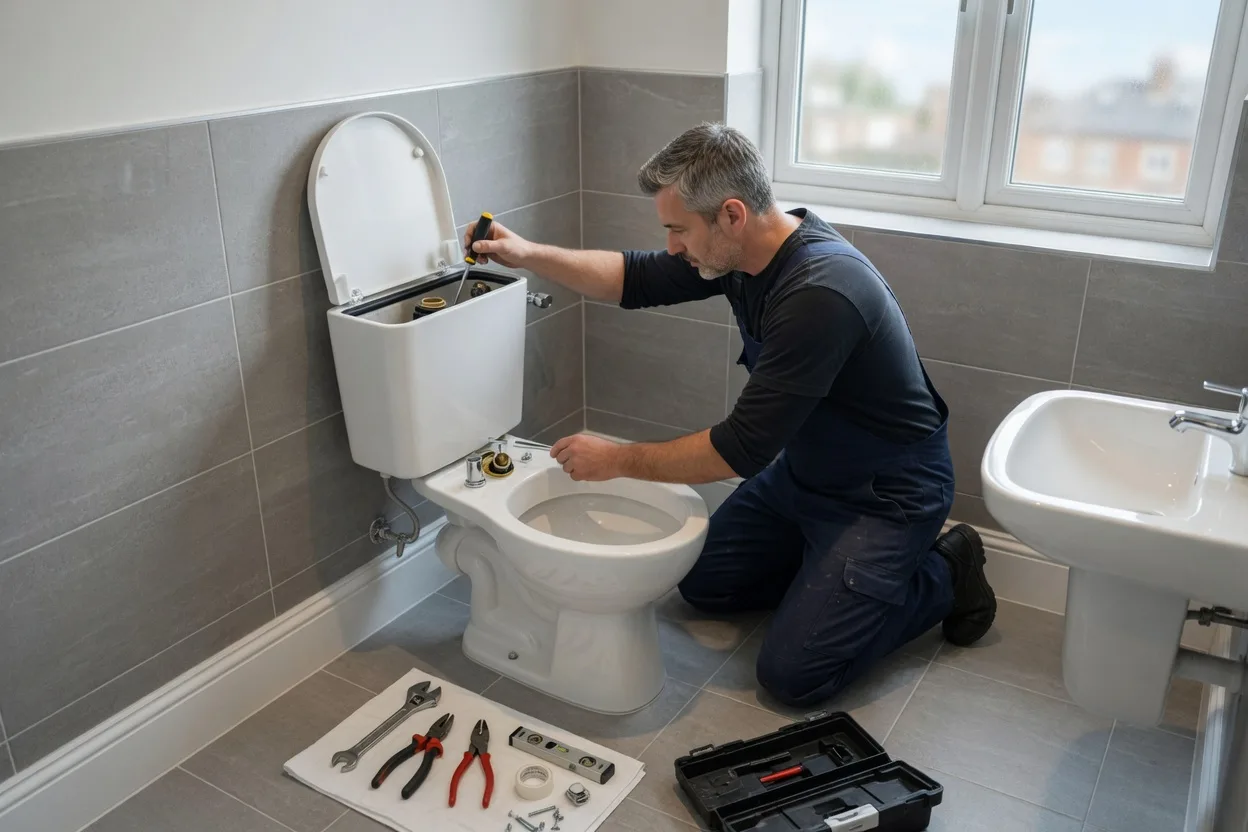
Outdoor plumbing repairs cover everything on the water supply and drainage that lives outside the heated envelope of the building: garden taps and standpipes, the external pipe runs that feed them, external stopcocks, irrigation lines, and the gullies and yard drains that carry surface water away. Emergency Plumber Chelsea repairs all of it across SW3, SW10 and the surrounding postcodes on 020 3002 6667, answered 24 hours a day. This is a different job to fixing a leak under a kitchen sink or clearing a blocked soil stack. Outdoor pipework sits in unheated ground, exposed brick and open lightwells, so it freezes, corrodes and gets knocked in ways internal plumbing never does, and reaching it often means working in a shared mews yard or a gated communal garden.
The most common outdoor job in Chelsea is a garden tap or standpipe that has seized, snapped or started dripping, and most of these trace back to frost. An outside bib tap left connected to a hose over winter holds water in the spout, that water freezes and expands, and the tap body or the copper feed behind the wall splits. You often do not see it until spring, when you open the tap and water pours out of the wall or the airbrick instead of the spout. We replace the tap with a frost-resistant pattern where the run allows, fit a non-return valve to stop garden water being drawn back into the drinking supply, and make good the wall penetration cleanly on brick or rendered elevations rather than leaving a ragged hole.
External supply runs and standpipes fail in ways that are easy to miss because the pipe is buried or clipped up a rear elevation where nobody looks. A supply run to a garden tap, a coach house, a studio at the bottom of the garden or an irrigation manifold may travel several metres through soil, along a boundary wall or across a flat roof, and a pinhole or a pulled joint on that run leaks continuously without anyone noticing until the water bill climbs or a damp patch spreads. We trace the run rather than guessing, isolate the leaking section, and repair or replace it in the correct material, whether that is copper, MDPE underground supply pipe or a matched plastic fitting, so the fix lasts rather than weeping again by the next season.
The external stopcock is the valve that decides how bad an outdoor leak gets, and in Chelsea it is often the one nobody can find. Many properties have an external stop tap in a small chamber near the boundary or under a cover in the pavement or front garden, alongside or instead of the internal stopcock under the kitchen sink. When these outdoor chambers silt up, seize solid or sit under a wheelie bin, isolating a burst supply run becomes slow at exactly the moment speed matters. We free or replace seized external stopcocks, clear and mark the chamber, and fit an internal isolation valve where one is missing so an outdoor circuit can be shut off and drained without cutting water to the whole house.
Winter is when outdoor plumbing generates most of its emergencies, and the pattern is predictable. Water freezes first in the runs with no heat around them: outside-tap feeds, standpipes, pipes clipped to a north-facing wall, and supply lines crossing an open lightwell or an unheated basement area. The pipe splits while frozen but stays sealed by the ice, so the flood only arrives on the thaw when pressure returns. If you turn an outside tap after a cold snap and get nothing, or a trickle that stops, assume the feed has frozen and possibly split, leave it turned off, and call us before you force it. Forcing a frozen tap open just guarantees the water finds the split the moment it thaws.
Frozen and burst external pipes need isolation first and thawing second, done gently. If you can reach the isolation valve for the outdoor circuit or the external stopcock, close it, then open the tap so there is somewhere for melt water and pressure to go. Thaw a frozen exposed pipe slowly with warm cloths or a hair dryer working from the tap end back towards the frozen section; never use a naked flame near pipework, walls or timber. If the pipe has already split you will see it as soon as it thaws, which is exactly why isolating first matters. We attend frozen and burst external pipes the same as any emergency, targeting 45 to 90 minutes for genuine floods, subject to traffic and availability.
Leaking garden irrigation is its own category, and in Chelsea it turns up in courtyard gardens, roof terraces and the planted communal grounds behind mansion blocks. Automatic irrigation systems run off a mains connection, usually through a solenoid valve manifold and a network of low-pressure poly tubing, and the weak points are the connection back to the mains, the manifold itself, and the many push-fit joints that get disturbed by planting, frost or a garden fork. A wet patch that never dries, a manifold that weeps between watering cycles or a mains connection that drips into a basement wall all point to an irrigation leak. We isolate the feed, find the failed fitting or valve, and repair it, and we make sure the connection back to the drinking supply is properly protected against backflow.
External drainage gullies and yard drains sit alongside the supply side of outdoor plumbing, and they cause trouble when they cannot carry surface water away. A gully at the foot of a downpipe, a channel drain across a mews entrance or a yard gully in a lightwell fills with leaves, silt and grit until it overflows in heavy rain, and the water then runs towards the building instead of away from it. This is where outdoor plumbing overlaps with basements: a blocked gully in a lightwell is one of the commonest routes for rain to end up inside a lower-ground room. We clear and rod external gullies and yard drains, check the fall and the trap, and tell you plainly whether the fault is a simple blockage or a broken drain that needs more work.
Leaks into patios, basements, lightwells and communal outdoor areas are where an unseen outdoor fault becomes an expensive internal problem, and these are common in Chelsea's lower-ground conversions. A weeping supply run under a patio, a cracked gully beside a lightwell or a leaking external tap feed inside a wall can push damp through the fabric into a basement kitchen, a converted cellar or a shared vault. The signs are a tide mark that keeps returning, a musty lower-ground room, or a water meter that ticks over with everything indoors turned off. We prioritise isolating the source over cosmetic patching, because sealing a damp wall while the pipe behind it still leaks only hides the problem until it comes back worse.
Chelsea's building stock shapes every outdoor repair we do. The Victorian and Georgian houses off the King's Road and around the Cadogan Estate streets have deep front lightwells, rear gardens reached through the house or a side passage, and original supply runs that were never meant to feed today's outside taps and irrigation. The red-brick mansion blocks have communal gardens, bin stores and basement service areas with shared external pipework. Mews properties off the main streets have cobbled courtyards, shared rear access and taps fed by long runs from the main house. Riverside flats at Chelsea Harbour and Imperial Wharf add terraces, planters and podium-level drainage. Each of these carries outdoor plumbing in a different place, which is why local knowledge beats a generic call-out here.
Chelsea's garden squares, communal grounds and mews courtyards bring access realities that a domestic outdoor job elsewhere does not. The tap or gully we need may be in a gated square, a managed communal garden, a porter-controlled service yard or a shared mews that several properties use, and reaching it can mean a key, a code, or a word with the managing agent, freeholder or head gardener first. We are used to booking in with concierge and estate staff, working cleanly in planted and paved shared spaces, and leaving communal areas as we found them. If your outdoor fault is on a shared supply or in a communal garden, tell us on the phone so we can plan access before the engineer arrives rather than losing time at a locked gate.
The repair process for outdoor work follows the same discipline as our indoor emergencies, adapted for ground and weather. The engineer confirms the water is isolated at the right valve, traces the fault to its exact point rather than opening the first likely spot, and then repairs or replaces the failed section in the correct material. Underground supply runs are jointed properly and reburied; external taps are set on sound fixings with the wall penetration made good; gullies are cleared, rodded and their fall checked. Where a run has failed once through frost or corrosion it will usually fail again nearby, so on tired outdoor pipework we advise replacing a length rather than nursing a single joint through another winter.
Freeze protection is the single best investment for outdoor plumbing in Chelsea, and it costs very little against the price of a burst. Lag every exposed external run and outside-tap feed, fit a frost-resistant tap or an internal isolation valve so the outdoor circuit can be shut and drained before winter, and disconnect and drain hoses and irrigation before the first hard frost. A simple drain-down routine each autumn, closing the isolation valve and opening the outside tap to empty the run, keeps water out of the vulnerable pipe entirely. Keep external gullies clear of leaves through the autumn so surface water still drains in winter storms. We fit isolators and explain the drain-down when we visit, so next year you can do it in five minutes.
Outdoor faults often involve a landlord, a managing agent or an insurer, and clean documentation decides who pays and how fast. On request we photograph the failure and any damage, note the cause and the work done, and provide an itemised invoice that landlords, managing agents and insurers accept for escape-of-water and buildings claims. In leasehold and mansion-block properties an outdoor leak frequently sits on the boundary between demised and communal responsibility, a shared gully, a communal garden supply or an external run that serves more than one flat, and we set out clearly which side of that line the fault falls on so the right party is dealing with the bill. Getting that recorded properly at the time saves a drawn-out dispute later.
Our outdoor plumbing services cover the whole outside of the property, so one outdoor plumber can deal with the tap, the pipe feeding it and the drain it empties into. That includes fitting new garden taps with double-check valves and internal isolation, repairing or renewing external supply runs, frost-proofing and lagging, replacing a seized external stopcock, fixing leaking irrigation feeds on terraces and courtyards, and clearing or repairing gullies and yard drains. If you are planning a new tap rather than fixing an old one, our guide to outside tap installation explains what a compliant fit involves, and how to stop pipes freezing covers the winter checks. A pipe spraying water right now needs burst pipe repair, and an overflowing gully is handled under emergency drainage.
Pricing for outdoor plumbing is kept transparent, with the same rates as the rest of our work. Daytime emergency call-outs start from £69, and nights, weekends and bank holidays from £89. Labour and parts are quoted before any major work starts, and agreed non-emergency jobs, such as fitting a new outside tap or a pre-winter drain-down, carry no call-out fee. The engineer assesses the fault on arrival and gives you a price before committing to the work. Our engineers are fully qualified and insured, and Gas Safe registered where any gas work is involved; outdoor plumbing rarely touches gas, but if you ever suspect a gas leak, call the National Gas Emergency Service on 0800 111 999 first, then call us.
Our outdoor plumbing coverage is genuinely local across the Chelsea core, so the van is not crawling in from miles away while your lightwell fills or your garden tap floods the wall. We cover SW3 1 through SW3 6 and all of SW10, including Chelsea Harbour, Worlds End, Lots Road and West Brompton, along with neighbouring SW1W, SW1X, SW5 and SW7, taking in King's Road, Sloane Square, the Royal Hospital Chelsea, Brompton, the Cadogan Estate streets and the riverside blocks along Chelsea Embankment and Imperial Wharf. If an outside tap, a garden supply, an external stopcock or a yard drain has failed at your Chelsea property, isolate the outdoor circuit if you safely can and call Emergency Plumber Chelsea on 020 3002 6667. We answer 24 hours a day, give you a real arrival time, and send an engineer who can trace, repair and protect outdoor pipework with clear pricing before the work starts.
Common symptoms
- External tap seized, dripping or dry
- Burst outdoor pipe after frost
- Damp basement linked to external supply
- Garden hose point leaking at the wall
- No isolation for outdoor circuit
- Damaged lagging on external copper
What's included
- External tap repair or replacement
- Frost-damage pipe repairs
- Improved isolation and drain-down points
- Lagging and weather protection advice
- Link to internal stopcock upgrades if needed
How outdoor plumbing repairs works in Chelsea
- 01
Call us
Speak to a real person on 020 3002 6667, day or night. Tell us the fault and your postcode.
- 02
Get an ETA
We give you an honest arrival time — 45 to 90 minutes for genuine emergencies across SW3 and SW10.
- 03
Assess & make safe
A Gas Safe registered engineer arrives, isolates the fault and stops the damage, then quotes before major work.
- 04
Fixed & tidy
We complete the repair, test it, and leave your property clean — with an itemised invoice for your records.
Transparent pricing
FAQs
Should outdoor taps be drained in winter?
Yes in frost-prone exposed runs. We can fit isolators and explain a simple drain-down routine for Chelsea gardens and mews.
Do you install new outdoor taps?
Yes — including non-return valves where required and tidy wall penetrations on brick and rendered elevations.
How quickly can you attend a burst outdoor pipe in Chelsea?
For a genuine emergency such as a burst external run flooding a lightwell or basement, we aim to arrive within 45 to 90 minutes across SW3 and SW10, subject to traffic. Call 020 3002 6667 and you get an honest ETA when you book.
Which Chelsea postcodes do you cover for outdoor plumbing?
We cover SW3 1 to 6 and all of SW10, including Chelsea Harbour, Worlds End, Lots Road and West Brompton, plus SW1W, SW1X, SW5 and SW7. That takes in most mews, gardens and basement lightwells across the area.
What causes outdoor taps and pipes to burst in winter?
Exposed external runs and unlagged bib taps freeze in a cold snap, and the expanding ice splits a joint or the pipe wall. Fitting isolation and draining the outdoor circuit before winter is the simplest way to prevent it.
Is there a call-out fee for outdoor plumbing work?
Emergency call-outs start from 69 pounds daytime and 89 pounds nights, weekends and bank holidays. There is no call-out fee on agreed non-emergency jobs, and none at all if the job runs over 3 hours. The price is agreed before major work starts.
Can you fix an external tap in a shared mews courtyard or vault?
Yes. We regularly work in shared rear access, vaults and mews courtyards, restoring water without flooding neighbours' lightwells. We provide an itemised invoice for managing agents or freeholders where the space is communal.
What outdoor plumbing services do you offer?
Outside tap installation and repair, external supply pipe repairs, frost protection and lagging, external stopcock work, irrigation feed leaks, and gully and yard drain clearance and repair, across SW3, SW10 and nearby postcodes.
Do I need a plumber to fit an outside tap?
It is worth using one. Under the Water Fittings Regulations an outside tap needs backflow protection, usually a double-check valve, and a well-fitted tap also has an internal isolation and drain-down point so the feed can be emptied before winter.
Also see our other Chelsea services: Emergency Plumber Chelsea, 24 Hour Plumber Chelsea, Plumbing Repairs, Plumbing Installation.
Book outdoor plumbing repairs in Chelsea
Call 020 3002 6667 — 24/7 dispatch across SW3, SW10 and nearby postcodes.