
— Chelsea plumbing services
Emergency Drainage in Chelsea
Foul water backing up is a health and property emergency. Emergency Plumber Chelsea provides 24/7 drainage response across SW3 and SW10 — isolate, clear and protect finishes while we restore flow.
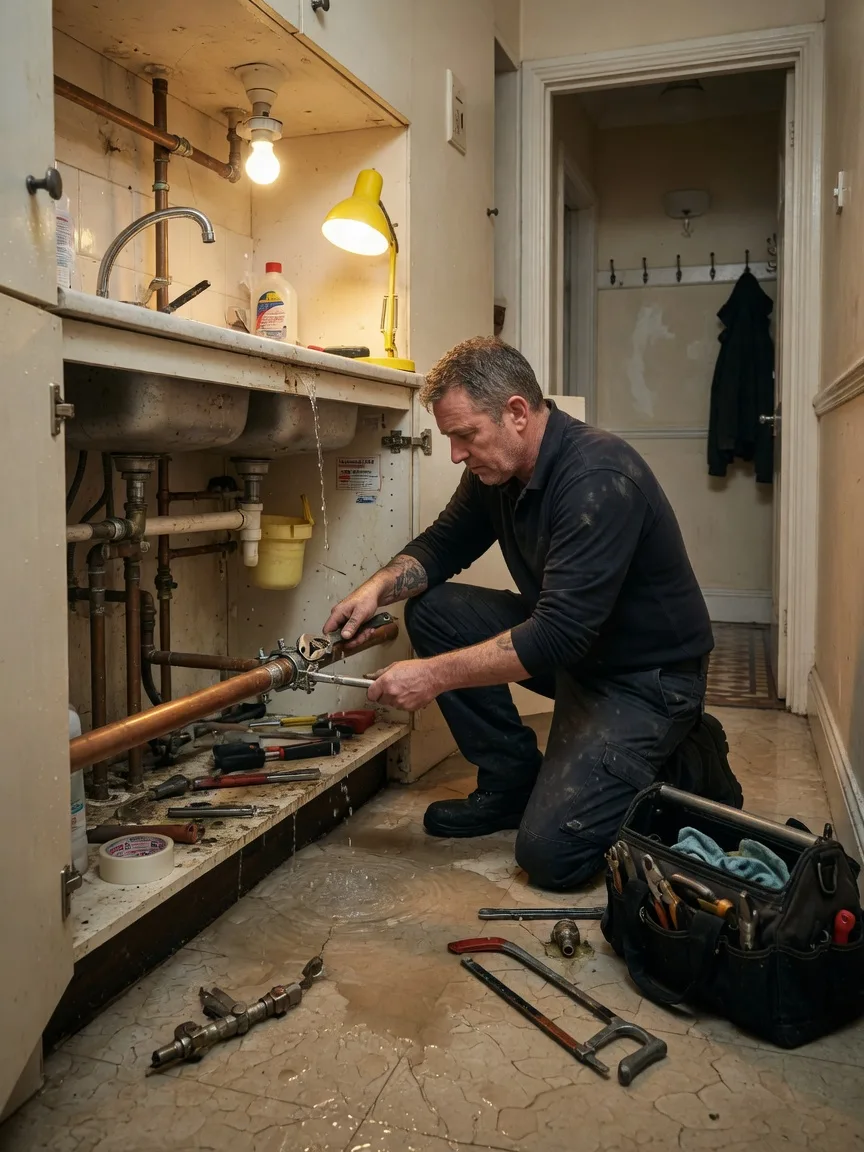
Emergency drainage is what you need when foul water is coming back into the property instead of draining away, and it cannot wait for a routine appointment. Sewage rising in a ground-floor shower tray, a toilet that overflows every time an upstairs flat flushes, or a manhole surcharging in the garden are health and property emergencies, not maintenance jobs. Emergency Plumber Chelsea attends drainage failures across SW3, SW10 and the surrounding postcodes 24 hours a day on 020 3002 6667, with a target arrival of 45 to 90 minutes for genuine emergencies. We stop the overflow, protect finishes, clear the primary blockage and get bathrooms and kitchens usable again, then tell you plainly whether a survey needs to follow.
This is a different job from routine drain unblocking, and the difference matters. A slow sink or a gurgling shower that still drains can wait for a booked visit; foul water backing up over a threshold cannot. Emergency drainage means the system has stopped coping and waste has nowhere to go but back into the building or up out of a gully, so every extra hour adds contamination and damage. When you call, describe what you are actually seeing, whether water is rising, standing or already spreading, and whether more than one fitting is affected, because that tells the engineer whether the fault is a local blockage or a failure in the main run that serves the whole property.
Foul water carries a real hygiene and health risk, which is why we treat it as urgent rather than unpleasant. Sewage backing up onto a bathroom floor or into a basement flat brings bacteria into living space, contaminates anything porous it touches, and leaves an odour that lingers in soft furnishings and skirtings long after the water has gone. Keep children and pets well clear, stop using every toilet, sink and appliance on the affected drain, and do not try to bail or plunge foul water yourself. The safe response is to isolate use, ventilate the room if you can do so without spreading the water, and let an engineer clear the blockage and make the area safe.
Several distinct emergencies bring people to this service, and the response differs for each. Sewage backing up into the lowest fittings usually means the main drain or the shared connection downstream is blocked, so the whole building is holding back. A surcharging manhole, where foul water lifts the cover or floods the garden or vault, points to a blockage further along the run. A blocked soil stack, the vertical pipe carrying waste down through a block of flats, can leave several homes unable to use their bathrooms at once. External drains flooding across a lightwell or basement area often mean a gully or interceptor has failed. Each of these is genuinely urgent, and each needs a slightly different approach on arrival.
There are useful things you can do in the minutes before we arrive, and they limit the damage. Stop all water use immediately across the property, including washing machines and dishwashers, because every litre that goes down adds to what is already backing up. If foul water is spreading, lift rugs, move furniture and get valuables and anything absorbent clear of it. Where a manhole in your own garden is surcharging, keep clear of it and do not lift the cover. If you know where an external gully or inspection chamber is, note it so you can point the engineer straight to it. Photograph the affected areas for your insurer while you wait, since escape-of-foul-water claims rely on that evidence.
When the engineer arrives, the first task is to work out how far the blockage sits and whether it is on private or shared drainage. We check which fittings are affected and in what order they back up, then locate and open the nearest inspection chamber or manhole to see whether the run is clear or holding water. A chamber running full tells us the blockage is downstream of that point; a dry chamber with a full one before it brackets the problem to a specific length of pipe. Getting this right early is what stops us clearing the wrong section, and in Chelsea's mix of period houses, mansion blocks and basement conversions the drainage layout is rarely obvious from inside the property alone.
High-pressure water jetting is the tool that clears most serious drainage blockages, and it does what rods and plungers cannot. A jetting hose feeds down the drain and cuts through the blockage with directed high-pressure water, scouring fat, silt, wet wipes, scale and root matter from the pipe wall rather than just punching a hole through the middle of it. That distinction matters, because a drain that has been fully jetted flows freely and is far less likely to block again next week than one that has merely been poked clear. We match the jetting head and pressure to the pipe so old or fragile drainage is cleared safely, and for local blockages closer to the fitting we still use augers and rods where they are the better tool.
Blocked soil stacks in mansion blocks are a category of their own, because one blockage takes several flats out at once. The soil stack is the shared vertical pipe that carries waste down from every flat on the line, so a blockage low in the stack backs foul water up into the lowest flats first, often appearing in a ground-floor or basement bathroom that did nothing to cause it. Clearing a stack means accessing it at the right point, frequently a communal riser cupboard, a rodding eye at the base, or an external chamber, rather than working blindly from a single flat. We isolate the problem to the shared run, clear it, and check that every affected flat drains properly again before we leave.
Working in shared and mansion-block drainage means coordinating access as much as clearing pipes. In Chelsea's red-brick mansion blocks and leasehold conversions off the King's Road and around the Cadogan Estate streets, the drain serving your flat is often communal below the point it leaves your demise, so reaching it can need a porter to open a riser cupboard, a basement or an external chamber. We are used to booking in with concierge and managing agents, working cleanly in occupied buildings, and being clear from the outset about what is private drainage and what is shared. That distinction usually decides who is responsible for the bill, so establishing it early saves arguments later between leaseholders, freeholder and managing agent.
Chelsea's basement and lower-ground flats deserve particular mention, because they take the worst of any drainage failure. Water finds the lowest point, so when a main drain or shared stack backs up, it is the basement bathroom, the vault or the lightwell that floods first, often several flats away from wherever the actual blockage sits. Many of these properties rely on gullies, interceptors or pumped drainage that adds its own failure points, and a surcharging manhole in a rear vault can flood a finished lower-ground room quickly. This kind of work forms a large part of what we do in Chelsea, and we come equipped to clear the blockage, check the pumped or gravity system that serves the basement, and get the space dry and usable.
Once the emergency is cleared, a CCTV drain survey often follows, because clearing a blockage tells you the drain is flowing again but not why it failed. Where a drain blocks repeatedly, where jetting reveals a partial obstruction that will not fully shift, or where the pattern points to something structural, we run a camera down the line to see the pipe from the inside. The survey shows exactly what is there: root ingress from a nearby tree working in through a joint, a collapsed or cracked section, displaced pipe from ground movement, a bellied run holding water, or scale and fat that has built up over years. That footage turns guesswork into a clear picture of what needs repairing and where.
Root ingress and collapsed drains are the two structural faults that turn a one-off emergency into a recurring one. Chelsea's mature street trees and garden planting send roots toward the moisture and nutrients in a foul drain, and once a fine root finds an old clay joint it thickens, catches passing waste and slowly chokes the pipe. A collapsed or cracked section, common in the original salt-glazed clay drainage under many period houses, does the same by disrupting flow and snagging debris. Jetting clears these enough to restore flow in an emergency, but if the survey shows roots or a collapse, the honest fix is a repair to the pipe itself, whether that is a localised patch, a relined section or an excavated replacement, so you are not calling again after the next heavy use.
Seasonal patterns drive a lot of emergency drainage, and it helps to know when the risk rises. Cold snaps can freeze external gullies and shallow runs, so a drain that coped all summer surcharges on the first hard frost. Heavy rain overwhelms combined and older drainage, lifting manhole covers and flooding basements and lightwells across the low-lying riverside streets toward Chelsea Embankment and Imperial Wharf. The festive period and long weekends bring a spike in kitchen-fat and wet-wipe blockages in busy flats and let properties, which is exactly when a soil stack in a full mansion block gives way. We answer through all of it, including nights, weekends and bank holidays, because drainage rarely fails at a convenient hour.
Pricing for emergency drainage is kept transparent, because a foul-water emergency is stressful enough without a surprise bill. Daytime emergency call-outs start from £69, and nights, weekends and bank holidays start from £89, with labour and any parts quoted before major work begins. The engineer assesses the fault on arrival, tells you whether it is a straightforward clear or something that needs jetting, a survey or a repair, and gives you a price before starting the substantive work. Agreed non-emergency and follow-up jobs, such as a booked CCTV survey or a planned repair, carry no call-out fee. If gas work ever features in the surrounding job our engineers are Gas Safe registered, and a suspected gas leak means leaving the property and calling the National Gas Emergency Service on 0800 111 999 first.
Our emergency drainage coverage is genuinely local across the Chelsea core, so an engineer is not crawling in from the far side of London while foul water spreads across your floor. We cover SW3 1 through SW3 6 and all of SW10, including Chelsea Harbour, Worlds End, Lots Road and West Brompton, along with neighbouring SW1W, SW1X, SW5 and SW7, taking in King's Road, Sloane Square, the Royal Hospital Chelsea, Brompton, the Cadogan Estate streets and the riverside blocks along Chelsea Embankment and Imperial Wharf. If a drain is backing up, a manhole is surcharging or a soil stack has failed in your Chelsea home or block right now, stop using the water and call Emergency Plumber Chelsea on 020 3002 6667. We answer 24 hours a day, give you a real arrival time, and send an engineer who can isolate, jet and clear the fault, then survey for a collapse or root ingress if one is likely, with clear pricing before the work starts.
Common symptoms
- Sewage or foul water overflowing
- Multiple fittings backing up at once
- Manhole surcharging in the garden or vault
- Toilet bubbling with foul smell
- Water escaping from gully lids
- Overnight stack failure in a block
What's included
- 24/7 emergency drainage call-out
- Rapid clearance and make-safe
- Protection of internal finishes where practical
- Assessment of private vs shared drainage
- Next-step survey or repair advice
How emergency drainage works in Chelsea
- 01
Call us
Speak to a real person on 020 3002 6667, day or night. Tell us the fault and your postcode.
- 02
Get an ETA
We give you an honest arrival time — 45 to 90 minutes for genuine emergencies across SW3 and SW10.
- 03
Assess & make safe
A Gas Safe registered engineer arrives, isolates the fault and stops the damage, then quotes before major work.
- 04
Fixed & tidy
We complete the repair, test it, and leave your property clean — with an itemised invoice for your records.
Transparent pricing
FAQs
What should I do before you arrive?
Stop using all toilets and sinks if water is rising. Keep children and pets away from foul water. Call 020 3002 6667 for dispatch.
Can you attend basement flats with vault drains?
Yes — basement and vault drainage issues are common in Chelsea and form a large part of our emergency work.
How fast can you respond to a drainage emergency in Chelsea?
We answer 24 hours a day and target a 45 to 90 minute response for genuine emergencies such as foul flooding or a surcharging manhole across SW3 and SW10, subject to traffic and engineer availability. Call 020 3002 6667.
What does an emergency drainage call-out cost?
Emergency call-outs start from £69 in the day and from £89 at nights, weekends and bank holidays, with the price agreed before any major work begins. There is no call-out fee at all if the job runs over 3 hours.
Which areas do you cover 24/7?
We cover SW3 (SW3 1 to 6) and SW10 including Chelsea Harbour, Worlds End, Lots Road and West Brompton, plus SW1W, SW1X, SW5 and SW7.
Is the blockage my responsibility or a shared drain?
It depends on the layout and where the restriction sits. On site we help identify whether the fault looks to be on your private run or in a shared or communal drain, which matters in mansion blocks and managed estates.
Can you provide an itemised invoice for insurers or managing agents?
Yes. We can document what we found and supply an itemised invoice suitable for insurance claims, landlords and managing agents.
Also see our other Chelsea services: Emergency Plumber Chelsea, 24 Hour Plumber Chelsea, Plumbing Repairs, Plumbing Installation.
Book emergency drainage in Chelsea
Call 020 3002 6667 — 24/7 dispatch across SW3, SW10 and nearby postcodes.