
— Chelsea plumbing services
Leaking Tap Repair in Chelsea
A dripping tap wastes water, stains enamel and keeps you awake — and in hard-water Chelsea areas it often means worn cartridges or washers rather than a full tap replacement. We repair and re-seat taps across SW3 and SW10.
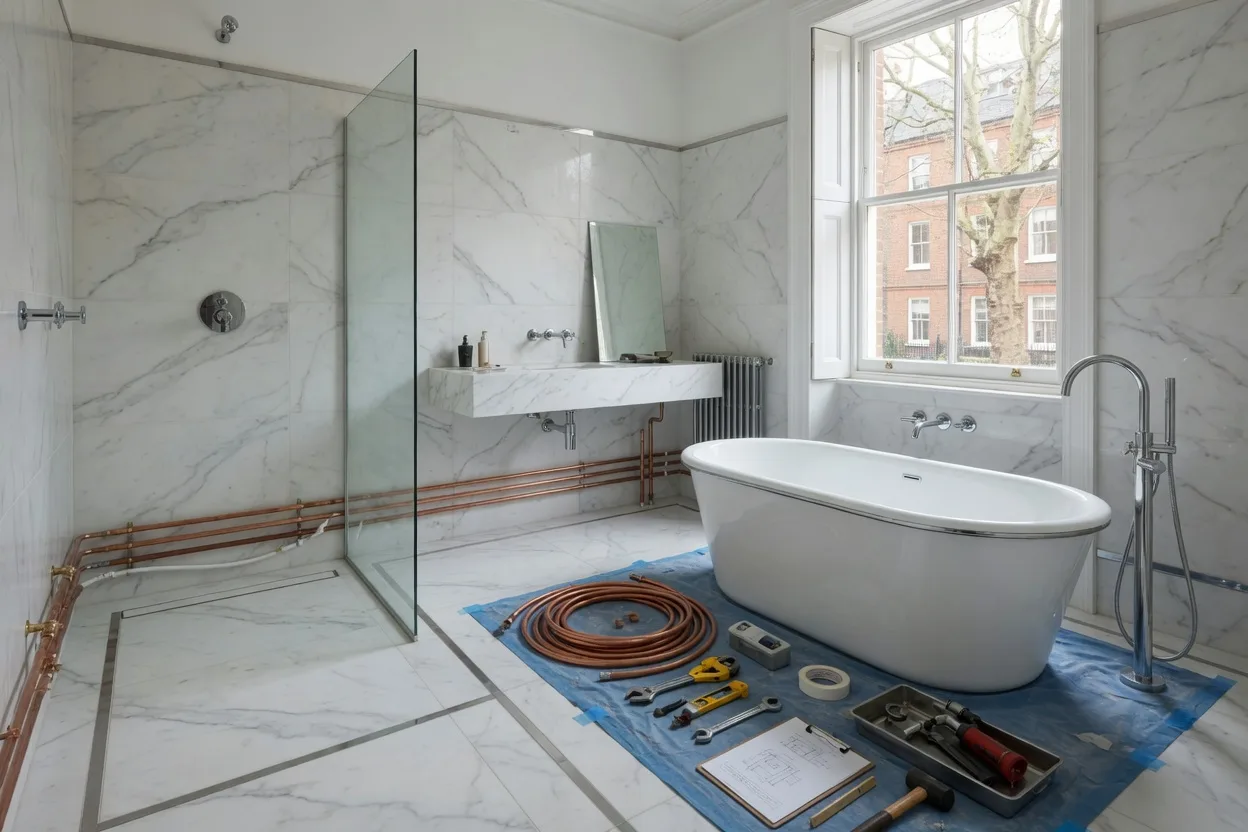
A leaking tap is almost always a worn part rather than a failed tap, which is why most drips in Chelsea are a repair job and not a replacement. Emergency Plumber Chelsea diagnoses and stops dripping and weeping taps across SW3, SW10 and the surrounding postcodes on 020 3002 6667, and for a straightforward drip we usually fit the correct washer, O-ring or ceramic cartridge on the same visit. We service kitchen mixers, basin pillar taps, bath fillers and the high-end and imported fittings common in Chelsea bathrooms, working out first whether the fault is a cheap seal or a corroded body. Daytime call-outs start from £69, and you always see the price before any work begins, so a small job stays a small bill.
A dripping tap is not a trivial annoyance, because it wastes a surprising amount of water and money over a year. A steady drip loses litres a day, and a fast one that fills the basin overnight loses far more, all of it metered and paid for. On the hot side the cost is worse, because every drip is water you have already heated, so a leaking hot tap quietly runs your boiler or cylinder as well as your water bill. Beyond the money, a constant drip stains enamel and stone, leaves limescale trails and green-blue marks under the spout, and keeps a light-sleeping household awake. Fixing a drip early is cheap; leaving it to wear the seat and score the tap body is what turns a washer job into a new tap.
London's hard water is the single biggest reason Chelsea taps leak, so understanding limescale explains most of what we find. The mains supply across SW3 and SW10 is hard, heavy in dissolved calcium, and every time a tap closes, a little scale is left behind on the washer, the cartridge and the seat it presses against. Over months that scale builds into a gritty crust that stops the seal seating cleanly, so the tap drips even when fully closed, and the same scale makes handles stiff and grinding to turn. It also chews through parts faster than soft-water areas, which is why a tap that was fine for years suddenly starts weeping. Descaling internal parts and fitting fresh seals is often the whole repair.
Knowing which kind of tap you have shapes the repair, because a mixer, a pillar tap and a monobloc each fail differently. Traditional pillar taps, common in period Chelsea bathrooms and on separate hot and cold basin sets, usually rely on a rubber washer pressing onto a brass seat, and a drip from the spout almost always means that washer has perished or the seat has corroded. Quarter-turn and modern mixer taps use ceramic disc cartridges instead, where two polished discs slide against each other, so a drip there means the cartridge has worn or scaled rather than a washer. Monobloc mixers, the single-lever fittings on most modern kitchen sinks and vanity basins, house their own cartridge and a set of O-rings, and can leak from the spout, the base or the swivel.
A drip from the spout when the tap is fully closed is the classic worn-washer or worn-cartridge fault, and it is the most common call we get. On a traditional tap it means the rubber washer at the bottom of the headgear no longer seals against the seat, often because scale or corrosion has pitted the brass seat so no washer will sit tight. The fix is to isolate the tap, strip the headgear, fit a new washer, and re-seat or re-cut the brass seat where it is scored so the new washer has clean metal to close against. On a ceramic tap the same symptom means a new cartridge. Getting the seat right is what stops the drip coming straight back a fortnight later.
Water seeping from the base of the tap or from the swivel spout is a different fault, and it usually points to failed O-rings rather than a new tap. On a monobloc mixer the spout swivels on a set of rubber O-rings, and when those harden or scale up, water escapes around the base of the tap or pools under it every time you run it, which then seeps down through the worktop or basin. On a kitchen mixer the same weep can soak the cupboard below without ever showing above. Replacing the O-rings is a small, inexpensive job once the tap is stripped, and it saves you from being sold a full swap for what is really a couple of seals worth a few pounds.
A ceramic disc cartridge that has worn or scaled is the usual culprit on modern lever and quarter-turn taps, and it is a clean part to replace when we have the right one. Ceramic discs give that smooth quarter-turn action and are meant to last for years, but hard water works fine grit between the discs, so eventually they drip when closed or the lever feels gritty and stiff. The repair is to identify the exact cartridge, which varies by brand and even by model, isolate the tap, and swap the disc pack. On common British brands we usually carry or quickly source the cartridge; on imported and designer taps the cartridge is often proprietary, which is where matching the part correctly matters most.
High-end and imported taps are everywhere in Chelsea bathrooms and kitchens, and they are exactly the taps that need a specific cartridge rather than a generic part. A great many SW3 and SW10 homes have Italian, German or other European designer fittings, sometimes fitted during a high-spec refurbishment years ago, and each brand uses its own cartridge dimensions, thread and disc pattern. Fitting a near-enough part to a tap like that either leaks again quickly or damages the body, so we identify the make and model first and source the genuine or correct-spec cartridge. That sometimes means a short wait for the right part rather than a same-hour fix, but it is the honest way to keep an expensive tap working instead of writing it off because a two-pound seal has worn.
A stiff, grinding or crunchy handle is a warning sign as much as a comfort problem, and it is worth acting on before the tap starts to drip. That gritty feel is scale and worn parts inside the headgear or cartridge, and forcing a stiff tap round is how handles snap, spindles strip and ceramic discs crack. On a traditional tap we service the headgear, grease the spindle and fit fresh washers; on a cartridge tap we replace the cartridge. Catching a tap at the stiff stage often means a straightforward service rather than a repair after it has started leaking and scored its own seat. If your basin or kitchen tap has become hard to turn, it is telling you the internals are due for attention.
The repair itself is quick and clean when the isolation valves work, and checking those valves is part of every visit. Under most Chelsea sinks and basins there are small isolation valves on the hot and cold feeds, and a working valve lets us shut off one tap and repair it without draining the property or disturbing anyone else in the building. Where those valves are seized with scale, painted over or missing, which is common in older conversions, we isolate further back or fit a new valve so the tap can be serviced properly and more easily next time. We strip the tap, descale and replace the worn parts, reassemble, then run it hot and cold to confirm the drip has gone and nothing weeps at the base.
Deciding between a repair and a replacement comes down to the condition of the tap body, and we are honest about it rather than defaulting to a sale. If the body is sound and only the washer, O-rings or cartridge have worn, a repair is far cheaper and quicker and the right call. A replacement makes more sense when the seat is too corroded to re-cut, when the tap body itself is cracked or pitted through, when a cartridge for an obsolete or unbranded import genuinely cannot be sourced, or when a badly scaled tap has been repaired repeatedly and keeps failing. We tell you which situation you are in before ordering anything, so you are not paying for a new tap when a seal would have done, or paying twice to patch a tap that is finished.
While you wait for us, there are a couple of things that limit the damage and make the visit quicker. If the drip is fast or a tap is weeping into a cupboard, turn off the isolation valve under the sink or basin if you can reach it, which stops the water to that tap alone and keeps the rest of the home in supply. Put a bowl or towel under a base leak so it is not soaking into a worktop or vanity unit. It also helps to note the make of the tap or find any paperwork from when the bathroom or kitchen was fitted, because knowing the brand lets us bring or source the correct cartridge first time, especially for imported fittings.
Preventing the next leak is largely about managing scale, and a few habits make Chelsea taps last much longer. Wiping taps dry after use stops scale building on the spout and around the base, and periodically clearing the aerator on the end of the spout keeps flow even and stops grit working back into the mechanism. Not over-tightening taps matters more than people think, because cranking a tap hard shut to stop a drip only crushes the washer and scores the seat, making the leak worse. If your home suffers repeatedly with scaled taps, kettles and showerheads, water softening or scale-reduction is worth considering, and we can advise on what suits your property when we visit.
For landlords, managing agents and leaseholders, a dripping tap is a small job that is easy to document and settle, and we handle it the same careful way as any other. Across Chelsea's mansion blocks, managed estates and leasehold conversions we can attend a tenanted flat, repair the tap, and provide a clear itemised invoice that landlords and agents accept, noting what was worn and what was replaced. Where a persistent leak has damaged a worktop, a vanity unit or the flat below, we record what we found so the paperwork is straightforward. Dealing with a drip promptly is also cheaper for everyone, since a tap left weeping into a cabinet for months causes far more damage than the ten-minute repair it needed.
Pricing for tap repairs is kept transparent, because a dripping tap should never turn into a surprise bill. Daytime emergency call-outs start from £69, and nights, weekends and bank holidays from £89, with labour and any parts quoted before the work starts and agreed non-emergency jobs carrying no call-out fee. Most single-tap repairs are a washer, O-ring or cartridge job completed on the visit; where an imported cartridge has to be ordered, we tell you the cost and timescale first. Our engineers are fully qualified and insured, and Gas Safe registered where any gas work is involved. If you ever smell gas, that is a separate matter: leave the property and call the National Gas Emergency Service on 0800 111 999 before calling us.
Our tap repair coverage is genuinely local across the Chelsea core, so a dripping tap does not mean waiting days for a van from miles away. We cover SW3 1 through SW3 6 and all of SW10, including Chelsea Harbour, Worlds End, Lots Road and West Brompton, along with neighbouring SW1W, SW1X, SW5 and SW7, taking in King's Road, Sloane Square, the Royal Hospital Chelsea, Brompton, the Cadogan Estate streets and the riverside blocks along Chelsea Embankment and Imperial Wharf. If a tap in your Chelsea home or flat is dripping, stiff or weeping at the base, call Emergency Plumber Chelsea on 020 3002 6667. We answer 24 hours a day, work out whether it is a seal, a cartridge or a genuine replacement, and fix it with clear pricing before the work starts.
Common symptoms
- Constant drip from spout when closed
- Water seeping at the base of the tap
- Stiff or grinding handle action
- Hot side dripping only
- Blue-green staining under the spout
- Spray or mist from the joint when open
What's included
- Tap diagnosis and isolation
- Washer, cartridge or O-ring replacement
- Reseating where appropriate
- Optional full tap replacement quote
- Check of under-sink isolation valves
How leaking tap repair works in Chelsea
- 01
Call us
Speak to a real person on 020 3002 6667, day or night. Tell us the fault and your postcode.
- 02
Get an ETA
We give you an honest arrival time — 45 to 90 minutes for genuine emergencies across SW3 and SW10.
- 03
Assess & make safe
A Gas Safe registered engineer arrives, isolates the fault and stops the damage, then quotes before major work.
- 04
Fixed & tidy
We complete the repair, test it, and leave your property clean — with an itemised invoice for your records.
Transparent pricing
FAQs
Can every dripping tap be repaired?
Most can if parts are available. Obsolete or cracked bodies are better replaced — we will say so honestly before ordering.
How quickly can you attend?
Non-urgent drips are scheduled promptly; if a leak is flooding a cupboard or ceiling, treat it as an emergency on 020 3002 6667.
What causes taps to drip in Chelsea?
In hard-water Chelsea areas it is usually a worn washer, a failed cartridge or a perished O-ring rather than a faulty tap. Limescale build-up also wears seals faster, which is why drips return on older fittings.
Is there a call-out fee for a leaking tap?
There is no call-out fee on agreed non-emergency jobs, and small tap repairs are usually booked this way. If a leak is flooding a cupboard we treat it as an emergency, priced from £69 daytime with the cost agreed first.
Do you cover my area for tap repairs?
Yes. We cover SW3 and SW10 including Chelsea Harbour, Worlds End, Lots Road and West Brompton, plus SW1W, SW1X, SW5 and SW7. Give us your postcode when you call 020 3002 6667.
Can you repair designer and high-spec taps?
Yes. We service monobloc mixers, traditional pillar taps, bath fillers and many designer brands found in high-spec Chelsea kitchens and bathrooms. Where a cartridge is available we repair; where the body is corroded we quote a clean replacement.
Do you provide an invoice for landlords or agents?
Yes. We provide itemised invoices with clear notes suitable for tenancy, managing agent and insurance files across Chelsea rental stock.
Also see our other Chelsea services: Emergency Plumber Chelsea, 24 Hour Plumber Chelsea, Plumbing Repairs, Plumbing Installation.
Book leaking tap repair in Chelsea
Call 020 3002 6667 — 24/7 dispatch across SW3, SW10 and nearby postcodes.