
— Chelsea plumbing services
Emergency Boiler Repair in Chelsea
No heat or hot water cannot wait until Monday. Our Gas Safe engineers diagnose and repair boilers and heating systems across Chelsea day and night — call 020 3002 6667.
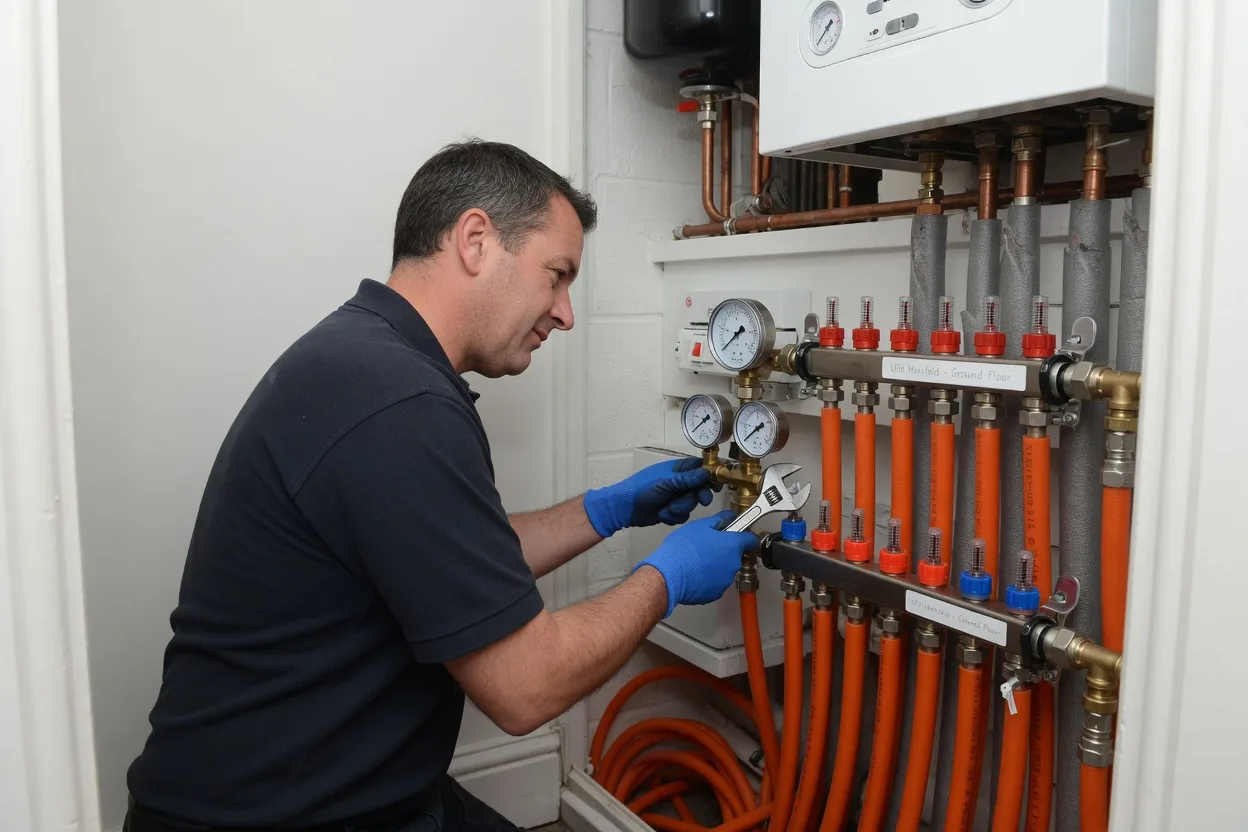
Boiler repair means diagnosing and fixing the fault in the appliance itself, the unit on the wall or in the cupboard that heats your water and drives your radiators, rather than the pipes and radiators it feeds. Emergency Plumber Chelsea sends Gas Safe registered engineers to boilers across SW3, SW10 and the surrounding postcodes, 24 hours a day, on 020 3002 6667, with daytime call-outs from £69 and nights, weekends and bank holidays from £89. A Gas Safe boiler fault diagnosis commonly starts from around £89, and you get a price before any major work begins.
The most common reason people call is no hot water, no heating, or both. When the boiler will not fire at all, the cause can sit anywhere from a tripped fuse or a failed diverter valve to a faulty pump, a stuck gas valve or a dead PCB. A combi that gives heating but no hot water usually points to the diverter valve or its actuator; a system that gives hot water but cold radiators often points to the pump or a motorised valve. We work through the appliance methodically instead of guessing, because the right diagnosis is what stops you paying for a part the boiler never needed.
The diagnostic process starts before the engineer touches a component. We check the obvious first: power, gas supply, system pressure, thermostat demand and any fault code on the display, because a surprising number of no-heat calls come down to a tripped switch, a spent battery in a wireless thermostat or a filling loop left open. From there the engineer reads the boiler's own diagnostics, checks the electrical and gas readings against the manufacturer's figures, and isolates the failed part by testing rather than by swapping. That discipline matters most in Chelsea, where an appliance in a hall cupboard or basement plant room is awkward to open twice, and getting the diagnosis right first time saves a second visit.
Low pressure is the fault Chelsea customers report most after a cold snap. If the gauge on the front of the boiler reads well below one bar, the appliance may refuse to fire to protect itself. Topping up through the filling loop restores pressure for a while, but if it keeps dropping the water is going somewhere: a weeping radiator valve, a corroded towel rail, a failed automatic air vent or, most often, a tired expansion vessel that no longer holds its charge. We find where the pressure is going rather than leaving you to repressurise every few days, which only masks the real fault. In many Chelsea flats the boiler and its filling loop are tucked into a cupboard the previous owner rarely opened, so the first time anyone looks is when the heating stops; we show you where the loop and gauge are and what a healthy cold reading should be, so a slow drop is caught early rather than as a January breakdown. Our guides to a boiler losing pressure and what pressure your boiler should be cover the checks you can make first.
A leaking boiler is never something to leave. Water inside the casing can drip onto the burner, the electrics or the gas valve, and over time it corrodes components that are expensive to replace. Leaks commonly come from the pump head, the auto air vent, a perished pump gasket, the heat exchanger or the pressure relief valve discharging because the system is over-pressurised. We isolate the appliance, trace the source and repair or replace the failed part, then check that the leak has genuinely stopped and has not simply moved somewhere less visible. A boiler weeping quietly in a cupboard can also feed damp into the wall or the flat below long before you spot a puddle, which in a Chelsea mansion block turns a small repair into a neighbour's ceiling stain, so we look for staining and corrosion around the case as well as the active drip.
Boiler lockout is designed to protect you, so treat it as information rather than a nuisance. When the appliance detects a fault it shuts down and shows a code. Different manufacturers use different codes, but they typically point to ignition failure, a flame that will not stay lit, overheating, low pressure, a fan or air-pressure fault, or a frozen condensate. A single reset that holds is fine. A boiler that locks out again within hours has an underlying fault that needs a Gas Safe engineer, and repeatedly resetting it can hide a problem that is getting worse.
Kettling, banging and gurgling are the noises that worry people most, and they usually mean the heat exchanger is fouled. Sludge and limescale build up on the exchanger, water overheats against the deposits and boils in bursts, which produces the rumble that sounds like a kettle coming to the boil. In hard-water Chelsea, scale forms readily, so kettling is common in older systems that have never been cleaned. We confirm the cause, treat or descale where it is safe and effective, and where the system water is heavily contaminated we discuss a flush and inhibitor to stop the problem returning. Noise from the boiler is not something to live with: left alone, a kettling exchanger runs hotter than it should, wears the appliance faster and eventually leaves you facing a heat exchanger bill that a cleaner system would have avoided.
Pilot and ignition faults show up as a boiler that clicks and tries but will not light, or a pilot that will not stay lit on older units. Causes range from a dirty or misaligned electrode and a faulty ignition lead to a failing gas valve, a blocked condensate trap or an air-supply fault. On sealed modern boilers the fix is an internal component; on older open-flued appliances a thermocouple or pilot assembly may be involved. Whatever the age, ignition work is gas work, and gas work is for a Gas Safe registered engineer only.
Frozen condensate pipes cause a wave of no-heat calls every time the temperature drops below freezing. Modern condensing boilers produce a small volume of acidic waste water that drains away through a plastic condensate pipe, and where that pipe runs outside or through an unheated space it can freeze solid and block. The boiler then locks out, often with a specific fault code. Thawing the pipe and restarting the appliance restores heat quickly, and we can advise on lagging or rerouting the run so the same freeze does not shut you down again next winter. Winter is when demand on every heating engineer peaks, so a boiler that has been serviced and has a protected condensate run is far less likely to leave you waiting for an engineer on the coldest night of the year. See frozen condensate pipe for how to thaw it safely, and boiler condensate pipe leaking if it is dripping rather than frozen.
A Gas Safe registered engineer is not optional for boiler work; it is the law. Anyone working on a gas appliance in the UK must be on the Gas Safe Register, and for good reason: a badly repaired boiler can leak gas, spill combustion products or produce carbon monoxide. Every engineer we send for boiler work is fully qualified, insured and Gas Safe registered. That protects you, satisfies landlord and insurance requirements, and means the repair is done to the standard the appliance and the regulations demand.
Safety comes before any repair, and gas is the one thing you never wait on. If you smell gas, or suspect a leak, do not switch anything on or off, put out naked flames, open windows if you can, leave the property if you need to, and call the National Gas Emergency Service on 0800 111 999 first, before you call anyone else. Once the network team has made the supply safe, call us on 020 3002 6667 for the Gas Safe follow-up on your boiler. The same applies to any suspected carbon monoxide alarm: fresh air and the emergency line come first.
Chelsea homes run on a mix of boiler types, and the right diagnosis starts with knowing which one you have. Combi boilers, common in flats and smaller houses, heat water on demand with no cylinder. System boilers work with a hot water cylinder and suit larger houses with several bathrooms. Conventional or heat-only boilers, still found in many period Chelsea properties, use both a cylinder and a feed-and-expansion tank in the loft. Each type fails in its own way, and an engineer who recognises the setup on sight wastes none of your time working it out. Mansion blocks add their own considerations, and Chelsea has a great many of them. In a red-brick block off Sloane Square or along the streets of the Cadogan Estate, a boiler may sit in a hall cupboard with limited ventilation, share a flue arrangement with the building, or drain its condensate into a communal stack. Access, noise and the managing agent all matter, and a leak or fault in one flat can concern the freeholder and the flat below, so we work cleanly, keep the paperwork clear, and flag anything that touches communal services so it can be handled properly.
Repair or replace is an honest conversation, not a sales pitch. A boiler that has had one clean fault on an otherwise sound unit is worth repairing. A boiler that breaks down repeatedly, is well past its expected life, needs an expensive part like a heat exchanger or gas valve, or is no longer economical to keep running may be better replaced. We tell you plainly which side of that line your boiler sits on, give you the cost of the repair against the likely cost of replacement, and leave the decision with you rather than pushing a new install. Where replacement is the sensible choice we can talk through it separately, but a boiler with plenty of life left gets repaired, not condemned to win us a bigger job. Our guides to when to replace your boiler and leaking boiler repair costs set out how we weigh it up.
Keeping records and servicing your boiler is what keeps repairs rare. An annual service catches worn and fouled components before they fail in the middle of winter, keeps most manufacturer warranties valid, and gives landlords the documentation they need. After any repair we leave clear notes on what was found and what was done, suitable for your own records or for a managing agent's compliance file. A boiler that is serviced and documented breaks down less, lasts longer and is far easier to diagnose when something does go wrong.
Pricing is transparent because a boiler breakdown is stressful enough without a surprise bill. Daytime call-outs start from £69, and nights, weekends and bank holidays start from £89, with Gas Safe fault diagnosis commonly from around £89. The engineer assesses the boiler, tells you what is wrong and what it will cost to put right, and gets your agreement before any major work starts. If a part has to be ordered we make the appliance safe, quote the repair clearly and book a prompt return, so you are never committed to a cost you have not seen. Agreed non-emergency jobs carry no call-out fee. Period and conservation-area properties sometimes limit where an external flue can go, and we work within those constraints rather than around them.
Our boiler coverage is genuinely local across Chelsea. We serve SW3 1 through SW3 6 and all of SW10, including Chelsea Harbour, Worlds End, Lots Road and West Brompton, along with the neighbouring SW1W, SW1X, SW5 and SW7 streets, taking in King's Road, Sloane Square, the Royal Hospital Chelsea, Brompton, the Cadogan Estate and the riverside blocks along Chelsea Embankment and Imperial Wharf. If your boiler has locked out, sprung a leak, lost pressure or left you with no hot water, call Emergency Plumber Chelsea on 020 3002 6667. We answer 24 hours a day, send a Gas Safe engineer, and give you a clear price before the work starts.
Common symptoms
- Boiler lockout or error code
- No hot water
- Radiators cold or only partly warm
- Low pressure / frequent repressurising
- Strange noise from the boiler
- Boiler firing then cutting out
What's included
- Gas Safe engineer attendance
- Diagnosis and repair
- Safety checks after work
- Advice on replacement when repair is uneconomic
- Clear notes for landlords and agents
How boiler repair works in Chelsea
- 01
Call us
Speak to a real person on 020 3002 6667, day or night. Tell us the fault and your postcode.
- 02
Get an ETA
We give you an honest arrival time — 45 to 90 minutes for genuine emergencies across SW3 and SW10.
- 03
Assess & make safe
A Gas Safe registered engineer arrives, isolates the fault and stops the damage, then quotes before major work.
- 04
Fixed & tidy
We complete the repair, test it, and leave your property clean — with an itemised invoice for your records.
Transparent pricing
FAQs
Are you Gas Safe registered?
Yes. Gas work is only carried out by Gas Safe registered engineers.
Smell of gas?
Leave the property if needed, call 0800 111 999 first, then us on 020 3002 6667 for Gas Safe follow-up.
How fast can you reach me for a boiler breakdown in Chelsea?
We target a 45 to 90 minute response for genuine no-heat and no-hot-water emergencies across SW3 and SW10, subject to traffic and engineer availability. Call 020 3002 6667 and you will get an honest arrival time.
Do you repair boilers at night and on weekends?
Yes, we attend boiler faults 24/7 including nights, weekends and bank holidays. Emergency call-outs start from £69 daytime and from £89 nights, weekends and holidays.
What does an emergency boiler repair cost?
Emergency call-outs start from £69 in the day and from £89 at nights, weekends and bank holidays, with the price agreed before any major work begins. There is no call-out fee at all if the job runs over 3 hours.
Which Chelsea postcodes do you cover for boiler repairs?
We cover SW3 (SW3 1 to 6) and SW10 including Chelsea Harbour, Worlds End, Lots Road and West Brompton, plus SW1W, SW1X, SW5 and SW7.
What should I do while I wait for the engineer?
Note any error code shown on the boiler and, if the system has lost pressure, avoid repeatedly repressurising it as this can mask a leak. If you ever smell gas, leave the property and call the National Gas Emergency Service on 0800 111 999 first.
Also see our other Chelsea services: Emergency Plumber Chelsea, 24 Hour Plumber Chelsea, Plumbing Repairs, Plumbing Installation.
Book boiler repair in Chelsea
Call 020 3002 6667 — 24/7 dispatch across SW3, SW10 and nearby postcodes.