
— Chelsea plumbing services
Blocked Manhole Clearance in Chelsea
A surcharging manhole means the main drain is not flowing. We open, clear and assess inspection chambers for Chelsea houses, mews and blocks so foul water stops rising at the lowest points.
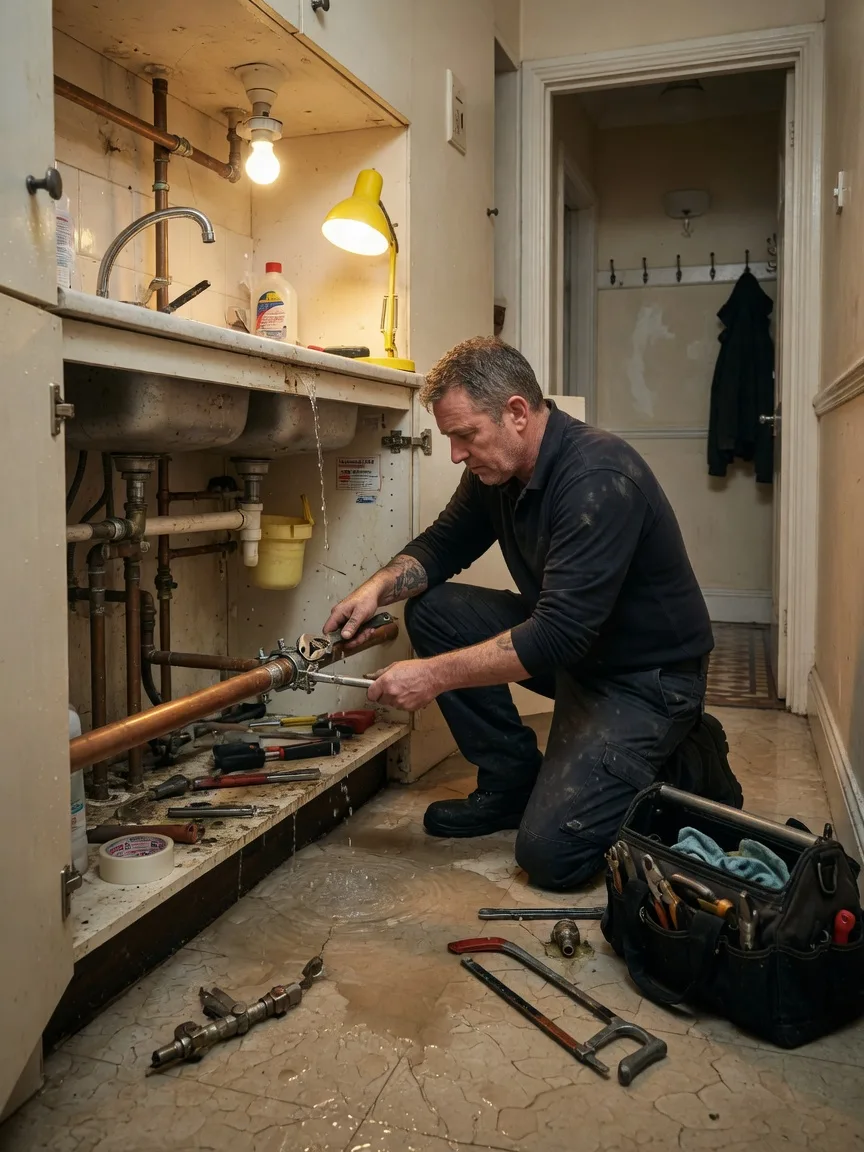
A surcharging manhole means the main drain run is blocked downstream, and the foul water rising in the chamber has nowhere left to go. Emergency Plumber Chelsea opens, clears and assesses inspection chambers across SW3, SW10 and the surrounding postcodes 24 hours a day on 020 3002 6667, with a target arrival of 45 to 90 minutes for genuine emergencies. Unlike a blocked sink or bath, which is a local problem inside one room, a flooded manhole tells you the shared spine of the drainage has stopped flowing, and every fixture upstream of the blockage is on borrowed time. We lift the cover safely, clear the chamber and the connected runs, and confirm flow has resumed towards the sewer before we leave.
The clearest sign of a blocked manhole is foul water standing or rising in the inspection chamber when it should be running straight through. In a healthy drain the chamber is just a viewing point: waste flows across the open channel at the bottom and carries on. When it fills, pools, or lifts the lid, the blockage is between that chamber and the sewer. Watch for foul water pooling on the ground around the cover, a dark tide mark inside the chamber above the channel, and a smell of sewage lingering in a basement lightwell, side return or shared garden. Once the manhole is full, the next thing to back up is whatever sits lowest in the house.
Multiple fixtures backing up at once is the symptom that separates a main-drain blockage from a simple fitting problem. If the ground-floor toilet gurgles when the washing machine drains, the shower tray fills when someone flushes upstairs, or the kitchen and downstairs loo both rise together, the restriction is downstream of all of them in the shared run, not in any single trap. In Chelsea's tall Victorian and Georgian terraces every floor drains down into the same soil stack and out through the same underground run, so a blockage at the manhole can present as odd noises and slow drainage across the whole house before anything actually overflows.
Treat a surcharging manhole as a hygiene emergency, because what is rising is raw foul water, not clean supply. Sewage carries bacteria and the risk becomes real the moment it reaches a floor, a garden a child or dog uses, or a basement flat's threshold. Keep people and pets away from the standing water, stop using toilets, sinks and appliances so you are not adding to a drain that cannot cope, and do not attempt to bail or hose it around. If foul water is threatening to enter the building at a low doorway or basement airbrick, call us straight away on 020 3002 6667 and tell us it is already at the property, so we prioritise the job accordingly.
Do not lift a heavy manhole cover yourself, and never reach into a chamber of foul water. Cast-iron and older stone covers in period Chelsea properties can weigh a great deal, are often rusted or paint-sealed into their frames, and lever back unpredictably onto fingers and feet. A chamber that has surcharged may also be deeper and fuller than it looks. Our engineers carry proper keys and lifting tools, open covers in a controlled way, and work to keep foul water contained rather than spread across a shared vault or garden. If a lid is already loose and lifting under pressure, keep clear of it and let us deal with it safely on arrival.
On arrival the first job is to establish where the blockage sits by reading the chamber, not by guessing. An engineer lifts the cover, looks at whether the chamber is holding water and how high, and checks the upstream and downstream sides of the open channel. If the chamber upstream is empty but the affected one is full, the restriction is in the run leaving that chamber towards the sewer. Where a property has several chambers in a line down the garden or across a mews yard, we work along them to find the last one flowing freely, which brackets the blockage to a single length of pipe and stops us digging or jetting in the wrong place.
We clear the run with rodding and high-pressure water jetting, matched to what the drain and the blockage need. Drain rods and a plunger or corkscrew head deal with a firm obstruction close to the chamber, driving it through or drawing it back. For grease, silt, scale, wipes and general build-up along a longer run, high-pressure jetting is the tool that actually restores full-bore flow: a hose fed down the drain with a jetting head scours the pipe wall clean and flushes the debris on to the sewer. Once the run is clear we watch the chamber empty and run water through from the house to confirm the channel is carrying it away cleanly.
Knowing whether the drain is private, shared or a public sewer decides who is responsible for the repair, and it is one of the first things we help establish. Broadly, the drain serving only your property up to its boundary is private and yours to maintain; a run shared with neighbouring properties, or the larger sewer beyond the boundary, generally became a public sewer adopted by the water company in 2011. In practice the layout on the ground matters more than the theory. We look at which properties feed into the chamber and where the flow heads, and tell you plainly whether the blockage looks to be on your own run or in a shared or public length where Thames Water may be responsible.
Chelsea's drainage is old, shared and densely packed, which is exactly why manholes here surcharge more readily than in a modern estate. Many terraces off the King's Road, around the Cadogan Estate streets and towards Chelsea Embankment run Victorian clay pipework laid over a century ago, joined at mortar sockets that roots find and silt settles in. Rear inspection chambers sit in narrow side returns and shared gardens, and in some blocks the run passes under vaults and lightwells. Basement conversions have added kitchens and bathrooms below the level of the main drain, so when the run backs up, the lowest new fixtures are the first to flood and the hardest to protect.
Mansion blocks and multi-flat conversions turn a blocked manhole into several households' problem at once. A shared chamber in the courtyard or basement of a red-brick block collects the waste from every flat on the stack, so a single downstream blockage can back foul water up into the lowest flats and the communal areas together. Reaching these chambers often means access through a porter, a locked bin store or a managing agent's key, and clearing a shared run is as much about coordination as plumbing. We are used to working with concierge and managing-agent arrangements, isolating the problem quickly, and documenting a communal drainage fault so the right party is billed rather than the nearest leaseholder.
After heavy rain, a manhole that only surcharges in a downpour points to a different issue from an everyday blockage. Chelsea sits on largely combined Victorian sewers that carry both foul waste and surface water, so an intense storm can overwhelm the network and briefly back water up into the lowest chambers even when your own pipes are clear. If your manhole floods only during rain and settles quickly afterwards, the restriction may be downstream in the public system rather than a blockage we can rod out. We help you tell the two apart, because chasing a private blockage that does not exist wastes money, and a recurring rain-driven surcharge is a matter to raise with the water company.
When a manhole blocks repeatedly, clearance alone is treating the symptom, and a CCTV drain survey finds the cause. A run that silts up or backs up again within weeks usually has an underlying defect: tree roots pushing through a clay joint, a cracked or displaced section, a partial collapse, a bellied length where water and solids sit, or fat and scale that has hardened onto the pipe wall. We feed a camera down from the chamber, record the condition of the run, and locate the exact fault and its depth. That survey turns guesswork into a plan, so you know whether the answer is periodic jetting, a root cut, a patch liner or an excavated repair, and roughly what it will cost.
There is genuine prevention available once the run is clear, and it costs far less than repeated emergency call-outs. Keep fats, oils and food waste out of kitchen drains, since congealed grease is one of the most common causes of a silted run in these older pipes. Bin wipes, sanitary items and kitchen roll rather than flushing them, because they snag on root intrusions and rough joints and build into a plug. If your property has known roots or ageing clay, a scheduled jetting visit every year or two keeps the bore clear before it surcharges. And knowing where your inspection chambers are, and keeping their covers accessible rather than paved or planted over, saves time in an emergency.
We document blocked-manhole and shared-drain jobs properly, because with communal drainage the paperwork often decides who pays. On request we photograph the surcharged chamber, note which properties feed into it, record what we cleared and how the run behaved afterwards, and provide an itemised invoice that landlords, managing agents and insurers accept. Where a CCTV survey shows a defect on a shared or public length, that evidence is what you need to pass the repair to the responsible party rather than absorbing it yourself. For leasehold flats and managed blocks we set out clearly whether the fault sat on demised, shared or public pipework, so the bill lands where it belongs.
Pricing for manhole and main-drain work is kept transparent, because a foul-water emergency is stressful enough without a surprise on top. Daytime emergency call-outs start from £69, and nights, weekends and bank holidays from £89, with labour and any parts quoted before major work starts and no call-out fee on agreed non-emergency jobs. The engineer opens the chamber, assesses what is causing the surcharge, and gives you a price for the clearance before rodding or jetting begins; if a CCTV survey or a repair is needed, that is quoted separately once we know the run. Our engineers are fully qualified and insured, and Gas Safe registered where any gas work is involved, though a blocked manhole itself is a drainage job.
Our drainage coverage is genuinely local across the Chelsea core, so an engineer reaches your surcharging chamber quickly rather than crawling in from miles away. We cover SW3 1 through SW3 6 and all of SW10, including Chelsea Harbour, Worlds End, Lots Road and West Brompton, along with neighbouring SW1W, SW1X, SW5 and SW7, taking in the King's Road, Sloane Square, the Royal Hospital Chelsea, Brompton, the Cadogan Estate streets and the riverside blocks along Chelsea Embankment and towards Imperial Wharf. If a manhole or inspection chamber is surcharging at your Chelsea home or block right now, stop using the drains, keep clear of the foul water, and call Emergency Plumber Chelsea on 020 3002 6667. We answer 24 hours a day, give you a real arrival time, and send an engineer who can open, clear and assess the run with clear pricing before the work starts.
Common symptoms
- Manhole lid lifting or water escaping
- Garden gully and manhole filling together
- Foul flooding at the lowest drain point
- Multiple fittings in the house backing up
- Odour from inspection chambers
- After heavy rain only the manhole surcharges
What's included
- Safe cover lift and chamber inspection
- Clearance of chamber and connected lines
- Flow assessment downstream
- Hygiene-conscious working practices
- CCTV recommendation when defects suspected
How blocked manhole works in Chelsea
- 01
Call us
Speak to a real person on 020 3002 6667, day or night. Tell us the fault and your postcode.
- 02
Get an ETA
We give you an honest arrival time — 45 to 90 minutes for genuine emergencies across SW3 and SW10.
- 03
Assess & make safe
A Gas Safe registered engineer arrives, isolates the fault and stops the damage, then quotes before major work.
- 04
Fixed & tidy
We complete the repair, test it, and leave your property clean — with an itemised invoice for your records.
Transparent pricing
FAQs
Is a blocked manhole a private or shared problem?
It depends on the layout. We help identify whether the restriction looks on your private run or further into a shared or company sewer.
Should I open the manhole myself?
Heavy covers and foul water are hazardous. Call 020 3002 6667 and let us open and clear it safely.
How quickly can you attend a surcharging manhole in Chelsea?
A surcharging chamber with foul water rising is an emergency, so we target a 45 to 90 minute response across SW3 and SW10, subject to traffic and engineer availability. Call 020 3002 6667 for an honest arrival time.
Do you clear blocked manholes at night and on weekends?
Yes, we attend 24/7 including nights, weekends and bank holidays. Emergency call-outs start from £69 daytime and from £89 nights, weekends and holidays, with the price agreed before any major work begins.
How much does blocked manhole clearance cost?
Emergency call-outs start from £69 in the day and from £89 at nights, weekends and bank holidays. There is no call-out fee at all if the job runs over 3 hours, and the price is confirmed before major work starts.
Which Chelsea postcodes do you cover?
We cover SW3 (SW3 1 to 6) and SW10 including Chelsea Harbour, Worlds End, Lots Road and West Brompton, plus SW1W, SW1X, SW5 and SW7, taking in the houses, mews and mansion blocks across the area.
Can you provide an invoice for a managing agent or freeholder?
Yes. We provide itemised invoices with notes suitable for managing agents, freeholders and insurers, which helps in Chelsea blocks and shared gardens where a chamber may serve more than one property.
Also see our other Chelsea services: Emergency Plumber Chelsea, 24 Hour Plumber Chelsea, Plumbing Repairs, Plumbing Installation.
Book blocked manhole in Chelsea
Call 020 3002 6667 — 24/7 dispatch across SW3, SW10 and nearby postcodes.