
— Chelsea plumbing services
Drain Repairs in Chelsea
When clearance only buys a few days, the pipe itself is usually at fault. Emergency Plumber Chelsea repairs damaged drains, failed joints and collapsed sections serving Chelsea homes and blocks.
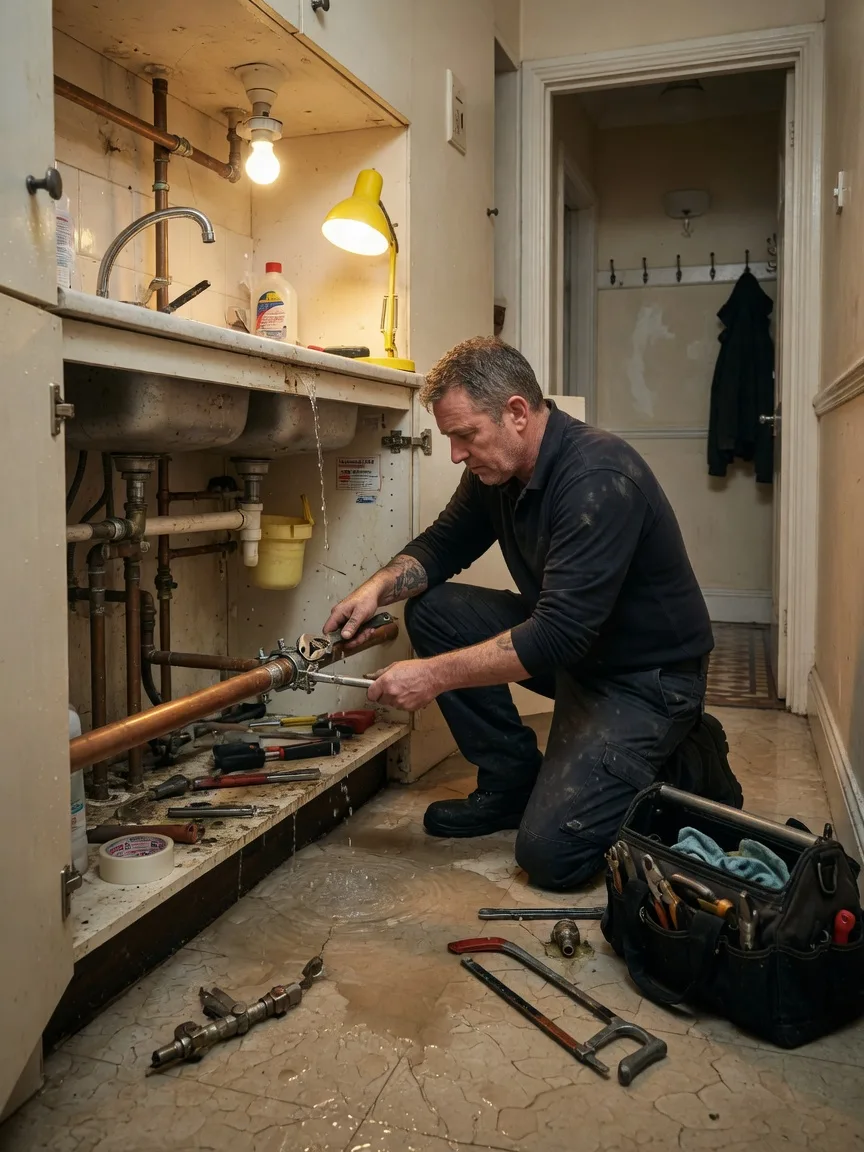
A drain repair fixes the pipe itself, not just what is stuck in it, and that is the difference between a lasting solution and a rod that has to come back every few weeks. Emergency Plumber Chelsea repairs damaged drains across SW3, SW10 and the surrounding postcodes on 020 3002 6667, answered 24 hours a day. Where drain unblocking clears a blockage, drain repair puts right the cracked pipe, collapsed section, displaced joint or root-invaded run that is causing the blockage to keep returning. We confirm the fault, usually with a camera survey, scope the work so you know before we dig, and repair or replace the failed length. Labour and parts are quoted before major work starts.
If a drain in Chelsea blocks again within days of being cleared, the pipe is almost certainly damaged rather than simply dirty. A healthy drain that is rodded or jetted stays clear for months; one that reblocks within a week has a defect catching debris, a broken section holding water, or roots growing back through a crack. Other signs point the same way: a gully or manhole that stays part-full after clearing, waste that drains slowly across several fixtures at once, a persistent drain smell in a garden or basement, or damp and staining on a wall where a soil pipe runs. When clearance only ever buys a few days, it is time to look at the pipe, not the plunger.
Damaged drains in Chelsea usually fail in one of a handful of ways, and each has its own repair. Cracked or fractured pipes let debris snag and groundwater in, often the first stage before a collapse. A collapsed section is where the pipe has lost its shape entirely, sometimes crushed by ground movement or a heavy load above, and it will not clear no matter how hard it is jetted. Displaced or open joints, where lengths have pulled apart or dropped out of line, leak and catch waste at the step. Root ingress is the classic period-garden problem, fine roots finding a hairline gap and thickening into a mat. And old pipe material can simply erode from the inside until the wall thins and fails.
Chelsea's period housing stock brings drainage materials that modern estates never had to worry about. Victorian and Georgian houses off the King's Road, around Cadogan Estate streets and along Chelsea Embankment were plumbed in salt-glazed clay, laid in short lengths with mortar joints that crack and open as the ground settles over a century and a half. Some mid-century repairs left pitch-fibre drains behind, a bitumen-and-fibre pipe that delaminates and blisters inward as it ages, closing the bore and trapping waste. Cast iron soil stacks rust from the inside and weep at the base. Roots from mature garden trees and neighbouring plane trees exploit every one of these weaknesses, which is why so many SW3 and SW10 drain faults trace back to the pipe material itself.
A CCTV drain survey is how we tell a repairable pipe from a pipe that needs replacing, and it is the honest first step before any dig. We introduce a camera into the accessible run, usually after a clear so the lens can travel, and watch the condition of the pipe on screen: where the crack is, how far along, whether a joint has dropped, how much root has come through, and whether the wall has lost integrity or the line has collapsed. The survey gives a measured position and depth, so a later excavation lands on the fault rather than guessing across a whole garden. It also produces a recording you can keep for a managing agent, freeholder or insurer, which often matters as much as the repair.
Once the survey shows what is wrong, the repair is matched to the defect, the pipe material and the access, not sold as one blanket method. A single cracked joint or a short fracture in an otherwise sound run can often be patch-lined from inside without excavation. A longer stretch of tired or root-damaged pipe may be relined along its whole length, again with no dig. A genuinely collapsed section, or a fault under a building where lining cannot pass, needs localised excavation to expose and replace that length. Accessible waste pipes under floors, in voids or on a soil stack are usually cut out and renewed in place. We explain which option fits and why, so you are not paying to dig up a garden that a liner could have saved.
Patch lining and full relining are the no-dig repairs that make sense for many Chelsea properties, where a garden may be paved, planted or shared and digging is disruptive and costly to reinstate. A patch liner is a resin-impregnated sleeve positioned over a specific crack or open joint and cured in place, bonding a new hard layer across the defect. A full liner does the same along an entire run, effectively forming a new pipe inside the old one, which is well suited to eroded clay or blistered pitch-fibre where the whole length is failing. Both avoid breaking up patios, mews cobbles or period garden walls. They depend on the pipe still holding its line, though; a liner cannot bridge a section that has already collapsed.
Localised excavation is the right answer when the pipe has lost its shape, dropped out of line, or sits where no liner can reach, and precise survey data keeps that dig small. Rather than opening a long trench on guesswork, we work to the measured position and depth from the CCTV, expose just the failed length, and replace it with matched pipe and proper joints before backfilling. In tight SW3 and SW10 plots this care matters, because drains often run close to boundary walls, under paths shared with a neighbour, or beside mature planting that is expensive to disturb. We scope the excavation and the reinstatement honestly up front, so you know whether a slab, a border or a section of path has to come up before the work begins.
Internal drain repairs, on waste pipes and soil stacks inside the property, rarely need any digging at all and are often the quieter half of the job. A cracked waste pipe under bathroom floorboards, a leaking soil pipe staining a wall in a converted flat, or a failed joint behind boxed-in pipework in a mansion block can usually be cut out and renewed in place once we have opened the smallest access needed. In period houses with lath-and-plaster and fitted joinery, and in finished apartments at Chelsea Harbour and Imperial Wharf, working tidily and opening only what we must is the difference between a small making-good bill and an expensive one. We leave you clear on what was replaced and what, if anything, still needs watching.
Repair beats repeated clearing the moment the clearing stops lasting, and the sums usually favour fixing the pipe sooner rather than later. Rodding or jetting a defective drain treats the symptom: it moves the blockage but leaves the crack, step or root gap that will catch the next lot of waste, so you pay again and again while the underlying fault worsens. A cracked joint left alone lets in groundwater and washes away the bedding, turning a patch repair into a collapse and a no-dig job into an excavation. When a survey shows a defect, dealing with it once is almost always cheaper over any real timescale than a standing arrangement of emergency clears that never hold.
Root ingress deserves its own plan because clearing alone never solves it, whatever it looks like on the day. Cutting roots out of a drain restores flow for a while, but the fine roots regrow through the same gap and the mat rebuilds, often thicker, within months, especially with the mature trees common in Chelsea gardens and along the streets off the King's Road. The lasting fix is to close the way in: patch-line or reline the cracked or open joint the roots are exploiting, or replace the affected length where the pipe is too far gone to line. We identify the entry point on the survey rather than just clearing the visible mass, so the repair addresses the actual defect the roots are using.
Shared and communal drains are common in Chelsea's leasehold conversions and mansion blocks, and working out who owns the fault comes before working out who pays. Many terraced and semi-detached period houses share a drain run with neighbours, and blocks share stacks and underground lines across several flats, while some pipes beyond the property boundary became the water company's responsibility under the 2011 transfer of private sewers. Where the fault sits determines who is liable: demised pipework, a communal run maintained by the freeholder or managing agent, or a shared or public lateral. We survey the line, show plainly where the defect is, and help you establish whether it looks private, shared or public, which is usually the first question any freeholder or insurer asks.
Coordinating a drain repair in a mansion block or managed building often means working with a porter, managing agent or freeholder as much as with the pipe. A shared underground run or a communal stack repair may need access to a basement, a light well or a neighbour's ground, and agreement on who authorises and funds the work before anything starts. We are used to the practicalities in SW3 and SW10: booking access through a concierge, providing the survey evidence an agent needs to instruct a repair, and setting out the scope clearly so a freeholder can approve it. Getting the ownership and access questions answered early is what stops a straightforward repair stalling for weeks while a defective drain keeps backing up.
Insurers increasingly cover drain damage such as collapses and root-caused failures, and clean evidence is what gets a claim moving. Many buildings policies include drainage cover, but insurers want to see what failed, where and why before they pay, and a vague description of a recurring blockage rarely satisfies them. A CCTV survey that shows the collapse, the open joint or the root ingress, with a measured position, gives you exactly the documentation a claim needs, and on request we provide an itemised record of the fault and the repair. For leasehold flats we can set out whether the failure sat on demised pipework or a communal run, which often decides whether it is your claim, the freeholder's, or shared.
Pricing for drain repairs is kept transparent, because the honest answer depends on what the survey finds rather than a number picked in advance. Daytime emergency call-outs start from £69, and nights, weekends and bank holidays from £89; agreed non-emergency jobs carry no call-out fee. Beyond that, a repair is quoted once we know the fault: a patch liner over a single joint, a full reline of a failing run, a localised excavation and section replacement, or an internal waste-pipe renewal are all priced differently, and we set out labour and parts before any major work begins. Where gas work happens to be involved in surrounding pipework our engineers are Gas Safe registered, and a suspected gas leak means leaving the property and calling the National Gas Emergency Service on 0800 111 999 first.
Our drain repair coverage is genuinely local across the Chelsea core, so a surveyor and engineer are not travelling in from miles away. We cover SW3 1 through SW3 6 and all of SW10, including Chelsea Harbour, Worlds End, Lots Road and West Brompton, along with neighbouring SW1W, SW1X, SW5 and SW7, taking in King's Road, Sloane Square, the Royal Hospital Chelsea, Brompton, the Cadogan Estate streets and the riverside blocks along Chelsea Embankment and Imperial Wharf. If a drain in your Chelsea home or block keeps blocking, smells persistently, or a survey has already shown a crack, collapse or root ingress, call Emergency Plumber Chelsea on 020 3002 6667. We answer 24 hours a day, diagnose the fault properly, and quote the repair, with clear pricing, before the work starts.
Common symptoms
- Blockages returning within days of clearance
- Dip or collapse suspected under garden path
- Waste pipe cracked under floorboards
- Root ingress known from previous survey
- Leaking soil pipe staining walls
- Offset joints seen on CCTV
What's included
- Fault confirmation (often after CCTV)
- Scoped repair quotation
- Section repair or replacement
- Reinstatement advice for dig sites
- Post-repair flow testing
How drain repairs works in Chelsea
- 01
Call us
Speak to a real person on 020 3002 6667, day or night. Tell us the fault and your postcode.
- 02
Get an ETA
We give you an honest arrival time — 45 to 90 minutes for genuine emergencies across SW3 and SW10.
- 03
Assess & make safe
A Gas Safe registered engineer arrives, isolates the fault and stops the damage, then quotes before major work.
- 04
Fixed & tidy
We complete the repair, test it, and leave your property clean — with an itemised invoice for your records.
Transparent pricing
FAQs
Do all drain repairs need excavation?
No. Internal waste and some stack repairs need no dig. External collapses often do — CCTV clarifies before major work.
Who pays for shared drain repairs?
It depends on freeholder, lease and water company boundaries. We help identify whether the fault looks private or shared.
How quickly can you attend a drain repair in Chelsea?
For active problems such as a leaking soil pipe or a collapse causing flooding, we aim to attend within 45 to 90 minutes across SW3 and SW10. Scoped, non-urgent repairs are scheduled at a time that suits you.
Can you repair the drain without digging up the garden?
Often yes. Internal waste pipes and many stack repairs need no excavation, and a CCTV survey tells us the exact defect before anyone digs. External collapses may need a dig, but we scope it so you know the extent first.
What does a drain repair cost?
Emergency call-outs start from £69 daytime and £89 nights, weekends and bank holidays, and we agree the repair price with you before major work begins. There is no call-out fee if the job runs over three hours or on agreed non-emergency work.
Do you provide an invoice for insurance or my managing agent?
Yes. We document the fault with photographs and notes and provide itemised invoices that insurers, landlords and managing agents accept, which matters for shared drains in Chelsea mansion blocks.
Which areas do you cover for drain repairs?
We serve SW3 and all of SW10, including Chelsea Harbour, Worlds End and Lots Road, plus SW1W, SW1X, SW5 and SW7. Call 020 3002 6667 to confirm cover for your street.
Also see our other Chelsea services: Emergency Plumber Chelsea, 24 Hour Plumber Chelsea, Plumbing Repairs, Plumbing Installation.
Book drain repairs in Chelsea
Call 020 3002 6667 — 24/7 dispatch across SW3, SW10 and nearby postcodes.