
— Chelsea plumbing services
Burst Pipe Repair in Chelsea
A burst pipe can flood a Chelsea flat in minutes. We isolate the supply, limit damage and complete a permanent repair across SW3, SW10 and surrounding areas — day or night on 020 3002 6667.
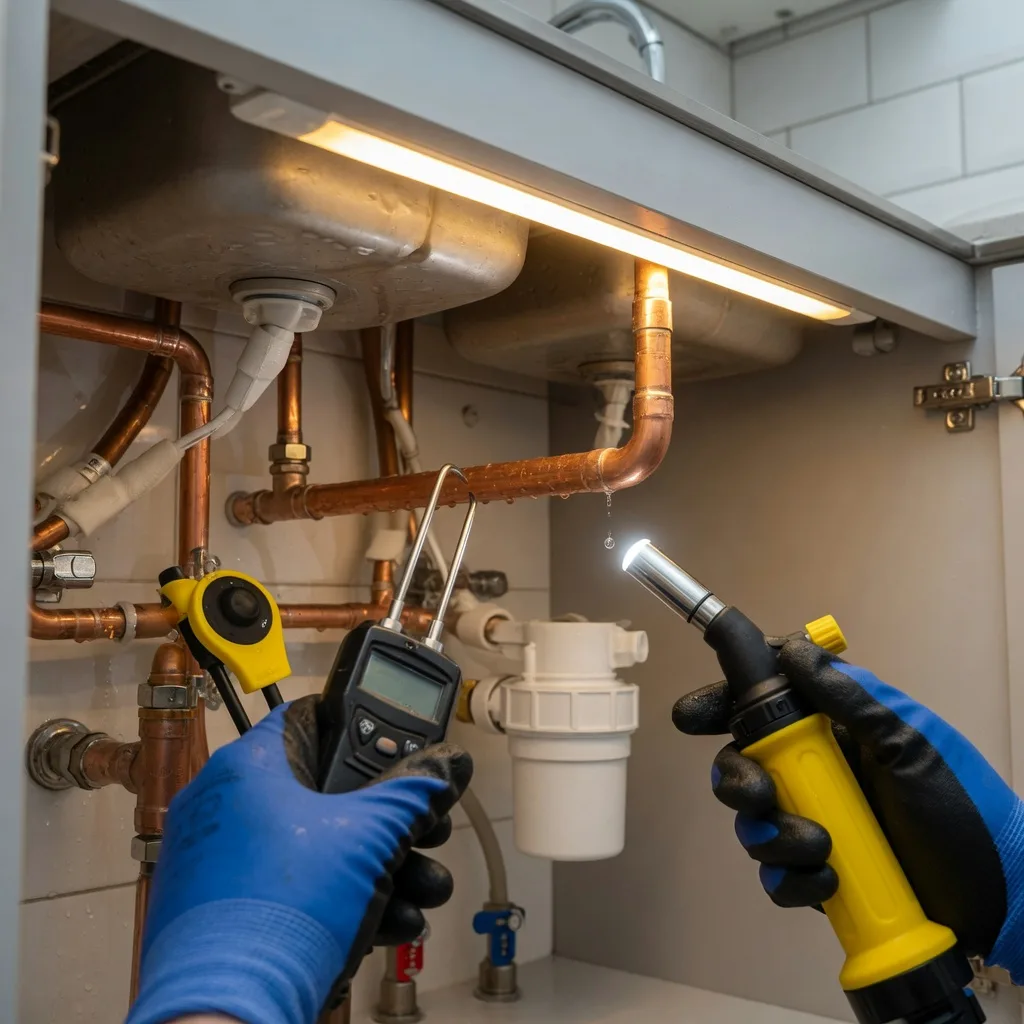
A burst pipe is a plumbing emergency that needs isolation within minutes, not a callback the next morning, because pressurised water keeps escaping until someone shuts it off. Emergency Plumber Chelsea attends burst pipes across SW3, SW10 and the surrounding postcodes 24 hours a day on 020 3002 6667, with a target arrival of 45 to 90 minutes for genuine emergencies. We stop the water, trace the failed section, repair or replace it, and pressure-test the run so the same joint does not let go again a week later. A burst pipe isolation and repair commonly starts from around £120, and you always see the price before major work begins.
Most bursts in Chelsea have one of five causes, and knowing which one you are dealing with shapes the repair. Winter freeze and thaw is the classic trigger: water freezes in an exposed loft run, an outside tap feed or an unheated basement pipe, expands, and splits the pipe or forces a joint apart, but the flood only appears when it thaws and pressure returns. Corrosion is the slow killer, thinning old copper and steel from the inside until a pinhole becomes a rupture. Then there are failed soldered or compression joints, high mains pressure hammering older pipework, and simple building movement, which matters a great deal in period houses where floors settle and pipes are pinched behind fixed panelling.
You can usually spot a burst before the ceiling comes down if you know the signs. A sudden drop in pressure at the taps, a hiss or rushing sound behind a wall or under the floor, a damp patch or a stain that grows while you watch, and a water meter that keeps spinning with every tap closed all point to a live burst. In cold weather a tap that runs then stops, or a radiator that will not fill, often means a pipe has already frozen and split upstream. The moment you see water where water should not be, treat it as urgent and get to the stopcock. Our step-by-step guide on what to do when a pipe bursts covers the first ten minutes.
The single most useful thing you can do before we arrive is turn off the stopcock, and it is worth knowing where yours is now rather than hunting for it during a flood. In most Chelsea homes the internal stopcock sits under the kitchen sink, in a hall or understairs cupboard, or near the front door in a converted flat; mansion blocks often have an additional isolation valve for the flat inside the airing cupboard or by the riser. Turn it clockwise to close. If it is seized, which is common in older properties that have never needed it, do not force it to breaking point; call us and we will free or replace it as part of the visit. If you cannot find it at all, see what to do if you can't find your stopcock.
After the stopcock, drain the system and protect the electrics, because those two steps stop most of the secondary damage. Open the lowest cold taps in the property, usually the kitchen and any ground-floor cloakroom, to bleed the remaining pressurised water out of the pipes rather than out of the burst. If water is anywhere near light fittings, sockets or the consumer unit, and you can reach the unit from a dry position, switch off the electrics; if you cannot reach it safely, leave it and tell us on the phone. Move rugs, furniture and anything valuable clear of the water, and photograph the scene for your insurer while you wait.
When our engineer arrives, the first job is to confirm isolation and find the exact point of failure before opening anything up. We check that the water is genuinely off at the right valve, then trace the run to the burst rather than guessing, using the layout of the property and, where the pipe is concealed, moisture and acoustic tracing so we open the smallest possible area of floor, wall or ceiling. Precise tracing is what keeps a burst repair a small job in a home with period floorboards, lath-and-plaster ceilings or an expensive fitted kitchen, where an unnecessary hole costs far more to make good than the plumbing itself.
The repair depends on the pipe material and how much of the run has failed, and we carry the fittings for all of it. For a clean split or a failed joint on sound copper we cut out the damaged section and fit a new piece with soldered or compression joints; for a temporary hold on an awkward run while a part is sourced, a proper repair clamp buys time safely. Plastic push-fit and barrier pipe get matched fittings. Where the burst is on tired pipework that will keep failing, replacing a longer section is the honest fix rather than patching a joint that is one cold snap from going again. Our guide to burst pipe repair costs explains how each type of repair is usually priced, and how long you can leave a burst pipe covers what a temporary clamp will and will not hold.
Chelsea homes contain a real mix of pipe materials, and each carries its own risk. Modern flats at Chelsea Harbour and Imperial Wharf tend to run copper and plastic on higher-pressure systems, so a failed joint sprays hard. Older Victorian and Georgian houses off the King's Road and around Cadogan Estate streets often still have original copper, and in the oldest properties surviving lead on the supply side, frequently with lead-to-copper transitions that corrode and weep at the join. Much of this pipework is concealed behind period fabric, panelling, boxed-in runs and under solid floors, which is exactly why careful tracing matters more here than in a new-build.
Bursts in mansion-block risers are a category of their own because one failure becomes several flats' problem in minutes. The vertical riser feeds every flat on the stack, so a split high up sends water down through ceilings floor by floor, and the flat with the burst is rarely the flat that suffers worst. If the fault is on the riser or a shared run we isolate at the appropriate valve rather than just the individual flat, which sometimes means coordinating with a porter, the managing agent or the freeholder to reach a communal cupboard. Getting the isolation point right, quickly, is what stops a single joint flooding half the building.
For the flats below a burst, speed of isolation and clear documentation are everything. Water tracks along joists and finds the nearest downlight or cornice, so damage can appear two floors down and several rooms across from the actual split. We isolate first to stop the source, then help establish what happened and where, so the neighbour below, the managing agent and both insurers are dealing with facts rather than guesswork. In a leasehold building the paperwork often matters as much as the repair, and a burst handled cleanly is the difference between a quick claim and a drawn-out dispute.
Riverside and Chelsea Harbour flats, and the blocks along Chelsea Embankment and towards Imperial Wharf, bring their own considerations. These are often higher-pressure systems with concealed runs, restricted parking, porter-controlled access and lifts that make carrying tools and materials a slower job than in a house. We are used to the practicalities: booking in with the concierge, working cleanly in finished apartments, and keeping noise reasonable where a burst has to be dealt with at night. The plumbing is usually more modern than in the period houses, but a high-pressure burst in a top-floor flat still has a long way to travel downwards.
Once the repair is made we pressure-test the run where appropriate rather than simply turning the water back on and hoping. Restoring supply to a fresh joint under full mains pressure is the moment a weak repair reveals itself, so we bring the pressure back up in a controlled way and check the joint and the surrounding pipe hold before we call the job done. We then leave the immediate work area as clean as the situation allows and tell you plainly whether ceiling voids, boxed-in runs or a riser need further inspection, so nothing is left quietly wet behind a wall.
Preventing the next burst is mostly about insulation and heat, and it costs very little compared with a flood. Lag exposed pipes in lofts, basements, garages and outside-tap feeds, since those unheated runs are where Chelsea pipes freeze first. In cold spells keep the heating ticking over at a low temperature rather than off, especially if you are away, so water never sits still long enough to freeze; even a modest background heat keeps loft and basement runs safe. Fixing dripping joints and weeping valves early matters too, because a joint that seeps in autumn is often the one that splits in January. Our guide on how to stop pipes freezing lists the runs to lag first.
We document burst pipe jobs properly because insurers and managing agents need evidence, and good paperwork protects you. On request we photograph the failure and the damage, note what caused it and what we did, and provide an itemised invoice that landlords, managing agents and insurers accept for escape-of-water claims. If you have already turned off the stopcock and taken your own photos, keep them; combined with our record they make a clean claim. For leasehold flats we can set out clearly whether the failure was on demised pipework or a communal run, which often decides who is responsible for the bill.
Pricing for burst pipe work is kept transparent because a flooding emergency is stressful enough without a surprise bill on top. Daytime emergency call-outs start from £69, nights, weekends and bank holidays from £89, and a typical burst pipe isolation and repair commonly starts from around £120 depending on access, materials and how much pipe needs replacing. The engineer assesses the fault on arrival and gives you a price, itemised or fixed, before any major work starts, and agreed non-emergency jobs carry no call-out fee. If gas is ever involved in the surrounding work, our engineers are Gas Safe registered, and a suspected gas leak means leaving the property and calling the National Gas Emergency Service on 0800 111 999 first.
Our burst pipe coverage is genuinely local across the Chelsea core, so the van is not crawling in from miles away while your ceiling fills. We cover SW3 1 through SW3 6 and all of SW10, including Chelsea Harbour, Worlds End, Lots Road and West Brompton, along with neighbouring SW1W, SW1X, SW5 and SW7, taking in King's Road, Sloane Square, the Royal Hospital Chelsea, Brompton, the Cadogan Estate streets and the riverside blocks along Chelsea Embankment and Imperial Wharf. If a pipe has burst in your Chelsea home or flat right now, turn off the stopcock if you safely can and call Emergency Plumber Chelsea on 020 3002 6667, we answer 24 hours a day, give you a real arrival time, and send an engineer who can isolate, repair and pressure-test the fault with clear pricing before the work starts.
Common symptoms
- Water spraying from wall, ceiling or cupboard
- Sudden drop in water pressure
- Hissing behind plaster or under floors
- Water meter spinning with all taps off
- Rapidly expanding ceiling stain
- Flooded basement or utility cupboard
What's included
- Emergency isolation and make-safe
- Pipe repair or section replacement
- Pressure test where appropriate
- Clean-up of the immediate work area
- Photos and notes for insurance on request
How burst pipe repair works in Chelsea
- 01
Call us
Speak to a real person on 020 3002 6667, day or night. Tell us the fault and your postcode.
- 02
Get an ETA
We give you an honest arrival time — 45 to 90 minutes for genuine emergencies across SW3 and SW10.
- 03
Assess & make safe
A Gas Safe registered engineer arrives, isolates the fault and stops the damage, then quotes before major work.
- 04
Fixed & tidy
We complete the repair, test it, and leave your property clean — with an itemised invoice for your records.
Transparent pricing
FAQs
Should I turn the stopcock off?
Yes, if you can do so safely. Then call 020 3002 6667 for permanent repair. If the stopcock is seized, we can free or replace it as part of the emergency visit.
Do you help with insurance reports?
Yes — photos and itemised invoices on request so you can support a claim after flood damage in Chelsea properties.
How fast can you reach a burst pipe in Chelsea?
We target 45 to 90 minutes for genuine emergencies across SW3 and SW10, subject to traffic and engineer availability. Call 020 3002 6667 and you will get an honest arrival time before we set off.
Are you available 24/7 for a burst pipe?
Yes. We answer the phone and dispatch engineers 24 hours a day, including nights, weekends and bank holidays, because a live burst cannot wait until morning.
What does an emergency burst pipe call-out cost?
Emergency call-outs start from £69 in the daytime and from £89 at nights, weekends and bank holidays, with the price agreed before any major work. There is no call-out fee at all if the job takes over 3 hours.
What causes burst pipes in Chelsea properties?
Common causes are frozen external runs in cold snaps, failed joints in basements, ageing lead-to-copper transitions and high-pressure bursts on rising mains inside mansion blocks. We repair the failed section and pressure-test the run so it does not fail again quickly.
What should I do while I wait for the engineer?
Turn off the stopcock if you can reach it safely, open a downstairs cold tap to drain the system, and move valuables away from the water. If water is near electrics and you can reach the consumer unit from a dry position, switch it off.
Also see our other Chelsea services: Emergency Plumber Chelsea, 24 Hour Plumber Chelsea, Plumbing Repairs, Plumbing Installation.
Book burst pipe repair in Chelsea
Call 020 3002 6667 — 24/7 dispatch across SW3, SW10 and nearby postcodes.