
— Chelsea plumbing services
Leaking Water Mains Repair in Chelsea
A leak on the rising main or internal supply side can dump large volumes of water under floors and into basements. Emergency Plumber Chelsea isolates and repairs leaking mains-side pipework across SW3 and SW10 on 020 3002 6667.
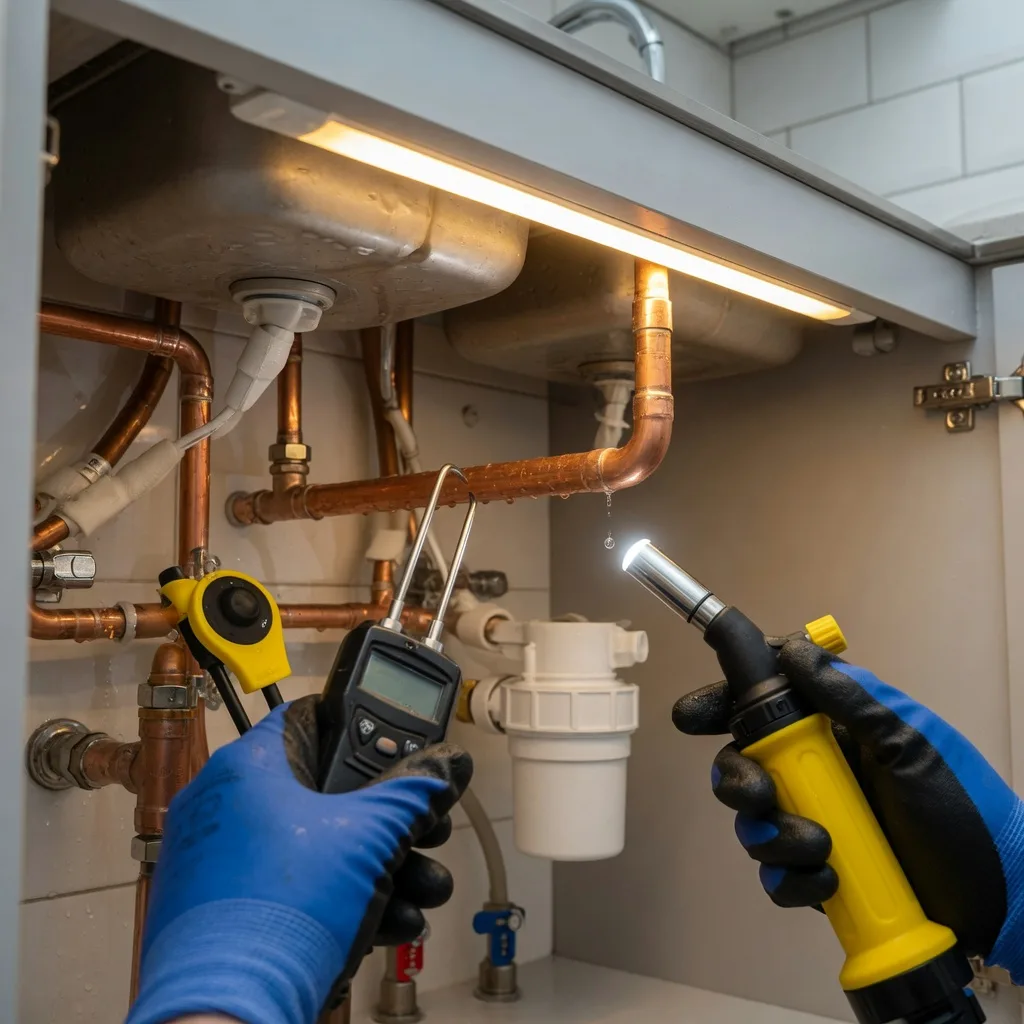
A leaking water main is the private supply pipe that carries water from the boundary stop valve in the street into your property, and a fault on it can quietly soak foundations, basements and under-floor voids for weeks before anyone notices. Emergency Plumber Chelsea locates and repairs supply-side and rising-main leaks across SW3, SW10 and the surrounding postcodes on 020 3002 6667, 24 hours a day, with a target arrival of 45 to 90 minutes for genuine emergencies. We confirm where the leak sits, isolate it, and repair or replace the failed length in materials rated for continuous mains pressure. Daytime emergency call-outs start from £69, nights and weekends from £89, and you see the price before major work starts.
The supply pipe and the rising main are not the same thing, and knowing the difference tells you where the problem is. The supply pipe runs underground from the external stop valve, usually under the pavement or front garden, up to where it enters the building. From that entry point it becomes the internal rising main, which carries mains-pressure water up to the kitchen tap, the loft tank or the combi boiler. A leak underground on the supply pipe shows as soft ground, unexplained bills and pressure loss; a leak on the rising main shows as water under floorboards, damp in a basement or hissing near the internal stopcock. Both are held at full mains pressure, so both waste water continuously until isolated.
The clearest sign of a supply-side leak is a water meter that keeps moving when every tap, appliance and toilet in the property is switched off. If you can find your meter, note the reading last thing at night, use no water overnight, and check it in the morning; movement with everything closed means water is escaping between the meter and your taps. Other signs are a steady drop in pressure at the kitchen cold tap, a water bill that has climbed with no change in use, and in cold weather a hiss you can hear near the stopcock cupboard. Any one of these is worth a call before the damage reaches joists, plaster or a finished basement.
Outside the building, a leaking supply pipe often shows itself in the ground long before it shows indoors. Look for a patch of garden, path or driveway that stays wet or unusually green when everywhere else is dry, ground that feels spongy underfoot along the line of the pipe, or water tracking out of a front lightwell or basement vault. In the hard winters that hit Chelsea's older streets, a supply pipe running shallow under a path can freeze and split, then leak only when it thaws. Damp appearing low down on a basement wall along the route of the incoming main is another common signal in the period houses off the King's Road and around the Cadogan Estate streets.
Ownership of the pipework has a clear boundary, and it decides who pays. As a general rule the section of pipe from the water main in the street up to the boundary of your property is Thames Water's responsibility, while the supply pipe from that boundary into and around your home is the homeowner's to maintain and repair. That means a leak in the footway close to the main is usually a matter for the water company, but a leak in your front garden, under your path or inside the building falls to you. We help you read which side of the line a leak sits on, so you contact Thames Water where the fault is genuinely theirs and are not left waiting on the wrong party while water escapes.
Where the leak is on your side of the boundary, we locate it before opening anything, because guesswork on a buried pipe is expensive. We start with isolation and meter tests to confirm the leak is on the supply run rather than a fitting inside, then narrow the position using the line of the pipe, the stop valve, and visual checks at the entry point and in any basement or vault the pipe passes through. Pinning the leak down to a short length is what keeps the repair contained, which matters a great deal under a Chelsea front garden with mature planting, York-stone paving or a tiled path that costs far more to reinstate than the plumbing itself.
Many older Chelsea properties still have their original lead supply pipe, and a leak is often the moment that becomes clear. Victorian and Georgian houses across SW3 were plumbed with lead on the supply side, and after a century or more of ground movement, corrosion and past disturbance, lead pipes weep at joints, crack at bends and thin until they seep. Lead-to-copper transitions made during earlier repairs are a frequent weak point, corroding where the two metals meet. When we find a leaking lead supply pipe we will usually recommend replacing the whole run rather than patching it, both because a patched lead pipe tends to fail again nearby and because a modern plastic supply pipe removes lead from your drinking-water route at the same time.
Ageing iron and steel mains are the other legacy material we meet, particularly on longer runs and in buildings that have never had the supply upgraded. Galvanised iron corrodes from the inside, narrowing the bore so pressure drops at the tap, and rusts through from the outside where it sits in damp ground, producing pinhole leaks that grow. Once an iron main starts leaking in one place it is rarely sound elsewhere, so spot repairs buy little time. Replacing a corroded iron or lead main with a new 25mm MDPE (blue plastic) supply pipe restores proper pressure and flow, resists corrosion, and gives a clean, jointless run from the boundary into the property that is far less likely to leak again.
Where a full supply pipe needs replacing, moling lets us renew it with very little digging, which matters on Chelsea's finished frontages. Mole-ploughing, or impact moling, drives a new pipe underground along the line of the old one using a launch pit at the boundary and a small entry point at the building, so a York-stone path, a planted front garden or a resin driveway is left largely intact instead of being trenched from end to end. Not every site suits moling: made ground, other buried services, tree roots and very short or sharply bent runs can force an open cut. We assess the ground and the route first and tell you honestly which method fits, along with what reinstatement the finished job will need.
When a full replacement is not warranted, we repair the failed section properly rather than leaving a compromise on a pressurised pipe. A clean split or a corroded joint on sound copper or plastic can be cut out and remade with fittings rated for mains pressure, and the repaired run brought back up to pressure in a controlled way to prove the joint holds before we finish. On the internal rising main we also take the chance to put isolation right: many Chelsea homes have only a single stopcock, so an extra service valve on the rising main means the next fault can be isolated in seconds without shutting off the whole property. Every repair is pressure-checked, not simply turned back on and hoped over.
A seized or hidden stopcock is one of the most common problems we deal with on a mains leak, because it is the very valve you need when water is escaping. In older Chelsea houses the internal stopcock and the first length of rising main are often tucked into a basement, a vault under the pavement or an understairs cupboard, and a valve that has not been turned in decades frequently will not move. Do not force a seized stopcock hard enough to snap the spindle, which turns one emergency into two. We free, repair or replace seized stopcocks as part of the visit, and where the internal valve is unreliable we can fit a new one so you can isolate the supply quickly next time.
In mansion blocks and converted flats the supply arrangement is shared, and that changes how a mains leak is handled. A red-brick mansion block off Sloane Square or along the Chelsea Embankment typically has one incoming main feeding a communal riser, with individual branches and flat-level valves off it, so a leak on the shared run affects several flats and sits in a communal cupboard or basement rather than inside any one flat. Isolating it often means reaching a valve controlled by the porter, the managing agent or the freeholder. We are used to coordinating that access, isolating at the correct point on the shared supply, and documenting clearly whether the leaking pipe was demised to a single flat or part of the communal system, which usually decides who carries the cost.
While you wait for us, a few simple steps limit the damage from a leaking main. Turn off the internal stopcock if you can reach it and it moves freely, turning clockwise to close, then open the kitchen cold tap to drain the pressure out of the rising main rather than out of the leak. If water is near light fittings, sockets or the consumer unit and you can reach the unit from a dry position, switch off the electrics; if you cannot do so safely, leave it and tell us on the phone. Move rugs, stored items and anything valuable clear of a wet basement, and photograph the water and any damp walls for your insurer. If the stopcock is seized, leave it and call us.
Good documentation matters on a mains leak because escape-of-water claims and shared-pipe disputes both turn on evidence. On request we photograph the leak and the damage, record what failed and what we did, and provide an itemised invoice that landlords, managing agents and insurers accept. For leasehold flats we set out plainly whether the fault was on demised pipework or a communal supply run, which often settles who is responsible before it becomes an argument. Where the leak turns out to sit on Thames Water's side of the boundary, we tell you that clearly too, so you are pursuing the right party rather than paying for a repair that was never yours to fund.
Our leaking-water-mains coverage is genuinely local across the Chelsea core, so help is not crawling in from miles away while your basement fills. We cover SW3 1 through SW3 6 and all of SW10, including Chelsea Harbour, Worlds End, Lots Road and West Brompton, along with neighbouring SW1W, SW1X, SW5 and SW7, taking in King's Road, Sloane Square, the Royal Hospital Chelsea, Brompton, the Cadogan Estate streets and the riverside blocks along Chelsea Embankment and Imperial Wharf. Our engineers are fully qualified, insured, and Gas Safe registered where gas work is involved. If your water meter is spinning with the taps off, your bill has jumped or the ground outside is wet, call Emergency Plumber Chelsea on 020 3002 6667 for isolation, location and a clear repair price before the work starts.
Common symptoms
- Continuous meter movement with all outlets closed
- Water under floorboards near the rising main
- Damp basement walls along the supply route
- Hissing near the stopcock cupboard
- Sudden high water bills without appliance faults
- Soft ground or damp near external supply entry
What's included
- Stopcock and isolation checks
- Supply-side leak location support
- Section repair or replacement
- New isolation valves where needed
- Guidance if the leak is water-company side
How leaking water mains repair works in Chelsea
- 01
Call us
Speak to a real person on 020 3002 6667, day or night. Tell us the fault and your postcode.
- 02
Get an ETA
We give you an honest arrival time — 45 to 90 minutes for genuine emergencies across SW3 and SW10.
- 03
Assess & make safe
A Gas Safe registered engineer arrives, isolates the fault and stops the damage, then quotes before major work.
- 04
Fixed & tidy
We complete the repair, test it, and leave your property clean — with an itemised invoice for your records.
Transparent pricing
FAQs
Is a mains leak always an emergency?
Yes if water is active or pressure is lost. Call 020 3002 6667 immediately — early isolation limits structural and insurance damage.
What if my stopcock will not turn?
Do not force it hard enough to snap the spindle. We free, repair or replace seized stopcocks as part of emergency attendance.
How quickly can you attend a leaking water main?
We aim to reach genuine emergencies within 45 to 90 minutes across SW3 and SW10, subject to traffic and availability. A live mains leak can flood a basement fast, so call 020 3002 6667 straight away for isolation.
Do you cover my postcode for mains repairs?
Yes. We cover SW3 and SW10 including Chelsea Harbour, Worlds End, Lots Road and West Brompton, along with SW1W, SW1X, SW5 and SW7. Tell us your postcode when you call.
What does a mains leak repair cost?
Emergency call-outs start from £69 daytime and from £89 nights, weekends and bank holidays, with the price agreed before major work. There is no call-out fee if the job runs over 3 hours.
How do you find a hidden mains leak?
We locate the leak path using isolation tests, water meter observation and visual checks on accessible runs, then repair or replace the failed section with materials suited to mains pressure. This keeps the repair targeted rather than opening up the whole floor.
Do you provide an invoice for insurers or managing agents?
Yes. We supply itemised invoices with photos and notes on request so you can support an insurance claim or satisfy a managing agent after supply-side water damage.
Also see our other Chelsea services: Emergency Plumber Chelsea, 24 Hour Plumber Chelsea, Plumbing Repairs, Plumbing Installation.
Book leaking water mains repair in Chelsea
Call 020 3002 6667 — 24/7 dispatch across SW3, SW10 and nearby postcodes.