
— Chelsea advice
How Does Central Heating Work?
Central heating heats the whole home from one source. In most UK homes that source is a gas boiler, which heats water that a pump then pushes through pipes to the radiators. The water gives off its heat in each room and flows back to the boiler, cooler, to be heated again. A programmer decides when the system runs, a room thermostat tells the boiler when the house is warm enough, and thermostatic valves on the radiators fine-tune each room. There are three common layouts, combi, system and regular, and knowing which you have makes it far easier to understand faults and talk to an engineer. If your heating has stopped, call Emergency Plumber Chelsea on 020 3002 6667.
Updated July 2026 · Emergency Plumber Chelsea
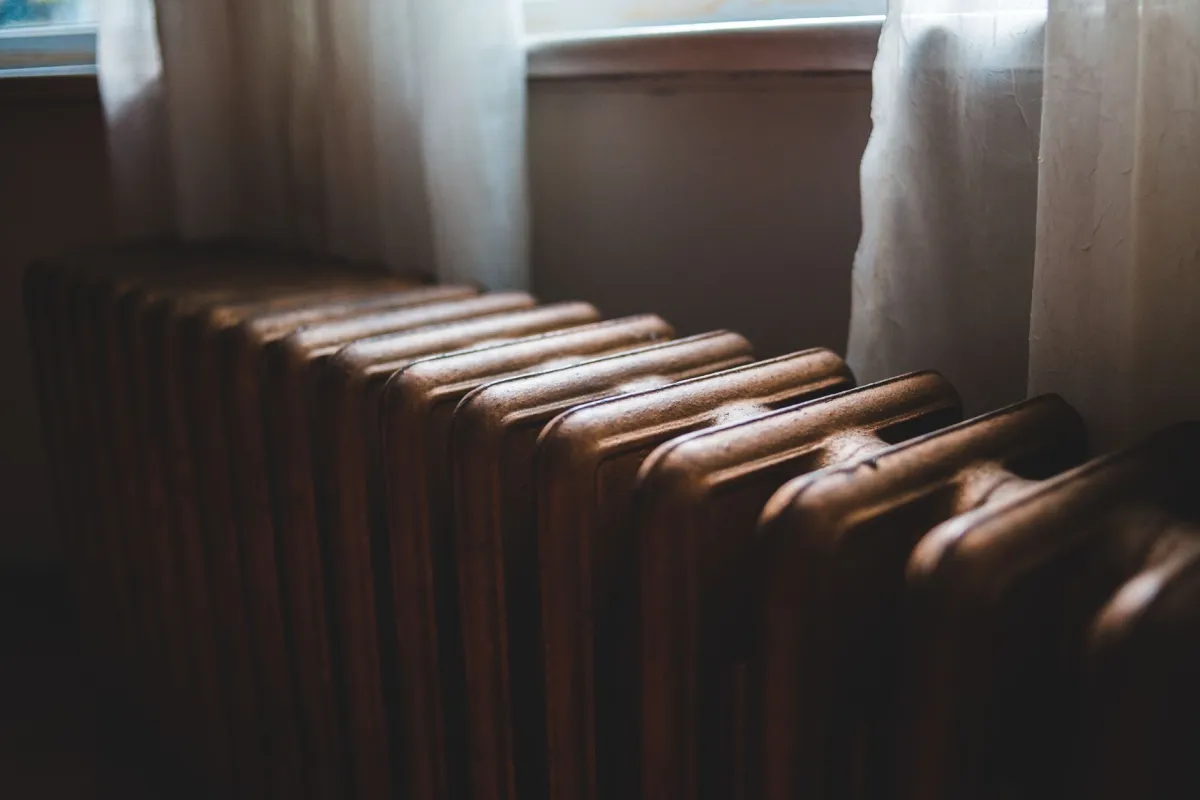
The basic loop. A wet central heating system is a closed loop of water. The boiler burns gas to heat the water inside its heat exchanger. The pump moves that hot water out along the flow pipe to each radiator in turn. Inside the radiator the water gives off heat to the room, mostly by warming the air around it, and the cooler water leaves through the return pipe and goes back to the boiler. The same water goes round and round for years; it is only topped up when some is lost through bleeding, a leak or a repair. That is why the water in a radiator comes out dark when you bleed it: it has been circulating through steel and iron for a long time.
The boiler. The boiler is the heat source. Modern boilers are condensing boilers, which recover extra heat from the exhaust gases and run most efficiently when the water coming back to them is relatively cool. Our guide to what a condensing boiler is explains why that matters. Some Chelsea homes have no gas and use electric heating, and a growing number use heat pumps; the loop of water and radiators works in the same way whatever heats it.
The pump and the pipes. The pump is what moves the water. In a combi or system boiler it is built into the boiler casing; in older regular systems it is usually a separate unit in the airing cupboard. Pipes run under floors and inside walls to every radiator. Many Chelsea houses have a mixture: original larger copper pipes, microbore pipework from a 1970s or 1980s refit, and newer plastic runs added when a basement was converted or a bathroom moved. That mix is one reason some radiators heat slower than others, and it is what balancing the system corrects. Our guide on how to balance radiators explains how.
The radiators and their valves. Each radiator has two valves. The thermostatic radiator valve, the one with numbers on it, senses the room temperature and closes as the room warms, so a bedroom set to 2 stays cooler than a living room set to 4. The lockshield valve at the other end is set once to control how much water the radiator gets and is then left alone. At the top of each radiator is a small bleed valve for letting out air. Our guide to a thermostatic radiator valve not working covers the most common valve fault.
The controls. The programmer or timer sets the times when the heating is allowed to run. The room thermostat, usually in a hallway or living room, switches the boiler off when that room reaches the set temperature and back on when it cools. The two work together: the programmer decides when, the thermostat decides how warm. Smart controls combine both and add features such as control from a phone. On systems with a hot water cylinder, a cylinder thermostat and one or more motorised zone valves decide whether the boiler is heating the radiators, the hot water or both. Our guide on how a room thermostat works explains how to set it.
System type 1: combi boiler. A combination boiler does two jobs. It heats the radiators through the closed loop, and it heats hot water for the taps instantly as it flows through, straight from the mains. There is no hot water cylinder and no tanks in the loft. Combis suit most flats and smaller houses, and they are by far the most common type in Chelsea mansion flats. Our guide on how a combi boiler works goes into more detail.
System type 2: system boiler with a cylinder. A system boiler heats the radiators and also heats a separate hot water cylinder, usually an unvented cylinder at mains pressure. The heating side is sealed and pressurised, with the pump and expansion vessel inside the boiler. This suits larger homes with several bathrooms that need plenty of hot water at once, which describes many Chelsea townhouses. Our comparison of a combi and a system boiler sets out the trade-offs.
System type 3: regular or heat-only boiler. The traditional layout, still common in period houses, uses a regular boiler with a vented hot water cylinder, a cold water storage tank in the loft, and a small feed and expansion tank that keeps the heating circuit topped up. The heating is open to the atmosphere rather than pressurised, so there is no pressure gauge to watch. These systems are simple and robust, but the loft tanks can freeze, overflow or grow tired, and the hot water pressure depends on the height of the tank above the taps. Our guide to mains pressure and gravity-fed plumbing explains how to tell which you have, and our guide to the types of boiler compares all three side by side.
Sealed systems and pressure. Combi and system boilers run on a sealed, pressurised heating circuit. The gauge on the front of the boiler should usually read around 1 to 1.5 bar when the system is cold, rising a little as it heats. Pressure that keeps dropping means water is escaping somewhere, and pressure that climbs too high can make the relief valve discharge. Our guide on what pressure your boiler should be explains the readings.
Communal heating in mansion blocks. Some Chelsea mansion blocks and newer developments heat every flat from a central plant room. Hot water is piped to each flat, where a heat interface unit or a set of valves passes the heat to the flat's own radiators and, often, its hot water. You still control your own radiators and thermostat, but the plant, the risers and the heating dates are the managing agent's responsibility. If your flat has no boiler and no gas meter, this is probably what you have.
What goes wrong. Most central heating problems fall into a handful of groups. Air collects at the top of radiators and needs bleeding. Sludge settles at the bottom and stops them heating fully. Valves stick, pumps weaken, zone valves fail, and the boiler itself can lose pressure, lock out or stop firing. Our guides to a boiler not working, one radiator not heating up and no heating but hot water cover the checks to do yourself first.
Getting help. Emergency Plumber Chelsea repairs and services central heating systems of every type, from combi boilers in mansion flats to regular systems with loft tanks in period houses, across Chelsea, Knightsbridge, South Kensington, Sloane Square and Fulham. Gas work is carried out by Gas Safe registered engineers. We explain what we find and the options before any work starts, and there is no call-out fee on jobs over 3 hours. See our central heating and central heating repairs pages, or call 020 3002 6667.
Quick tips
- A pressure gauge on the boiler means a sealed system; tanks in the loft mean an open-vented one.
- The programmer sets when the heating runs; the room thermostat sets how warm it gets.
- Thermostatic radiator valves control each room; lockshield valves are set once and left alone.
- Radiators cold at the top need bleeding; cold at the bottom usually means sludge.
- If you have no boiler and no gas meter in a mansion flat, you are probably on communal heating.
FAQs
How does a central heating system work in simple terms?
A boiler heats water, a pump pushes it through pipes to the radiators, the radiators give off the heat into each room, and the cooled water flows back to the boiler to be heated again. Controls decide when it runs and how warm each room gets.
What are the three types of central heating system?
Combi boilers, which heat radiators and give instant hot water with no cylinder; system boilers, which are sealed and heat a separate hot water cylinder; and regular or heat-only boilers, which use a vented cylinder and tanks in the loft.
How do I know what type of central heating I have?
If there is no hot water cylinder, it is almost certainly a combi. If there is a cylinder but no tanks in the loft and a pressure gauge on the boiler, it is a system boiler with an unvented cylinder. If there are tanks in the loft and a cylinder in the airing cupboard, it is a regular open-vented system.
Does central heating also heat the hot water?
Usually, yes. A combi heats hot water on demand, while system and regular boilers heat water stored in a cylinder. Some homes also have an electric immersion heater in the cylinder as a backup.
Why do some radiators get hotter than others?
Radiators nearer the boiler in pipework terms get more flow unless the system is balanced. Air, sludge, stuck valves or a weak pump can also leave some radiators cooler. Bleeding and balancing fix most cases.
Need an engineer in Chelsea?
Call 020 3002 6667 for 24/7 emergency dispatch across SW3, SW10 and nearby postcodes.