
— Chelsea advice
What Is a Condensing Boiler? Condensing vs Combi Explained
A condensing boiler is a gas boiler that captures extra heat from its own exhaust gases before they leave the flue. It cools those gases so much that the water vapour in them condenses, and it drains that water away through a small plastic pipe, which is where the name comes from. It is not an alternative to a combi: combi, system and regular (heat-only) describe how a boiler supplies your hot water, while condensing describes how it burns gas, so almost every new combi is also a condensing boiler. In England, new and replacement gas boilers have had to be condensing since 2005, so if your boiler is younger than that, it almost certainly is one. For boiler advice or a replacement quote in Chelsea, call Emergency Plumber Chelsea on 020 3002 6667.
Updated July 2026 · Emergency Plumber Chelsea
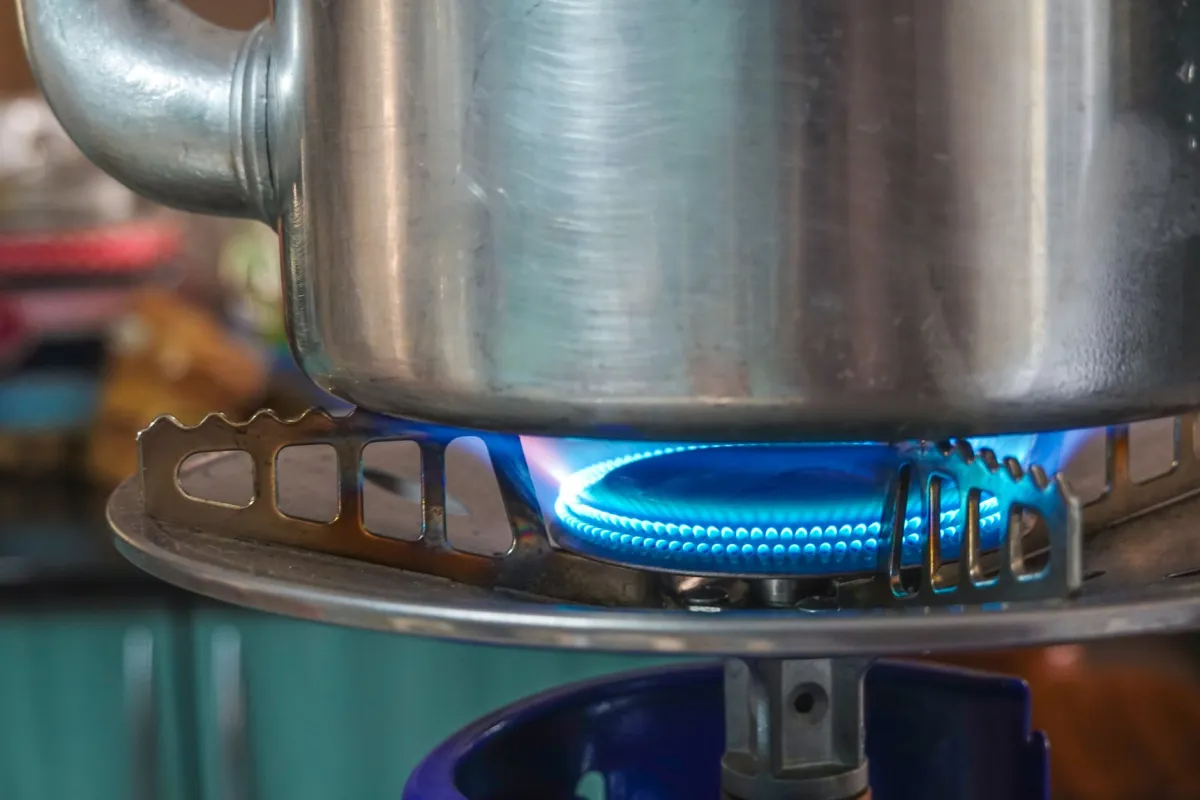
How a condensing boiler works. When gas burns it produces hot exhaust gases, mostly carbon dioxide and water vapour. An older non-condensing boiler sends those gases straight out of the flue while they are still very hot, which wastes a lot of heat. A condensing boiler passes them over a larger heat exchanger, or a second one, where the cool water returning from your radiators absorbs that heat. As the gases cool, the water vapour turns back into liquid and gives up even more heat as it does. The result is that more of the gas you pay for ends up in your radiators and less goes out of the flue. Most combi boilers are condensing boilers, and our guide on how a combi boiler works explains how they switch between heating and hot water.
Condensing vs combi is the wrong comparison. It is one of the most common points of confusion when people start looking at new boilers. A combi boiler heats water on demand straight from the mains, with no tank or cylinder. A system boiler heats a hot water cylinder, usually in an airing cupboard, with the heating circuit sealed and pressurised. A regular or heat-only boiler works with a cylinder and cold water tanks in the loft. Any of those three can be condensing, and nearly all modern ones are. So the real questions are which type suits your home and hot water use, and whether your current boiler is an older non-condensing model worth replacing. Our guide to combi vs system boilers covers the first question in detail.
How to tell if your boiler is a condensing boiler. Look underneath or beside it for a plastic pipe, usually white or grey and about the width of a thumb, that runs to a drain, a sink waste or outside. That is the condensate pipe, and only condensing boilers have one. Other clues: the flue terminal outside is plastic-lined or has a plastic-finished outlet, you see a white plume of vapour from the flue on cold days, and the boiler was fitted from 2005 onwards. An older boiler with a visible pilot light, a metal flue and no condensate pipe is almost certainly non-condensing. The make and model on the front, or the data plate inside the lower cover, will confirm it.
The plume from the flue is normal. On a cold morning a condensing boiler's flue gives off a visible cloud of water vapour. It is not smoke and not a sign of a fault. It can be a nuisance if the flue points at a neighbour's window, a walkway or a front door, which is why flue position is given careful thought on Chelsea terraces, mews houses and flats. In a conservation area or on a listed building there can be extra rules about where a flue can go; our guide on boiler flues in conservation areas explains what to expect.
The condensate pipe is the one weak point. The water a condensing boiler produces is mildly acidic, so it runs through plastic pipe to a drain. Where that pipe runs outside, or through a cold garage or basement vault, it can freeze in a hard frost and the boiler locks out, often with a gurgling noise. Thawing the pipe with warm water and resetting the boiler usually fixes it, and lagging or rerouting the pipe stops it happening again. Our guide to a frozen condensate pipe shows how. Never block or disconnect the condensate pipe, and do not let it drain into a place where the water can pool against brickwork.
A condensing boiler only condenses when the water coming back to it is cool enough. If the radiators run very hot all the time, the water returning to the boiler stays too warm to cool the exhaust gases, and the boiler works more like an old non-condensing model. That is why engineers often suggest a lower flow temperature on the boiler for heating, with radiators that are sized properly for the rooms, and good controls such as a room thermostat and TRVs. In many homes the heating flow temperature can come down a little without the house feeling any colder, but it depends on the radiators and the building. In a large period house with small radiators, an engineer should look at it rather than guessing. Our guide to how a room thermostat works explains how the controls fit together.
Is it worth replacing a non-condensing boiler? If your boiler is non-condensing, it is now at least twenty years old, and the case for replacing it is usually about reliability and parts as much as efficiency. Parts for older models get harder to find, and a boiler that has run for that long tends to need more repairs each winter. Our guides on how long boilers last and when to replace your boiler set out the signs. If your boiler is already condensing and working well, there is no need to replace it just because a newer model exists; an annual service keeps it running efficiently.
Things to think about when choosing a new condensing boiler. The type (combi, system or regular) should follow your home and hot water use: a combi suits a flat or smaller house with one bathroom in use at a time, while larger homes with several bathrooms often do better with a system boiler and cylinder. The output should match the heat the home actually needs, not simply the old boiler's rating. The flue route and condensate route both need planning, especially in basement flats and mansion blocks where the nearest outside wall or drain may be some distance away. And the installation should be done by a Gas Safe registered engineer, registered with Building Control, with the warranty registered with the manufacturer. Our guide to what size boiler you need covers the sizing side.
Emergency Plumber Chelsea installs, services and repairs condensing boilers across Chelsea, Knightsbridge, South Kensington, Sloane Square and Fulham. We can tell you what you have, whether it is worth keeping, and what would suit your home if it is not, and we explain the options before any work starts. There is no call-out fee on jobs over 3 hours. See our boiler installation and boiler service pages, or call 020 3002 6667.
Quick tips
- Combi, system and regular describe how a boiler supplies hot water; condensing describes how it burns gas.
- A plastic condensate pipe under the boiler means it is a condensing boiler.
- A white plume from the flue on cold days is water vapour, not smoke.
- Lag or reroute an outside condensate pipe before winter so it does not freeze and lock the boiler out.
- Ask your engineer about the heating flow temperature at the next service; lower return temperatures help the boiler condense.
FAQs
What is the difference between a condensing boiler and a combi boiler?
They describe different things. A combi heats hot water on demand with no cylinder, while condensing describes the technology that recovers heat from the exhaust gases. Most modern combi boilers are condensing boilers, and so are most modern system and regular boilers.
How do I know if I have a condensing boiler?
Look for a plastic condensate pipe running from the underside of the boiler to a drain or outside. Only condensing boilers have one. A boiler fitted in England since 2005 is almost certainly condensing, and the model details on the front or inside the lower cover will confirm it.
Why is steam coming out of my boiler flue?
On a condensing boiler, a white plume from the flue in cold weather is water vapour and is normal. If you see dark smoke, soot around the flue or the boiler casing, or a yellow or orange flame, switch the boiler off and get it checked, because those can be signs of poor combustion.
Are condensing boilers more likely to break down?
They have more to them than old boilers, including the condensate pipe, which can freeze or block. With an annual service and a properly routed and lagged condensate pipe, a condensing boiler is reliable, and modern models are far more efficient than the non-condensing boilers they replaced.
Need an engineer in Chelsea?
Call 020 3002 6667 for 24/7 emergency dispatch across SW3, SW10 and nearby postcodes.