
— Chelsea advice
Carbon Monoxide From a Boiler: Warning Signs and What to Do
If you think carbon monoxide is coming from your boiler or another gas appliance, turn the appliance off if you safely can, open doors and windows, get everyone out into fresh air and call the National Gas Emergency Service on 0800 111 999. If anyone has symptoms such as a headache, dizziness, nausea or breathlessness, get medical help straight away and say you suspect carbon monoxide. The gas has no smell, colour or taste, so the warning signs below and a working carbon monoxide alarm are what protect you. Once the network engineer has made the appliance safe, Emergency Plumber Chelsea can inspect and repair it across SW3 and SW10 on 020 3002 6667.
Updated July 2026 · Emergency Plumber Chelsea
Carbon monoxide, often shortened to CO, is produced when a fuel such as gas, oil, coal or wood burns without enough oxygen. A gas boiler that is working properly burns its fuel cleanly and sends the fumes out through the flue. When the burner is dirty, the air supply is restricted, the flue is blocked or leaking, or a component has failed, combustion becomes incomplete and carbon monoxide is produced instead. If the flue cannot carry it away, it builds up in the room. This is different from a gas leak. A gas leak smells, because a smell is added to mains gas. Carbon monoxide gives you no smell at all, which is what makes it so dangerous. If you can smell gas, follow our guide on what to do if you smell gas in your house.
The symptoms of carbon monoxide exposure are easy to mistake for flu, food poisoning or tiredness. The most common are a tension-type headache, dizziness, feeling sick or being sick, tiredness and confusion, stomach pain, and shortness of breath. Higher levels can cause loss of balance, a fast heart rate, collapse and loss of consciousness, and very high levels can kill. The clues that point to CO rather than an illness are patterns: symptoms that ease when you go out and come back when you return home, several people in the household or pets feeling unwell at the same time, and symptoms that are worse when the heating or a gas fire has been on. If that sounds familiar, treat it as a possible CO problem.
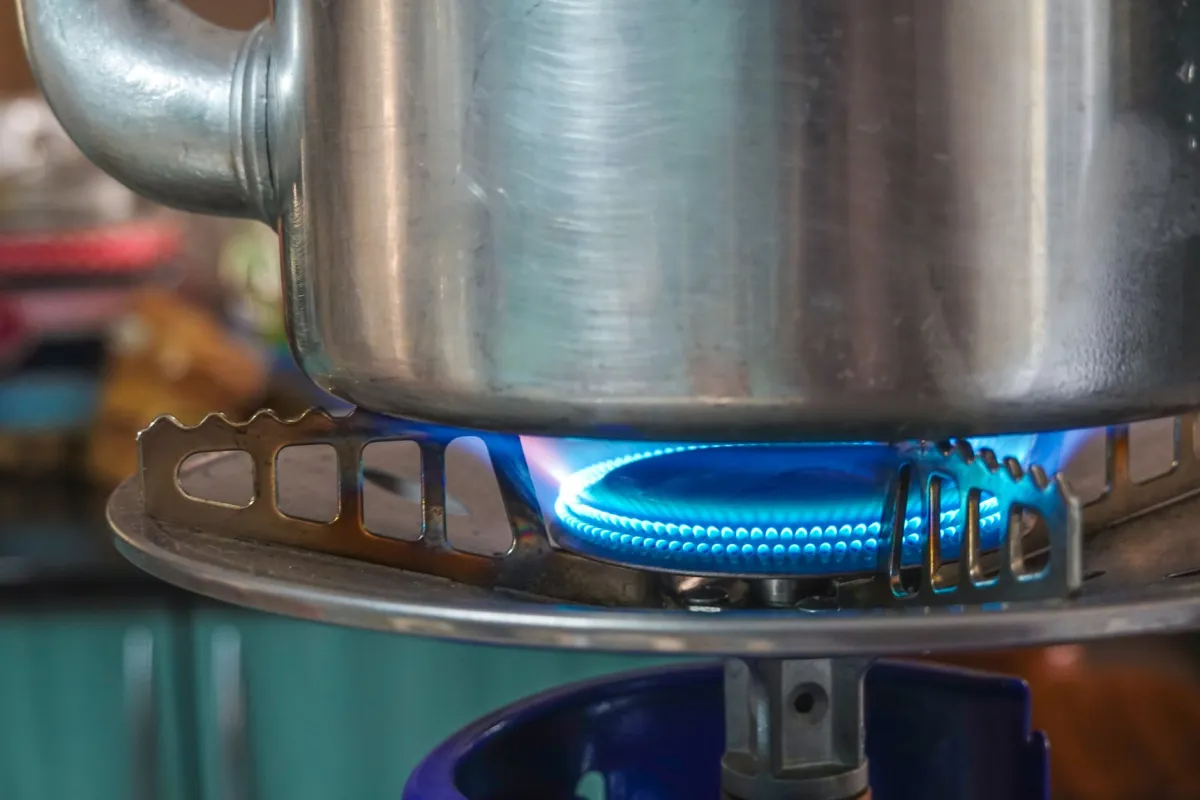
The appliance itself often gives visual warnings before anything else. A gas flame on a hob, fire or older boiler with a viewing window should burn crisp and blue. A lazy yellow or orange flame is a sign of poor combustion. Look for black sooty marks or brown or yellow staining on or around the boiler, fire or flue, a pilot light that keeps going out, more condensation than usual on the windows in the room with the appliance, and a boiler that has started making unusual noises or keeps locking out. None of these proves there is carbon monoxide, but each one means the appliance should be switched off and checked by a Gas Safe registered engineer before it is used again. If you are weighing up other symptoms, such as noises, leaks or pressure faults, our guide is my boiler dangerous? sorts what needs action now from what can wait for a repair. Gas fires that have sat unused all summer are a common source in older Chelsea houses, and our guide to gas fire servicing explains the checks to have done before you light one.
If your carbon monoxide alarm goes off, or you suspect CO for any other reason, act straight away. Turn off the boiler or appliance if you can do so quickly and safely. Open doors and windows to let fresh air in, and get everyone out of the property, including pets. Once outside, call the National Gas Emergency Service on 0800 111 999. The line is free and staffed around the clock, and they will send an engineer to make the appliance and the property safe. Do not go back in until you are told it is safe, and do not use the appliance again until it has been inspected and repaired.
If anyone has symptoms, get medical help. Call 999 if someone has collapsed, is confused, has chest pain or is struggling to breathe. Otherwise call NHS 111 or see a doctor, and tell them you think carbon monoxide may be involved, because a simple test can confirm exposure and the symptoms are easily missed otherwise. Even if people feel better once they are in fresh air, it is still worth getting checked.
A carbon monoxide alarm is the only reliable way to know the gas is there. Fit an audible CO alarm, marked as meeting the British and European standard EN 50291, in any room with a fuel-burning appliance such as a boiler, gas fire or open fire, and ideally in bedrooms too. Follow the manufacturer's instructions on where to put it, which usually means at head height and away from windows, extractor fans and the appliance itself. Test it when the clocks change and when the heating goes back on in autumn, and replace it when it reaches the end of its life, which is shown on the unit. The black spot detectors that change colour are not a substitute, because they do not make a sound and will not wake you.
Most carbon monoxide problems start with the flue or the air supply, and in Chelsea's older housing stock there are a few specific risks. Flues run through voids, cupboards and ceiling spaces in converted period houses and mansion blocks, where a joint can come apart without anyone seeing it. Old open-flued boilers and back boilers that draw air from the room are still found in some properties. Air vents get blocked during redecoration or bricked up to stop draughts. Building work next door or on the floor above can damage or block a shared flue. Anything that changes the room around a gas appliance, such as new kitchen units boxing in a boiler or a new extractor fan, should be checked by a Gas Safe engineer.
An annual boiler service is the best prevention, because the engineer checks the combustion, the flue and the ventilation, which is where carbon monoxide problems start. Our guide to how often to service a boiler explains what a service covers and why the start of the heating season is a sensible time to book it. If you rent, your landlord has to have gas appliances checked every year and give you a copy of the record, and our gas safety certificate page explains what that check involves.
Once the emergency service has made the property safe, the appliance will usually be capped off or labelled as unsafe to use until it is repaired. Emergency Plumber Chelsea sends Gas Safe registered engineers to inspect boilers and flues, find the cause and carry out the repair across SW3, SW10, Knightsbridge, South Kensington and Fulham. Call 020 3002 6667 to book a boiler repair or a service. There is no call-out fee on jobs over 3 hours.
Quick tips
- Carbon monoxide has no smell; the gas smell you know belongs to mains gas, not CO.
- Suspect CO if symptoms ease when you leave home and return when you come back, or several people feel ill at once.
- A yellow or orange flame, soot or staining around a boiler or fire means stop using it and get it checked.
- If a CO alarm sounds: appliance off, windows open, everyone out, then call 0800 111 999.
- Fit an audible CO alarm in every room with a fuel-burning appliance and test it when the heating goes back on.
FAQs
What are the first signs of carbon monoxide poisoning?
A headache is the most common early symptom, often with dizziness, feeling sick, tiredness and confusion. Because these feel like flu, the key clue is that they improve when you leave the house and return when you come back.
Can a boiler leak carbon monoxide without an alarm going off?
Yes, if there is no alarm, the alarm has expired or its battery is flat, or it is in the wrong place. That is why an audible CO alarm in each room with a fuel-burning appliance, tested regularly, is so important.
Who do I call if I suspect carbon monoxide?
Get out into fresh air first, then call the National Gas Emergency Service on 0800 111 999. If anyone feels unwell, call 999 or NHS 111. Once the property is safe, a Gas Safe registered engineer needs to inspect and repair the appliance before it is used again.
Does an orange flame on my boiler mean carbon monoxide?
Not always, but it is a sign the gas is not burning properly, which is when carbon monoxide is produced. Stop using the appliance and have a Gas Safe engineer check it. Call 020 3002 6667.
How often should a boiler be checked for carbon monoxide?
Once a year, as part of an annual service or gas safety check. The engineer tests combustion, checks the flue and looks at ventilation, which covers the usual causes of carbon monoxide.
Need an engineer in Chelsea?
Call 020 3002 6667 for 24/7 emergency dispatch across SW3, SW10 and nearby postcodes.