
— Chelsea advice
Is My Boiler Dangerous? Warning Signs and What to Do
Most boiler faults are a nuisance rather than a danger. Low pressure, a dripping pipe, a humming pump or a banging noise usually means a part is wearing or the system needs attention, and modern boilers are built to shut themselves down safely when something goes wrong. A boiler becomes dangerous when there is a risk of gas escaping or of carbon monoxide getting into your home. The signs of that are a smell of gas, a carbon monoxide alarm sounding, soot or scorch marks around the boiler or flue, a lazy yellow or orange flame on an older boiler, and headaches or nausea that ease when you leave the house. If you see any of those, switch the boiler off, open windows and call the National Gas Emergency Service on 0800 111 999. This guide sorts the warning signs into what needs action now and what can wait for a booked repair. Emergency Plumber Chelsea covers SW3, SW10 and nearby postcodes on 020 3002 6667.
Updated July 2026 · Emergency Plumber Chelsea
Start with the signs that mean stop. A smell of gas, the rotten-egg smell added to mains gas so leaks can be noticed, is the clearest one. Do not use light switches, doorbells or anything that could spark, do not light a flame, turn off the gas at the meter if you can reach it safely, open doors and windows and leave the property. Call the National Gas Emergency Service on 0800 111 999 from outside. The emergency service makes the supply safe, and after that a Gas Safe registered engineer finds and fixes the fault. Our guide on what to do if you smell gas sets out each step in order.
Carbon monoxide is the hidden risk. It has no colour, no taste and no smell, so the only reliable warnings are an audible carbon monoxide alarm and the way people in the home feel. Headaches, dizziness, nausea, breathlessness and tiredness that get better when you go out and return when you come home are classic signs, especially if more than one person or a pet is affected. Visible clues include sooty or brown staining on or above the boiler, a damaged flue and heavy condensation in the boiler room. If your alarm sounds or you suspect carbon monoxide, turn the boiler off, get everyone into fresh air, call 0800 111 999 and seek medical advice if anyone feels unwell. Our guide to the signs of carbon monoxide from a boiler covers the symptoms in more detail.
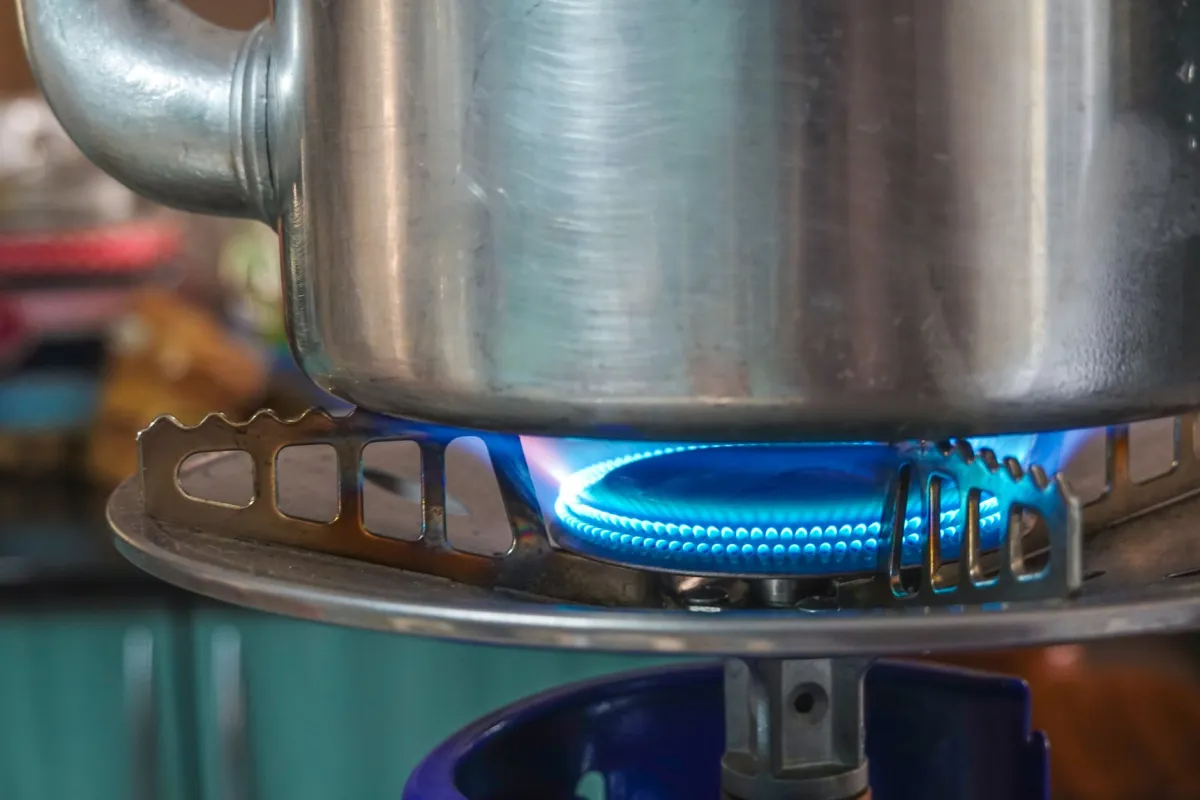
Flame colour matters on older boilers. Many older open-flue and back-boiler models let you see the burner or a pilot light. A healthy gas flame is crisp and blue. A floppy yellow or orange flame, or a pilot light that keeps going out, can mean the gas is not burning cleanly and producing carbon monoxide. Modern condensing boilers are room-sealed, so you will not see the flame, which is one reason a working carbon monoxide alarm matters so much. If an older boiler shows a yellow flame, stop using it and book a Gas Safe engineer before you switch it back on.
A burning or scorching smell is different from a gas smell but still needs care. Dust burning off when the heating first comes on in autumn is normal and fades within an hour or so. A smell that persists, smells of hot plastic or electrics, or comes with the boiler cutting out points to an overheating component or wiring. Switch the boiler off at the fused spur and book an engineer. Do not take the casing off to look: the fan, gas valve and burner sit behind a sealed panel for a reason.
Pressure faults are rarely dangerous on their own. When the pressure on a sealed system drops too low, the boiler stops firing to protect itself, so you lose heating and hot water rather than facing a hazard. When the pressure climbs too high, the pressure relief valve opens and lets water out through a small pipe, usually to the outside wall, before the system can come to any harm. Both still need fixing. Our guides to what pressure your boiler should be, a boiler losing pressure and boiler pressure that is too high explain the readings and fixes.
A boiler leaking water is a damage risk more than a gas risk. Water dripping from underneath usually comes from a pump seal, a pipe joint, the pressure relief valve or, in worse cases, the heat exchanger. The danger is water reaching electrics, the fused spur or a ceiling below, which is a real concern in Chelsea flats where the boiler often sits in a kitchen cupboard above a neighbour. Switch the boiler off, turn off its electrical supply if you can do so without touching water, close the water feed or the main stopcock if the leak is heavy and put a bowl underneath. Our guide on what to do if your boiler leaks walks through it. The exception is hot water or steam spraying from the boiler or from a cylinder's tundish, which means a safety valve is working hard and needs an engineer straight away.
Noises tell you about wear, not usually about danger. A banging, knocking or kettle-like rumble is normally kettling, where scale or sludge on the heat exchanger makes water boil in spots. It strains the boiler and shortens its life, and it should be dealt with, but boilers have an overheat cut-out and a relief valve to stop it becoming a safety problem. A hum, buzz or loud aeroplane-like whoosh usually comes from the pump or the fan, and a whistle often points to kettling or air in the system. Our guides to a boiler making a banging noise and a boiler humming or buzzing explain each sound. A boiler that shows a fault code and stops has usually shut itself down safely; reset it once at most, as our guide on how to reset a boiler explains.
Can a boiler explode? Explosions from modern domestic boilers are extremely rare. A sealed system has several layers of protection: a pressure relief valve that opens before pressure can build dangerously, an overheat thermostat that shuts the burner down, and flame supervision that cuts the gas if the flame goes out. The risks that deserve your attention are gas escapes and carbon monoxide, which is why the smell of gas and a carbon monoxide alarm are the two things never to ignore. Disabling a safety device or capping a relief valve pipe removes that protection, which is one reason gas work must only be done by a Gas Safe registered engineer.
Hidden flues are a particular issue in Chelsea. In converted period houses and mansion flats, the flue from a modern boiler often runs through a ceiling void or boxing before it reaches an outside wall. Gas Safe rules require those concealed flues to be visible for inspection, usually through inspection hatches, so an engineer can check the joints are sound and the flue is properly supported. If an engineer cannot inspect a concealed flue, they may classify the installation as at risk and advise that it is turned off until hatches are fitted.
What happens when an engineer finds a dangerous fault. Gas Safe registered engineers follow an industry procedure for unsafe situations. If they find an appliance is immediately dangerous or at risk, they explain the problem, label it, and with your permission turn it off or disconnect it. If you are given a warning notice or a Do Not Use label, do not switch the boiler back on until the fault has been fixed and the appliance has been checked.
The simplest protection is routine. Have the boiler serviced every year by a Gas Safe registered engineer, who checks combustion, the flue, seals and ventilation. Fit an audible carbon monoxide alarm in the room with the boiler and in bedrooms, test it monthly and replace it when it reaches its expiry date. Keep vents and flue terminals clear, never dry washing on or in front of the boiler, and do not box it in more tightly than the installation manual allows. Our guide on how often to service a boiler explains what a service covers.
If you are not sure whether your boiler is safe, switch it off and ask. Emergency Plumber Chelsea sends Gas Safe registered engineers to boiler faults across Chelsea, Knightsbridge, Sloane Square, South Kensington and Fulham. We find the cause, tell you plainly whether the boiler is safe to use, and explain the options before any work starts. There is no call-out fee on jobs over 3 hours. See our boiler repair, boiler service and gas leak detection pages, or call 020 3002 6667. If you smell gas at any point, call National Gas Emergency on 0800 111 999 first.
Quick tips
- Gas smell, carbon monoxide alarm, soot marks or a yellow flame means switch off, ventilate and call 0800 111 999.
- Low or high pressure, a drip or a noise is a repair to book, not an emergency, unless it comes with one of the danger signs.
- Reset a locked-out boiler once at most. If it locks out again, the fault needs finding, not forcing.
- Fit an audible carbon monoxide alarm near the boiler and in bedrooms, and test it every month.
- Never cap, block or tie up the relief valve pipe or tundish to stop a drip. It is a safety outlet.
FAQs
How do I know if my boiler is dangerous?
The danger signs are a smell of gas, a carbon monoxide alarm going off, soot or brown staining around the boiler or flue, a yellow or orange flame on an older boiler, and symptoms such as headaches or nausea that ease when you leave home. If you notice any of these, turn the boiler off, open windows and call National Gas Emergency on 0800 111 999.
Is low boiler pressure dangerous?
No. When pressure drops too low the boiler stops firing to protect itself, so you lose heating and hot water rather than facing a hazard. It still needs attention, because pressure that keeps falling means water is escaping somewhere on the system.
My boiler is making a banging noise. Is it dangerous?
Usually not in itself. Banging is normally kettling, caused by scale or sludge on the heat exchanger. It strains the boiler and should be fixed, but the overheat cut-out and relief valve protect against it becoming a safety problem. It becomes urgent if the noise comes with a gas smell, a burning smell or a carbon monoxide alarm.
Is it dangerous if my boiler is leaking water?
A water leak is mainly a risk to electrics and ceilings rather than a gas risk. Switch the boiler off, isolate its power if you can do so without touching water, turn off the water feed if the leak is heavy and book an engineer. Hot water or steam from the boiler or a tundish needs an engineer straight away.
Need an engineer in Chelsea?
Call 020 3002 6667 for 24/7 emergency dispatch across SW3, SW10 and nearby postcodes.