
— Chelsea advice
Banging, Whistling, Humming: Plumbing Noises Explained
The sound your plumbing makes is a clue to what is wrong with it. A bang when a tap closes points to a different fault than a whistle while water runs, a gurgle after a flush, or a low rumble from the boiler. This guide runs through the common plumbing and heating noises in Chelsea homes, tells you the likely cause of each and how it is usually fixed, and shows you which sounds are harmless and which mean you should call for help. Emergency Plumber Chelsea covers SW3, SW10 and nearby postcodes on 020 3002 6667.
Updated July 2026 · Emergency Plumber Chelsea
The single most useful thing you can do before calling anyone is to note exactly when the noise happens and which outlet triggers it. A sound that only appears when a tap closes, when the heating fires up, or when a toilet refills tells a plumber far more than the noise on its own. Work through your taps, appliances and toilets one at a time and listen. Below are the sounds Chelsea households report most often, what each usually means, and the fix that normally clears it.
Banging or knocking almost always means water hammer or trapped air. A sharp bang or a rapid series of knocks right as a tap shuts, a toilet finishes refilling, or a washing machine or dishwasher closes its fill valve is water hammer: fast-moving water is stopped suddenly and sends a pressure shockwave back through the pipes, making them jump against joists and walls. High mains pressure and modern fast-closing valves make it worse, and loose or unsupported pipework in older SW3 and SW10 homes amplifies it. The fix is to secure loose pipes with extra clips and insulation, fit a water hammer arrestor on the offending supply, and reduce pressure with a valve where the mains runs high. A softer, one-off knock when you first draw water can instead be trapped air, which usually clears once the pipes are bled through.
Whistling or screaming means water is being forced through a restriction. A high-pitched whistle or squeal while a tap or valve is open is the sound of water squeezing past a narrowed gap at speed. The usual culprits are a worn or loose tap washer vibrating in the flow, a partly closed or scaled isolation valve, a ballvalve in a toilet cistern nearing the end of its fill, or simply mains pressure that is too high for the fittings. If one tap whistles, the washer or cartridge in that tap is the likely cause and a cheap part cures it. If the noise follows the whole house or appears at several outlets, high pressure or a restricted valve is more probable, and fitting or adjusting a pressure reducing valve is the answer. A whistle from a filling toilet points at the float valve, which is inexpensive to replace.
Gurgling means a drain or vent problem, not a supply one. A glug or gurgle from a plughole, or from a toilet after you flush, means air is being pulled through the water in a trap because a drain or its vent is partly blocked. Waste cannot flow away smoothly, so it drags air behind it and you hear it bubbling back. If a single basin or bath gurgles, the local waste or trap is starting to block. If several fittings gurgle together, or water rises in the bath when a toilet flushes, the problem is deeper in the shared soil stack or the underground drain, which is common in Chelsea terraces and mansion blocks. Clearing the blockage and checking the soil vent pipe restores quiet, gravity-fed flow. Persistent gurgling is worth acting on early, because it is often the first warning of a backing-up drain.
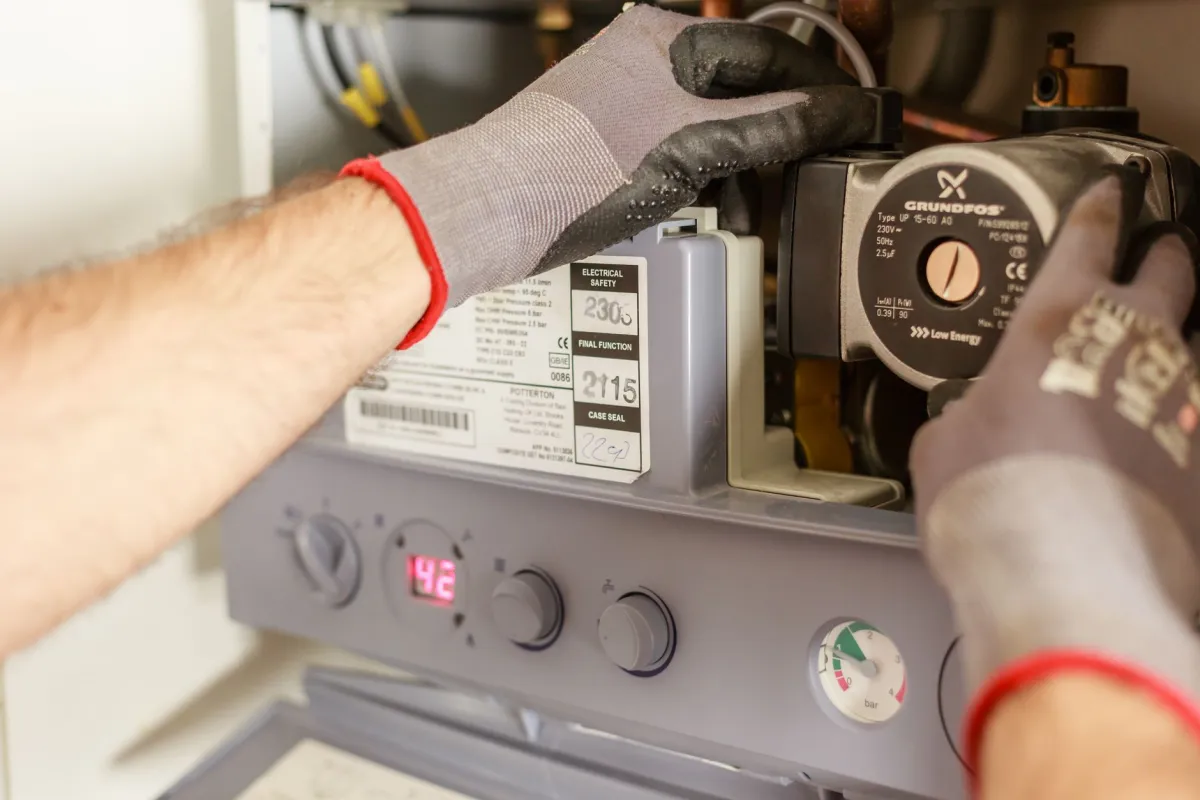
Humming or vibrating usually means a pump or high pressure. A steady hum or a low vibration you can feel through the pipes while water or heating is running normally comes from a component working hard or from water moving too fast. On heating systems the circulating pump is the common source, either running at too high a speed setting or beginning to wear. High mains pressure can set long pipe runs vibrating, and a loose pipe against a wall will buzz as it resonates. The fixes match the cause: drop the pump speed or replace a failing pump, fit a pressure reducing valve where the mains is strong, and clip or cushion any pipe that is free to vibrate against timber or masonry. A new or louder hum from a boiler or pump that was previously quiet is worth having looked at before the part fails completely. If the hum is coming from the boiler itself, our guide to a boiler humming or buzzing explains what each sound usually means.
A rumbling, kettle-like boiler means limescale. If your boiler bangs, rumbles or makes a sound like a kettle coming to the boil when the heating or hot water is on, that is kettling, and the usual cause is limescale on the heat exchanger. London and Chelsea sit in a hard water area, so scale builds up steadily inside boilers and cylinders. The scale traps pockets of water against the hot metal, which overheats, boils and rumbles rather than flowing smoothly. Left alone, kettling makes the boiler work harder, wastes gas and shortens its life. The fix is a chemical descale or a power flush of the system by a Gas Safe engineer, sometimes with a scale reducer or filter fitted to slow it happening again. A boiler that has started kettling should be checked rather than ignored.
Ticking, tapping or creaking is normally heating pipes expanding, and is usually harmless. A regular tick or a series of soft taps that start a few minutes after the heating fires up, and fade once the house is warm, is the sound of copper pipes expanding as hot water reaches them and rubbing against the joists, floorboards or clips they pass through. It is one of the few plumbing noises that is almost never a fault. Where it is loud enough to be a nuisance, easing a pipe clip that is gripping too tightly and wrapping felt or foam where the pipe crosses timber lets it expand quietly. It is worth telling this benign sound apart from water hammer, which is a sudden violent bang tied to a valve closing rather than a gentle tick tied to the heating warming up. Our guide to a radiator making noise covers the sounds radiators make in more detail.
To narrow any of these down yourself, run a simple check before you call. Close each tap firmly in turn and listen for a bang. Run each tap open and listen for a whistle. Flush every toilet and listen as the cistern refills and as the pan clears. Start a washing machine or dishwasher fill. Turn the heating on from cold and listen for kettling, humming and ticking as it warms. Note which single action produces the noise, because a fault at one outlet usually means a cheap local repair, whereas a noise that follows the whole house points to pressure or a system-wide issue and a fuller inspection.
Most plumbing noises are a nuisance rather than an emergency, but a few deserve a faster call. Treat it as urgent if a boiler is kettling loudly and also losing pressure or leaking, if gurgling drains are accompanied by foul water backing up into the home, or if banging pipes coincide with a visible leak or damp patch appearing. If you ever smell gas alongside a boiler noise, leave the property and call the National Gas Emergency Service on 0800 111 999 before anything else. For the ordinary knocks, whistles and rumbles, a booked visit is fine, and catching them early is cheaper than waiting for the underlying fault to grow.
Emergency Plumber Chelsea diagnoses and fixes noisy plumbing and heating across SW3, SW10 and nearby postcodes, from water hammer arrestors and pressure control to descaling a kettling boiler and clearing a gurgling drain. We are fully qualified and insured, and gas work is carried out by Gas Safe registered engineers. Call-outs start from £69 in the daytime and from £89 at night, on weekends and on bank holidays, with labour and any parts quoted before major work begins. If your pipes bang, whistle or hum, call 020 3002 6667 and describe the sound and when it happens, and we will tell you what it is likely to be and what it will take to put right.
Quick tips
- Note which single tap, toilet or appliance triggers the noise before you call: one outlet usually means a cheap local fix, the whole house points to pressure.
- A bang tied to a valve closing is water hammer; a gentle tick tied to the heating warming up is just pipes expanding and is harmless.
- In hard-water Chelsea, a kettle-like rumble from the boiler is limescale: book a descale or power flush rather than ignoring it.
- Gurgling drains are a warning of a partial blockage or a blocked vent: act early, before waste starts backing up.
- If you smell gas alongside any boiler noise, leave and call National Gas Emergency on 0800 111 999 first.
FAQs
Why do my pipes bang when I turn off a tap in my Chelsea flat?
That is water hammer: fast-moving water is stopped suddenly by the closing valve and the pressure shockwave makes the pipes knock against joists and walls. It is common in older SW3 and SW10 pipework and is usually fixed by securing loose pipes, fitting an arrestor and reducing high mains pressure. Call 020 3002 6667.
What does it mean when my boiler makes a rumbling or kettling noise?
A kettle-like rumble usually means limescale has built up on the heat exchanger, which is common in hard-water London. The scale traps water against hot metal so it boils and rumbles. A Gas Safe engineer can descale or power flush the system to clear it and fit a scale reducer to slow it returning.
Is a gurgling drain something I need to fix quickly?
It is worth acting on early. Gurgling means air is being pulled through a trap because a drain or its vent is partly blocked. If several fittings gurgle together, or water rises in the bath when a toilet flushes, the blockage is deeper in the soil stack or drain and can back up into the home. Call us before it worsens.
Need an engineer in Chelsea?
Call 020 3002 6667 for 24/7 emergency dispatch across SW3, SW10 and nearby postcodes.