
— Chelsea advice
Wall-Hung Toilets: Are They Worth It?
A wall-hung toilet is worth it if you are already renovating the bathroom and want a clean look, an easy floor to clean and a pan set at the height you choose. It is usually not worth it if you only want to replace a toilet in a finished bathroom, because the pan hangs on a steel frame hidden inside a false wall, and fitting that frame means opening up the wall, the floor and the tiling. The other thing to weigh is access: the cistern lives behind the wall, so every future repair goes through the opening behind the flush plate. Emergency Plumber Chelsea installs and repairs wall-hung toilets and concealed cisterns across SW3, SW10, Knightsbridge, South Kensington and Fulham on 020 3002 6667.
Updated July 2026 · Emergency Plumber Chelsea
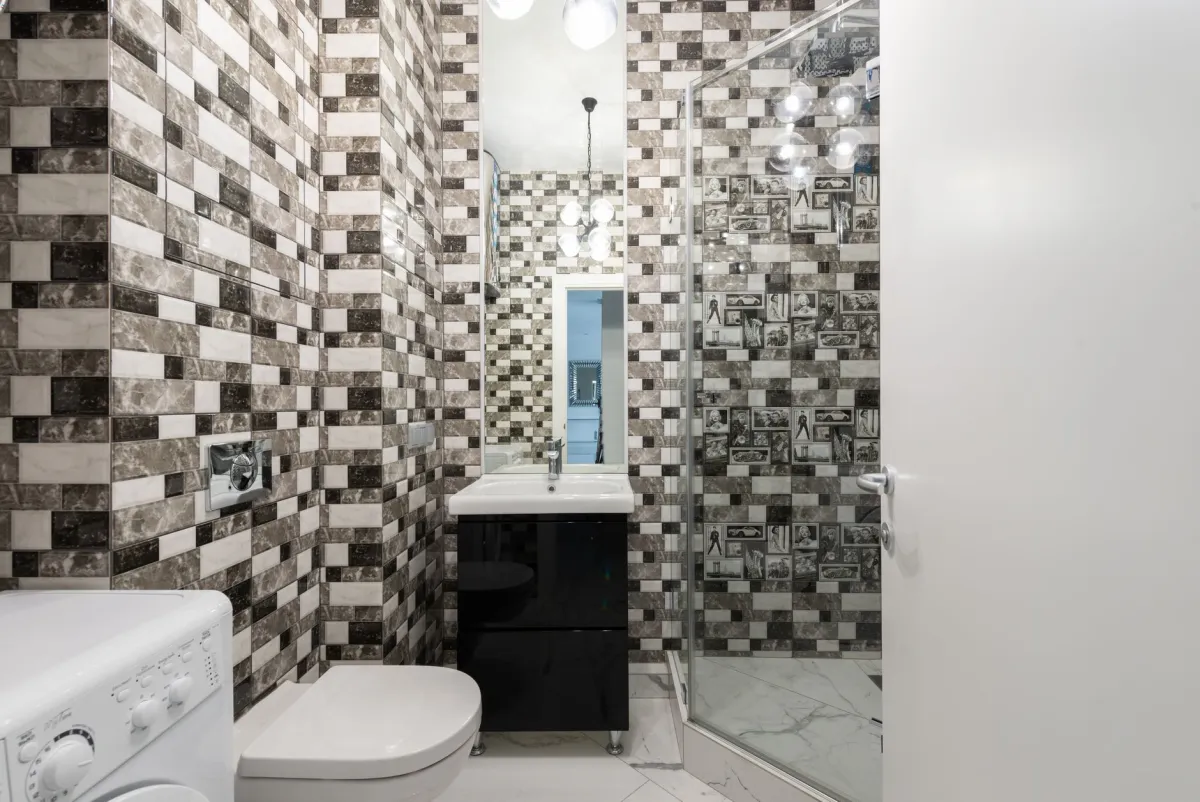
How a wall-hung toilet actually works. The pan is bolted to a steel installation frame, sometimes called a carrier or in-wall frame, which is fixed to the floor and the wall behind. The frame carries the weight, holds the concealed cistern, and has the connections for the water supply and the soil pipe built into it. The frame is then boxed in with a stud wall or a ledge, tiled over, and the only visible parts are the pan and the flush plate. So when you choose a wall-hung toilet, you are really choosing the frame and cistern system, and the pan that hangs off it.
The advantages. The floor under the pan is clear, which makes cleaning easier and helps a small bathroom or cloakroom look larger. The pan height is set when the frame is installed, so it can be raised for someone who finds a standard toilet low, or lowered for children. The cistern and pipework are hidden, which gives the clean, built-in look many Chelsea renovations are after, and the boxing often doubles as a shelf. A good-quality frame and cistern are designed for long service with replaceable internal parts.
The disadvantages. Installation is more involved than a floor-standing toilet: the frame, the boxing, the tiling and the finishes all add labour and materials. The cistern cannot be lifted out for repair, so fill valves, flush valves and seals are changed through the flush plate opening, which is fine on a well-chosen system and awkward on a poor one. A leak behind the wall can go unnoticed until it shows as damp on the wall or a stain on the ceiling below. And if a future owner wants to change the toilet, they are usually tied to a pan that fits the same frame fixings.
Access is the part people regret skipping. Before you pick a flush plate for its looks, check that the frame and cistern are a make with readily available spare parts, and that the fill valve and flush valve can be removed through the plate opening without taking the wall apart. Ask where the isolation valve is; on a good installation it sits inside the frame and can be reached behind the plate. Keep a note of the frame and cistern make and model, because it makes a later repair much quicker. Our guide to concealed cistern problems shows what those repairs look like in practice.
The structure behind the wall matters in period homes. Many Chelsea houses and mansion flats have timber floors and a mix of solid and lightweight internal walls. A floor-standing frame transfers most of the load to the floor, so the fixings into the joists or subfloor need to be solid, and the frame has to be fixed where it can be secured properly. Where the pan goes on an external or solid wall, the frame is fixed to the masonry and boxed out in front of it. None of this is unusual, but it is a reason to have the plumbing and the boxing done as one job rather than fitting a frame into whatever wall happens to be there.
The soil pipe decides what is possible. A wall-hung pan still needs a gravity connection to the soil pipe at the right height and fall. Moving the toilet a short distance within a bathroom is normally straightforward during a renovation; moving it far from the soil stack may not be, and a macerator is a compromise rather than a like-for-like solution. Our guide to moving plumbing during a renovation covers what limits a new layout.
Wall-hung or back-to-wall? A back-to-wall toilet is a floor-standing pan pushed flush against a unit or boxing that hides the cistern. It gives most of the tidy look with less structural work, because there is no load-bearing frame, and it can often go into an existing bathroom with only the furniture unit changing. You lose the clear floor and the adjustable height. For a cloakroom or a bathroom that is not being stripped out, back-to-wall is often the more sensible choice. For a full renovation where the walls are opening up anyway, the extra work for a wall-hung toilet is modest. Our guide to the types of toilet compares these with close coupled, low level and high level designs.
What makes the price. We do not quote a single figure for a wall-hung toilet because the bill depends on whether the bathroom is already stripped out, the frame and pan you choose, how the boxing is built and finished, how far the soil connection moves, and how much tiling and making good is involved. Fitting a frame into a finished bathroom costs far more than the toilet itself because of the building work around it. Our guide to what a new bathroom costs explains how these pieces fit into a whole bathroom budget.
Common problems we see. Most wall-hung toilet call-outs are for the same faults as any toilet: a cistern that keeps running, a weak flush, a button that no longer works, or a slow leak at the pan connection. The difference is diagnosis through a small opening. Pans that feel loose usually mean the fixing studs have worked loose or were not tightened evenly, which should be fixed before it strains the pan connection. If your toilet keeps running, our guide to a toilet that keeps running covers the cause.
Planning a wall-hung toilet. Emergency Plumber Chelsea can advise on the frame, cistern and pan, check the soil connection and the structure, install the frame and plumbing ready for boxing and tiling, and fit and commission the pan afterwards. There is no call-out fee on jobs over 3 hours. See our bathroom plumbing service or call 020 3002 6667 to talk through your bathroom in SW3, SW10, Knightsbridge, Sloane Square, South Kensington or Fulham.
Quick tips
- Choose the frame and cistern for spare parts and access, then choose the flush plate for looks.
- Make sure the isolation valve can be reached behind the flush plate.
- Write down the frame and cistern make and model and keep it with your house papers.
- If you are not stripping the bathroom, compare a back-to-wall toilet before committing to a frame.
- Damp on the boxing or a stain on the ceiling below is a reason to call quickly, not to wait.
FAQs
Are wall-hung toilets worth it?
Yes if you are renovating the bathroom and want the clear floor, adjustable height and built-in look. Usually not if you only want to swap a toilet in a finished bathroom, because fitting the frame means opening the wall, floor and tiling.
Can you fix a wall-hung toilet cistern without removing the wall?
On most modern systems, yes. The fill valve, flush valve and seals are designed to come out through the opening behind the flush plate. Older or budget installations with no proper access are the exception.
Are wall-hung toilets strong enough?
A correctly installed frame carries the weight through its fixings to the floor and wall, not through the pan. Problems usually come from a frame fixed to a weak surface or fixing studs that were not tightened properly.
What is the difference between wall-hung and back-to-wall toilets?
A wall-hung pan is held off the floor by a steel frame in the wall. A back-to-wall pan stands on the floor against a unit or boxing that hides the cistern. Back-to-wall needs less structural work; wall-hung gives a clear floor and adjustable height.
Can I replace my existing toilet with a wall-hung one?
Usually, but it is a bigger job than a straight swap. The frame needs to go where the old toilet was, the soil connection must line up, and the wall needs boxing and retiling. It is easiest as part of a bathroom renovation.
Need an engineer in Chelsea?
Call 020 3002 6667 for 24/7 emergency dispatch across SW3, SW10 and nearby postcodes.