
— Chelsea advice
Types of Toilet: Which Style Suits Your Bathroom?
There are five main types of toilet in UK homes. A close coupled toilet has the cistern sitting directly on the back of the pan, and it is the most common and simplest to fit. A back to wall toilet is a floor-standing pan pushed against a unit or boxing that hides the cistern. A wall-hung toilet hangs from a steel frame inside a false wall. A low level toilet has the cistern fixed to the wall a short way above the pan, joined by a flush pipe, and a high level toilet has the cistern near the ceiling with a pull chain. Which suits you depends on the space, where the soil pipe runs, how much building work you want and how easy you want future repairs to be. Emergency Plumber Chelsea fits and repairs every type across SW3, SW10, Knightsbridge, South Kensington and Fulham on 020 3002 6667.
Updated July 2026 · Emergency Plumber Chelsea
Close coupled toilets. The cistern bolts straight onto a platform at the back of the pan, with a rubber seal between the two, so the whole toilet is one freestanding unit against the wall. It is the default in most bathrooms because it needs no boxing, no frame and no separate flush pipe, and every part is easy to reach when something goes wrong. The downsides are looks and depth: the cistern is on show, and the combined unit sticks further into the room than a pan on its own. For a straightforward replacement in a finished bathroom, a close coupled toilet is almost always the quickest and least disruptive choice.
Back to wall toilets. Here the pan stands on the floor but sits flush against a vanity unit, a furniture run or a boxed-in panel, and the cistern is hidden inside. You see only the pan and a flush button or lever on top of the unit. It gives most of the tidy, built-in look of a wall-hung toilet without the load-bearing frame, so it can often go into an existing bathroom with just the furniture or boxing to build. The concealed cistern is reached by lifting a lid, removing the flush plate or taking off a panel, so make sure whoever builds the boxing leaves a way in. Our guide to concealed cistern problems explains why that access matters.
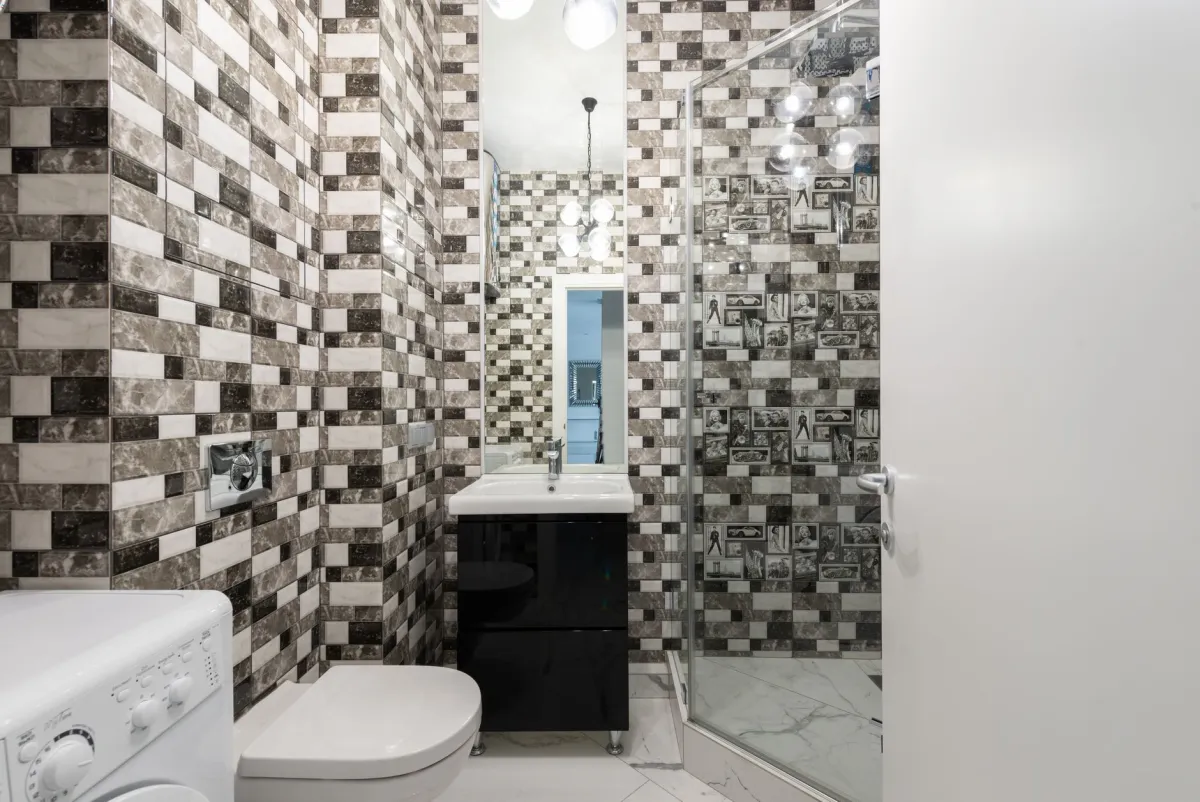
Wall-hung toilets. The pan is bolted to a steel frame fixed to the floor and wall, and the frame also holds the concealed cistern and the soil connection. The floor underneath stays clear, the pan height can be set to suit you, and the look is the cleanest of all. The cost is building work: the frame has to be installed, boxed in and tiled, which makes it a renovation choice rather than a quick swap. We weigh up the pros and cons in detail in our guide on whether a wall-hung toilet is worth it.
Low level toilets. A low level toilet has a separate cistern fixed to the wall a little above the pan, connected by a short flush pipe. It was the standard arrangement for much of the twentieth century and is now mostly chosen for a traditional look. Because the cistern and pan are separate, the pan can sit slightly further from the wall than a close coupled toilet, and the flush pipe joints are two extra places that can weep over time. Low level designs are popular in period bathrooms where a close coupled toilet looks too modern and a high level cistern would be too much.
High level toilets. The cistern sits high on the wall, often with a chain pull, and water drops down a long flush pipe to the pan. It is the classic Victorian arrangement and suits tall-ceilinged Chelsea townhouses and mansion flats, where it fills the height of the room well. The drop gives a strong flush. Reproduction high level cisterns are made to meet current water rules, so you get the look without the old water use. The practical points are a solid wall to fix the cistern to, a long visible flush pipe, and a ladder for any cistern repair. If your house still has an original high level cistern, it may be worth restoring rather than removing, especially in a listed building; our guide to plumbing in listed buildings covers when consent can come into it.
Other terms you will see. A short projection toilet has a pan that sticks out less from the wall, which helps in a cloakroom or a narrow en suite. Comfort height pans sit a few centimetres higher than standard, which many people find easier to use. Rimless pans have no hidden rim under the edge, so they are easier to keep clean. Dual flush simply means two buttons, a small flush and a full one, and almost every modern toilet has it. None of these is a separate type as such; they are options within the main styles above.
The soil pipe decides what is possible. Whatever style you choose, the pan has to connect to the soil pipe at the right height with enough fall for waste to drain by gravity. Pans are made with either a horizontal outlet that goes through the wall or a vertical outlet that goes into the floor, and flexible pan connectors can bridge small differences. Moving a toilet a short distance during a renovation is usually fine. Moving it far from the soil stack, or to a room with no gravity route, may need a pumped macerator toilet instead, which comes with its own care needs; see our guide to macerator and Saniflo problems.
Flushing mechanisms. Most modern cisterns use a push-button flush valve with a rubber seal at its base. Older and traditional cisterns often use a siphon worked by a lever or chain. Siphons rarely leak into the pan but can wear and give a weak flush; flush valves are easy to operate but can let water trickle into the bowl when the seal wears. Both are repairable. Our guides on a toilet that keeps running and a weak toilet flush explain the common faults with each.
Which type suits which bathroom? For a quick swap in a bathroom you are not refitting, a close coupled toilet is the simplest, and a back to wall toilet is a good step up if you are also fitting furniture. If you are stripping the room back to the walls and want the most built-in finish, wall-hung makes sense. For a period bathroom, low level and high level designs keep the character, and they are often the better match in a Victorian or Edwardian house with high ceilings. In a small cloakroom, look for a short projection pan in whichever style you prefer.
Think about repairs before you choose. Every toilet eventually needs a new fill valve, flush valve or seal. On a close coupled, low level or high level toilet those parts are in plain sight. On a back to wall or wall-hung toilet they are reached through a panel or the flush plate opening, which is fine if the installer has left proper access and a nuisance if they have not. In a flat, a slow leak from a hidden cistern can go unnoticed until it shows on the ceiling below, so easy access to an isolation valve is worth insisting on.
Getting a toilet fitted or changed in Chelsea. If you are choosing a new toilet and want to know what will work with your soil pipe, floor and space, or you need a toilet replaced after a failure, call Emergency Plumber Chelsea on 020 3002 6667. We look at the connection, access and water supply before recommending a style, and our guide to toilet replacement costs explains what affects the price of the job. For repairs to any type of toilet, see our toilet repairs service, and for larger refits our bathroom plumbing service. There is no call-out fee on jobs over 3 hours.
Quick tips
- Measure from the wall to the centre of the existing soil outlet before choosing a new pan.
- Check whether the current pan outlet goes through the wall or into the floor.
- Insist on an access panel or removable flush plate for any concealed cistern.
- In a small cloakroom, look for a short projection pan.
- In a period house, consider restoring an original high level cistern rather than replacing it.
FAQs
What is the difference between a close coupled and a back to wall toilet?
A close coupled toilet has the cistern sitting on the back of the pan, visible in the room. A back to wall toilet is a floor-standing pan pushed against a unit or boxing that hides the cistern, so only the pan and flush button show.
What is a low level toilet?
A low level toilet has a separate cistern fixed to the wall a short way above the pan, joined by a short flush pipe. It gives a traditional look and was the standard arrangement in many older British homes.
Are high level toilets still available?
Yes. Reproduction high level cisterns with a chain pull are widely made for period bathrooms and are designed to meet current water rules. They need a solid wall high up and a long flush pipe to the pan.
Which type of toilet is easiest to repair?
Close coupled, low level and high level toilets are the easiest, because the cistern and its parts are on show. Back to wall and wall-hung toilets are repaired through a panel or the flush plate opening, so good access matters.
Can I change to a different type of toilet in the same place?
Often, yes, as long as the new pan lines up with the soil pipe at the right height and outlet direction. Changing to a wall-hung or back to wall toilet also means building a frame, unit or boxing.
Need an engineer in Chelsea?
Call 020 3002 6667 for 24/7 emergency dispatch across SW3, SW10 and nearby postcodes.