
— Chelsea advice
Radiator Replacement: When to Replace and What It Involves
Replace a radiator when the radiator itself has failed: rust or a pinhole leak in the panel or seams, cold areas that come back after bleeding and flushing, or a unit that is too small or damaged. A leak from a valve, a cold top or a stuck thermostatic valve does not mean you need a new radiator, because those are cheaper fixes. A like-for-like swap in the same position is usually a job of a few hours: isolate or drain the radiator, fit the new one on matching brackets and tails, refill, bleed and add inhibitor. Emergency Plumber Chelsea replaces radiators and valves across SW3, SW10, Knightsbridge, South Kensington and Fulham; call 020 3002 6667 for a clear price before work starts.
Updated July 2026 · Emergency Plumber Chelsea
Repair or replace? Start by working out what has actually failed. A radiator that is cold at the top and warm at the bottom usually just has air in it and needs bleeding; our guide on how to bleed a radiator shows how. A radiator that stays cold while others are hot is often a stuck thermostatic valve pin or a closed lockshield, which our guide to a thermostatic radiator valve not working covers. Water dripping from the nut where the valve meets the radiator is a valve or joint problem, not a radiator problem; see radiator valve leaking. If any of those is the cause, replacing the whole radiator will not help and costs more.
Signs the radiator itself needs replacing. A pinhole leak or weeping seam in the panel is the clearest sign, because radiators corrode from the inside and a leak through the steel means the metal is thin elsewhere too. Our guide on why a radiator leaks helps you pin down where the water is coming from. Other signs are rust bubbling through the paint along the bottom edge, a radiator that stays cold at the bottom or in patches even after the system has been cleaned, dents or damage, and a radiator that simply cannot keep the room warm because it is too small for the space. Cold at the bottom on its own usually means sludge, and our guide to a radiator cold at the bottom explains when that can be flushed out and when the radiator is too far gone.
Sludge affects more than one radiator. If one radiator has corroded or silted up, others on the same system are often heading the same way, and the boiler and pump are circulating the same dirty water. Fitting a new radiator into a dirty system shortens its life. Where the water drained out is black or brown, it is worth cleaning the system with a flush and adding fresh inhibitor at the same time as the replacement. Our radiator power flush service explains when a full flush is worth it.
Matching the new radiator. The simplest swap is a new radiator with the same pipe centres as the old one, meaning the distance between the two valve connections, so the existing pipes and valves line up without alteration. Old imperial radiators and many continental sizes do not match modern ones exactly, so the plumber may need extension pieces or to adjust the pipe tails slightly. Height matters too: a taller radiator may clash with a window board, and a lower one leaves an unpainted patch of wall. Measure the old one, width and height and centres, before choosing a new one.
Getting the heat output right. A radiator's output is quoted in watts or BTUs, and it depends on the size of the room, its windows, outside walls and insulation, not just its floor area. A replacement should give at least as much output as the one it replaces, and more if the room was always cold. A double panel radiator with fins (usually called type 22) gives much more heat than a single panel of the same size, which is useful where wall space is short. If you are changing boiler or lowering flow temperatures at the same time, check the sizing with your installer.
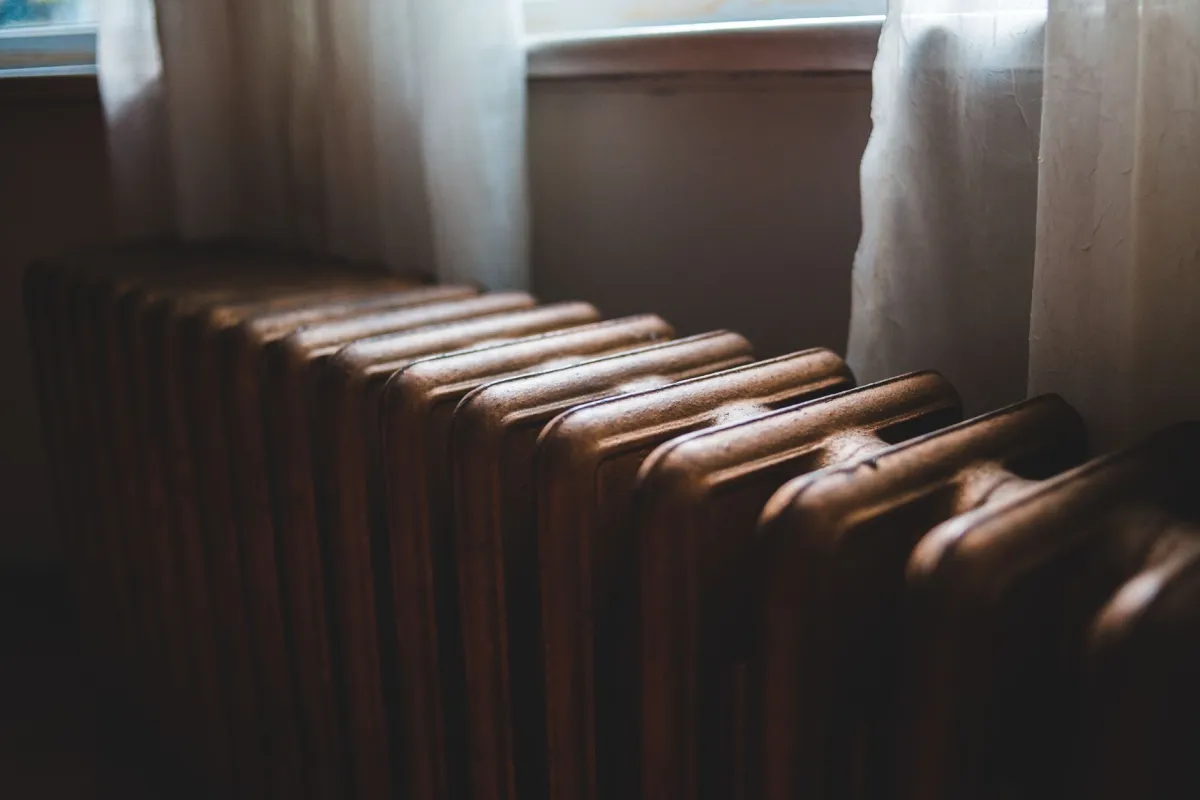
Choosing a type. Standard steel panel radiators are the cheapest and most efficient for their size. Column radiators suit period interiors and are common in Chelsea townhouses and mansion flats; they are heavier and need solid fixings. Cast iron radiators are heavier again and may need floor-mounted feet on a suspended timber floor, and original cast iron radiators can often be reconditioned rather than scrapped. Vertical radiators free up wall space in narrow rooms. Heated towel rails give less heat than a panel radiator of similar size, so a towel rail alone may not heat a larger bathroom. Our guide to cast iron radiators compares cast iron with steel column radiators in more detail.
Does the whole system need draining? Often not. If the thermostatic valve and the lockshield both close off properly, the plumber can isolate that one radiator, drain it into a tray and swap it, losing only a little system water. Where valves are old and will not hold, or where new valves are being fitted as well, part or all of the system may have to be drained down. Either way, the system is then refilled, the new radiator and others on the circuit are bled, the pressure is reset on a sealed system and inhibitor is topped up. Our guide on how to drain a radiator shows the steps involved.
Replace the valves at the same time. Radiator valves that have been in place for decades often weep once they are disturbed, and a new radiator on old, stiff valves is a false economy. Fitting a new thermostatic radiator valve on the flow gives room-by-room control, and a new lockshield on the return lets the radiator be balanced properly. Our explainer on the lockshield valve covers what it does.
How long does it take? A straightforward like-for-like swap on working valves typically takes a couple of hours, including isolating, draining, fitting, refilling and bleeding. Changing pipe centres, fitting new valves, draining the whole system, swapping several radiators or hanging heavy cast iron all add time. Doing several radiators on one visit is more efficient than one at a time, because the drain-down and refill are shared.
Replacing and moving at the same time. If the radiator is going to a new position, most of the work is in the pipework rather than the radiator. If it stays where it is, a replacement is usually the simpler and cheaper job.
Flats, mansion blocks and listed buildings. In a flat, a leak from a failed radiator or a badly made joint lands in the ceiling below, so good isolation and a careful refill matter. Some mansion blocks run communal heating, in which case the managing agent may need to isolate the riser or approve work before a radiator can be changed. In a listed building, original radiators may form part of the historic interior, so check before removing them.
Can you replace a radiator yourself? A confident DIYer can swap a radiator on good isolating valves, but it involves draining water into the room, making watertight joints, refilling and bleeding, and on a sealed system repressurising. A joint that weeps slowly can go unnoticed for days. If the valves will not isolate, the pipework is microbore or the system needs draining down, it is a job for a plumber.
Getting it done. Emergency Plumber Chelsea checks whether the radiator really needs replacing, matches the size and output, replaces valves where they need it and leaves the system refilled, bled and protected with inhibitor. There is no call-out fee on jobs over 3 hours, which often covers a multi-radiator visit. See our central heating service or call 020 3002 6667.
Quick tips
- Bleed the radiator and check the TRV pin before assuming it needs replacing.
- Measure width, height and pipe centres of the old radiator before buying a new one.
- Choose output for the room, not just a panel that fits the gap.
- Replace old valves at the same time as the radiator, since they often weep once disturbed.
- If the drained water is black or brown, clean the system before fitting new radiators.
FAQs
How do I know if my radiator needs replacing?
Pinhole leaks or weeping seams in the panel, rust through the paint along the bottom, and cold patches that return after bleeding and cleaning are the usual signs. Leaks from valves or a cold top on their own are not reasons to replace it.
How long does it take to replace a radiator?
A like-for-like swap on working valves typically takes a couple of hours, including draining, fitting, refilling and bleeding. New valves, different pipe centres or draining the whole system add time.
Do you need to drain the whole system to replace a radiator?
Not always. If the thermostatic and lockshield valves close off properly, the radiator can be isolated and drained on its own. If the valves will not hold or are being replaced, part or all of the system is drained.
Can I fit a bigger radiator in the same place?
Often, yes, as long as the wall has space and the pipes can reach the new connection points. A double panel radiator gives more heat in the same wall space. Taller or wider radiators may need the pipe tails adjusting.
Should I replace the radiator valves at the same time?
Usually. Old valves are prone to weeping once disturbed, and fitting new ones during the replacement avoids a second drain-down later.
Need an engineer in Chelsea?
Call 020 3002 6667 for 24/7 emergency dispatch across SW3, SW10 and nearby postcodes.