
— Chelsea advice
Boiler Ignition Lockout: Why Your Boiler Won't Light
An ignition lockout means the boiler tried to light several times, did not detect a flame, and shut off the gas for safety. The most common causes are simple: no gas reaching the boiler (a prepayment meter out of credit or a closed valve), or, in cold weather, a frozen condensate pipe. Check that your hob lights, check the pressure gauge, and look at the plastic condensate pipe outside, then reset the boiler once or twice. If it still locks out, the fault is usually a worn ignition electrode, flame sensor, gas valve or fan, and that needs a Gas Safe registered engineer. If you smell gas, do not reset anything: leave and call 0800 111 999. Emergency Plumber Chelsea covers SW3, SW10 and nearby postcodes on 020 3002 6667.
Updated July 2026 · Emergency Plumber Chelsea
Every time the heating or hot water calls for heat, a modern boiler goes through the same routine. The fan starts and clears the combustion chamber, the gas valve opens, a spark from the ignition electrode lights the burner, and a flame sensor checks that a flame has actually formed. If the sensor does not see a flame within a few seconds, the boiler shuts the gas off and tries again. After a set number of failed attempts it stops and shows an ignition fault. That is a lockout, and it stays that way until someone resets it. It is a safety feature, designed to stop unburnt gas building up inside the casing.
The fault code tells you what happened, so write it down before you do anything else. On a Worcester Bosch Greenstar the ignition code is EA with the cause code 227. On an Ideal it is usually L2, and on many Baxi boilers it is E133. Other makes use their own codes, and some older boilers simply show a red light. Take a photo of the display, because it will clear when you reset. Our guides to Worcester fault codes, Ideal fault codes and Baxi fault codes explain the neighbouring codes too. On a Viessmann, the no-flame code is usually F4, explained in our guide to Viessmann boiler fault codes.
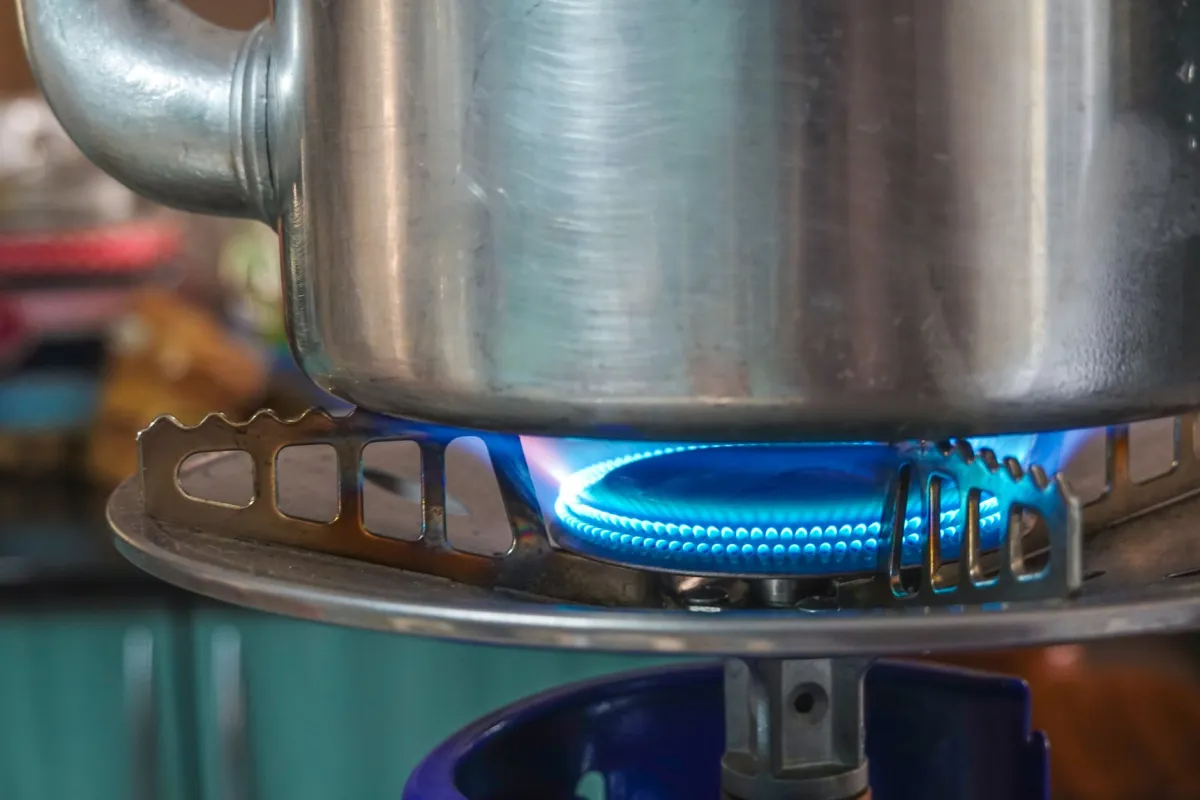
Start with the gas supply, because it is behind a large share of ignition lockouts. Try the hob or another gas appliance. If nothing lights anywhere in the flat, the problem is the supply, not the boiler. On a prepayment meter, check the credit and the emergency credit, and remember the meter may need a button pressing to restore the supply after a top-up. Check that the lever on the gas meter is in line with the pipe, which is the on position. If there has been work in the street or the building, the supply may have been interrupted, and in some mansion blocks the gas to each flat runs through a valve in a riser cupboard that someone may have turned off.
In cold weather, check the condensate pipe next. Condensing boilers produce acidic water that drains away through a white or grey plastic pipe, and where that pipe runs outside it can freeze during a cold snap. The water backs up, a sensor detects it, and the boiler locks out, often with the same code as a failed ignition. You may hear a gurgling from the boiler before it stops. Thawing the pipe with warm, not boiling, water usually fixes it, and our guide to a boiler locked out from a frozen condensate pipe shows where to look and how to do it safely.
Check the pressure gauge while you are there. Strictly speaking, low water pressure is a different fault from ignition, but on many boilers it produces a lockout that looks similar, and a reset will not work until the pressure is back in range. With the heating cold, the gauge should read around 1 to 1.5 bar. Our guide on what pressure your boiler should be explains how to read the gauge and top it up.
Once you have checked the gas, the condensate pipe and the pressure, reset the boiler. On most models you press and hold the reset button for a few seconds, or turn the selector knob to the reset position and back. The boiler will run its start-up sequence again. If it lights and keeps running, you are done, though if a lockout happens again within a few days it is worth booking a check. Give it one or two attempts at most. Our guide on how to reset a boiler explains why repeated resets can do more harm than good.
What you hear during the start-up sequence narrows down the cause. If you hear the fan run and a rapid clicking but the boiler never lights, the spark is trying but gas is not arriving or is not igniting, which points to the supply, the gas valve or a worn or badly gapped ignition electrode. If the boiler lights for a few seconds, then goes out and tries again, the flame is forming but the boiler cannot see it, which is usually a dirty or failing flame sensor, sometimes called the ionisation probe, or a poor earth connection. If you hear nothing at all, not even the fan, the problem is more likely electrical, such as a blown fuse or a fault on the control board. If you are trying to work out a clicking sound more generally, including clicks when the boiler should be idle, our guide to a boiler clicking noise covers each pattern.
Some faults need an engineer and are not a DIY job. The ignition electrode, flame sensor, gas valve, fan and printed circuit board all sit inside the sealed combustion side of the boiler, and only a Gas Safe registered engineer should remove the casing and work on them. A blocked flue, a failing fan that cannot clear the chamber, or low gas pressure at the boiler can all cause an ignition lockout too, and an engineer will check the gas pressure at the inlet as part of the diagnosis. Many of these faults are picked up early at an annual service, which is one reason our guide on how often to service a boiler recommends doing it every year.
Older boilers with a pilot light work a little differently. A permanent pilot is a small flame that stays lit all the time and lights the main burner when needed. If the pilot keeps going out, the usual cause is a failing thermocouple, the small probe that sits in the pilot flame and holds the gas valve open. A draught, a dirty pilot jet or a problem with the flue can also blow it out. Relighting a pilot is covered in most boiler manuals, but if it will not stay lit after following the instructions, stop and call an engineer rather than trying again and again. A pilot light that keeps going out on an older back boiler or floor-standing boiler is also worth weighing against a replacement, and our guide on when to replace your boiler sets out the signs.
Safety comes before getting the heating back on. If you smell gas at any point, do not press reset, do not switch lights or appliances on or off, and do not use a phone inside the property. Open doors and windows if it is safe to do so, turn off the gas at the meter, leave, and call the National Gas Emergency Service on 0800 111 999. Our guide on what to do if you smell gas covers each step. Also stop and call if you see scorch marks or soot on the casing, if the boiler makes a loud bang when it tries to light, or if your carbon monoxide alarm sounds.
Ignition lockouts often turn up on the first cold days of autumn, because a boiler that has barely run all summer is more likely to show a worn part when it is suddenly asked to work hard. Running the heating for an hour in late September or early October finds these faults while engineers are less stretched. If your boiler will not light after the checks above, Emergency Plumber Chelsea sends Gas Safe registered engineers for boiler repairs across Chelsea, Knightsbridge, South Kensington, Sloane Square and Fulham. We diagnose the fault, explain the repair and agree it with you before we start. There is no call-out fee on jobs over 3 hours. Call 020 3002 6667.
Quick tips
- Photograph the fault code before you reset; it clears from the display afterwards.
- Check the hob lights and the prepayment meter has credit before blaming the boiler.
- In frosty weather, look at the plastic condensate pipe outside first.
- Reset once or twice at most; repeated lockouts need a Gas Safe engineer.
- If you smell gas, do not reset: leave the property and call 0800 111 999.
FAQs
What does ignition lockout mean on a boiler?
It means the boiler tried to light several times, did not detect a flame, and shut off the gas as a safety measure. It will stay off until it is reset. The cause can be as simple as no gas supply or a frozen condensate pipe, or a worn part such as the ignition electrode or flame sensor.
How do I fix an ignition fault on my boiler?
Check that other gas appliances work, that a prepayment meter has credit, that the pressure is around 1 to 1.5 bar and that the condensate pipe is not frozen. Then reset the boiler once or twice. If it locks out again, the fault is inside the boiler and needs a Gas Safe registered engineer.
Why does my boiler click but not light?
Clicking is the ignition spark. If the boiler clicks but never lights, gas is not reaching the burner or is not igniting. Check the gas supply first. If gas is fine, the gas valve or the ignition electrode is the likely cause, and an engineer needs to test them.
Why does my boiler light then go out?
If the flame forms for a few seconds and then goes out, the boiler usually cannot detect it. A dirty or failing flame sensor, a poor earth connection or low gas pressure are the common causes. It needs a Gas Safe engineer to diagnose.
Is a boiler ignition lockout dangerous?
The lockout itself is a safety feature that stops unburnt gas building up. It becomes a concern if you smell gas, hear a bang when the boiler tries to light, see soot or scorch marks, or your carbon monoxide alarm sounds. In any of those cases switch off, leave and call 0800 111 999 if you smell gas.
Need an engineer in Chelsea?
Call 020 3002 6667 for 24/7 emergency dispatch across SW3, SW10 and nearby postcodes.