
— Chelsea advice
Annual Plumbing Maintenance Checklist for Chelsea Homeowners
The cheapest plumbing emergency is the one that never happens. Working through a simple annual checklist stops most burst pipes, boiler breakdowns and floods before they start, and it takes an afternoon spread across the year rather than a single day. This guide sets out the jobs that matter for Chelsea homes in SW3 and SW10, from period terraces to mansion flats, and explains why each one earns its place. If a check turns up a problem you cannot fix safely, Emergency Plumber Chelsea is on 020 3002 6667.
Updated July 2026 · Emergency Plumber Chelsea
Start with the stopcock, because it is the one thing you must be able to use in a real emergency. Find your main stopcock, usually under the kitchen sink, in a hall cupboard or near where the mains enters the property, and turn it fully off then on again once a year. This proves it is not seized, which is common in older Chelsea homes where a valve has not moved in a decade. A stopcock that will not turn during a burst means you cannot stop the water, and a flat can flood in minutes while you hunt for a building shut-off. If yours is stiff or leaks when moved, have it replaced before you need it in anger.
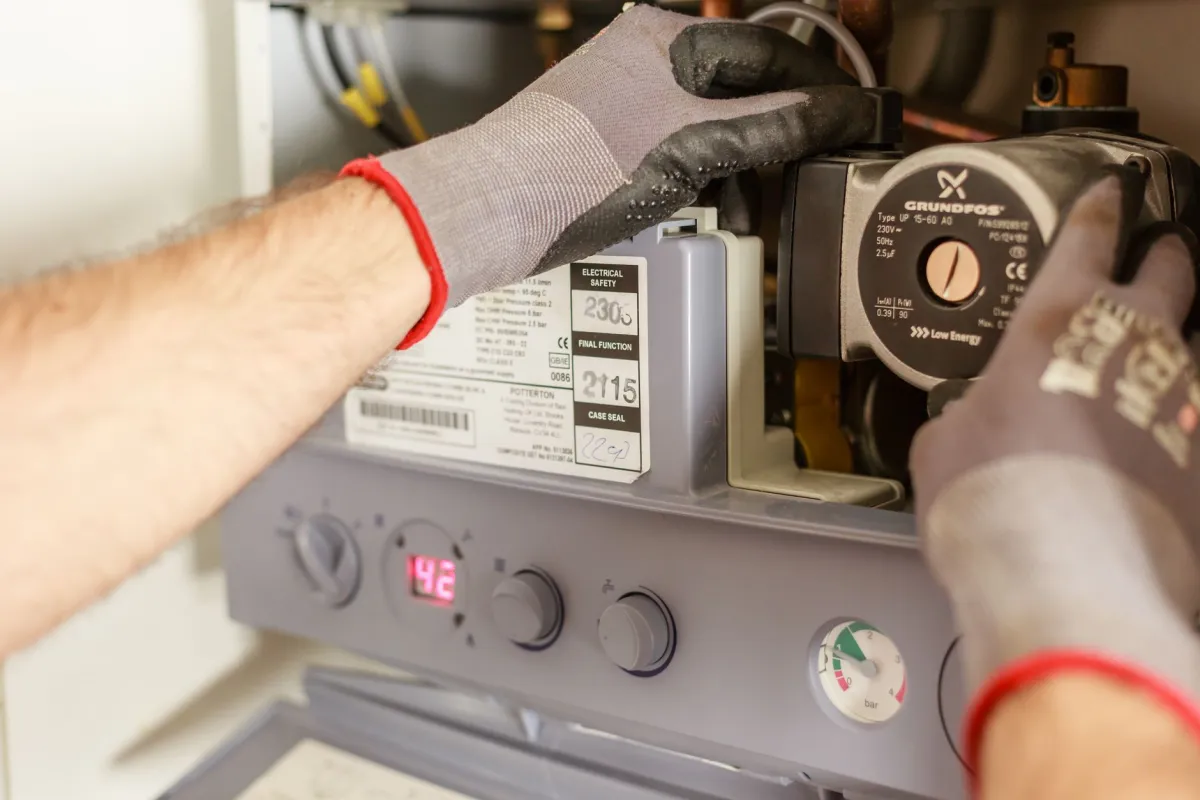
Service the boiler once a year, ideally in late summer or early autumn before the heating season. An annual service by a Gas Safe registered engineer checks combustion, pressure, seals and safety devices, catches worn parts before they fail on the coldest night, and keeps most manufacturer warranties valid. It also protects against carbon monoxide, which a faulty gas appliance can produce without any smell. Most breakdowns we attend in January trace back to a boiler that was never serviced. For how the timing works, see how-often-to-service-a-boiler-chelsea. If you ever smell gas, leave the property and call the National Gas Emergency Service on 0800 111 999 first.
Bleed the radiators at the start of each heating season. Cold patches at the top of a radiator while the bottom is warm mean trapped air, which stops the system heating evenly and makes the boiler work harder to reach temperature. Turn the heating off, let the radiators cool, then open each bleed valve with a key until water replaces the hiss of escaping air. Repressurise the boiler afterwards if the gauge has dropped. Bleeding takes ten minutes and restores heat you are already paying for. If a radiator keeps needing air, or the water that comes out is dark and sludgy, that points to a deeper system issue worth investigating.
Walk the home looking for leaks and damp at least twice a year. Check under sinks, behind the toilet, around the bath and shower, at visible pipe joints and beneath the boiler. Look for green or white crusting on copper fittings, blistered paint, a musty smell, or dark tide marks on ceilings and walls. A slow leak wastes water, rots timber and joinery, and can quietly ruin a period cornice long before it becomes an obvious drip. Catching a weeping joint early turns a ten-minute fix into exactly that, rather than a ceiling collapse. Photograph anything you are unsure about so you can see whether a mark is spreading over the months. In a stacked mansion flat the first sign of a leak is often a stain appearing on the ceiling below, so if you notice damp arriving from above, tell your upstairs neighbour or the managing agent early rather than waiting for it to worsen.
Descale showerheads and taps once a year, more often given how hard London water is. Chelsea sits in a hard-water area, so limescale builds steadily inside spray heads, aerators and valves, weakening flow and eventually jamming moving parts. Unscrew the showerhead and any tap aerators and soak them in a descaling solution or white vinegar, then rinse and refit. Restoring the flow keeps a mixer working properly and delays the day a scaled-up valve needs replacing. Left alone, limescale also shortens the life of the boiler and any unvented cylinder, so this small job protects expensive kit too.
Deal with slow drains before they become blocked ones. A basin, bath or sink that drains sluggishly is telling you a blockage is forming, usually hair, soap and grease in the trap. Clear it early by removing and rinsing the bottle trap, or flushing with hot water, rather than waiting for a full backup that leaves you standing in dirty water. Keep strainers over plug holes, keep fat and food scraps out of the kitchen sink, and never treat wipes labelled flushable as safe for the toilet. For the full prevention routine, see how-to-prevent-blocked-drains-chelsea. Acting on a slow drain is far cheaper than an emergency clearance of a fully blocked stack. Where several homes share a soil stack, as they do in many Chelsea blocks, one flat forcing waste into a partial blockage can cause a backup in a neighbour's bathroom, so clearing your own slow drains promptly is good for the whole building.
Insulate exposed pipework before winter, because frozen pipes are one of the most common and most damaging cold-snap emergencies. Any pipe in an unheated space is at risk: lofts, basements, garages, outdoor runs and the boiler condensate pipe. Fit foam lagging over exposed lengths and pay particular attention to the condensate, which freezes and locks the boiler out on the coldest mornings if it runs outside uninsulated. Water expands as it freezes and splits the pipe, then floods when it thaws, so lagging fitted in autumn prevents a January disaster. For a full walkthrough of materials and priority areas, see pipe-lagging-insulation-guide-chelsea.
Check the cold water tank in the loft if your home has one, common in older Chelsea properties on a gravity-fed system. Lift the lid and look for a well-fitted cover, clean water, no debris and no corrosion, and confirm the float valve shuts off cleanly so the tank is not constantly trickling into the overflow. A missing lid lets in dust, insects and contamination, while a failed float valve wastes water and can overflow into the ceiling below. While you are in the loft, confirm the tank and its pipework are properly insulated, since a tank in a cold roof space is a prime freezing risk.
Inspect visible pipework and fittings as a final sweep. Look along accessible runs in cupboards, under floors where you can see them, and in the basement for green corrosion on copper, rust on old steel, damp lagging, or the dull grey of surviving lead supply pipe. Gently check that fittings are dry and secure and that supports have not come loose so a pipe vibrates or knocks. Period Chelsea homes often hide a mix of copper, lead and older steel, and spotting a fitting that is starting to weep or corrode lets you plan a calm repair rather than react to a failure. Note anything doubtful and get advice before it lets go.
Spread these tasks across the year so none of it feels heavy. Test the stopcock and inspect pipework in spring, book the boiler service and bleed radiators in early autumn, descale and check drains through the summer, and lag exposed pipes and check the loft tank before the first frost. Keep a simple note of what you did and when, which also helps with insurance and with any freeholder or managing agent in a mansion block. If any check reveals something beyond a routine fix, or you would rather have a professional run through the system, Emergency Plumber Chelsea covers SW3, SW10 and nearby postcodes and can carry out repairs before small faults become emergencies. Call 020 3002 6667.
Quick tips
- Test the main stopcock once a year by turning it fully off and on, so it is not seized when you need it in a burst.
- Book the annual boiler service in late summer, before the heating season, to catch worn parts before the first cold night.
- Lag every pipe in an unheated space plus the outdoor condensate run before winter, as frozen pipes cause the worst floods.
- Act on a slow-draining sink straight away by cleaning the trap, rather than waiting for a full blockage and backup.
- Keep a dated note of each check done, which supports insurance claims and satisfies a mansion-block managing agent.
FAQs
How often should I do plumbing maintenance on a Chelsea home?
Run the full checklist once a year, spread across the seasons. Test the stopcock and inspect pipework in spring, service the boiler and bleed radiators in early autumn, and lag exposed pipes plus check the loft tank before the first frost. Descaling and clearing slow drains can be done as needed through the year.
Which annual plumbing job prevents the most expensive emergencies?
Two stand out: an annual Gas Safe boiler service, which prevents most winter breakdowns and protects against carbon monoxide, and lagging exposed pipes before winter, which prevents frozen pipes that split and flood on thawing. Testing the stopcock is the cheapest of all and lets you stop any leak fast.
Can I do this maintenance myself or do I need a plumber?
Most of it is safe DIY: testing the stopcock, bleeding radiators, descaling taps, clearing slow drains, lagging pipes and checking the loft tank. The boiler service must be done by a Gas Safe registered engineer, and anything you find that involves gas, corroded or lead pipework, or an active leak is worth a professional. Call Emergency Plumber Chelsea on 020 3002 6667.
Need an engineer in Chelsea?
Call 020 3002 6667 for 24/7 emergency dispatch across SW3, SW10 and nearby postcodes.