
— Chelsea advice
A Chelsea Landlord's Guide to Plumbing and Heating Responsibilities
If you let a property in Chelsea, the law makes you responsible for keeping the water, heating and sanitary installations in working order, and you cannot pass that duty to the tenant. This guide sets out what a landlord must generally maintain, the annual Gas Safety check, hot water and heating provision, HMO rules in Kensington and Chelsea, Legionella awareness and the records worth keeping. It is general guidance, not legal advice, so confirm specifics with RBKC or a solicitor where it matters. Emergency Plumber Chelsea supports landlords across SW3 and SW10 on 020 3002 6667.
Updated July 2026 · Emergency Plumber Chelsea
The starting point is the landlord's repairing obligation. For most residential lets, Section 11 of the Landlord and Tenant Act 1985 requires the landlord to keep in repair and proper working order the installations for the supply of water, gas and electricity, and for sanitation, including basins, sinks, baths and sanitary conveniences, along with the installations for space heating and heating water. This applies to short residential tenancies whatever the written agreement says, so a clause trying to shift these repairs onto the tenant is generally not enforceable.
What that covers in practice is the fabric of the plumbing and heating that you provide. Pipework, the boiler and radiators, the hot water cylinder, taps, stopcocks, the bath, the WC and the waste runs are all your responsibility to keep working. The tenant is usually responsible for minor day-to-day things such as replacing a tap washer or keeping drains clear of their own misuse, and for reporting faults promptly, but the moment a boiler fails, a pipe leaks or a drain collapses, that is a landlord repair. You also cannot start most of these repairs until the tenant has told you, so a clear reporting route matters.
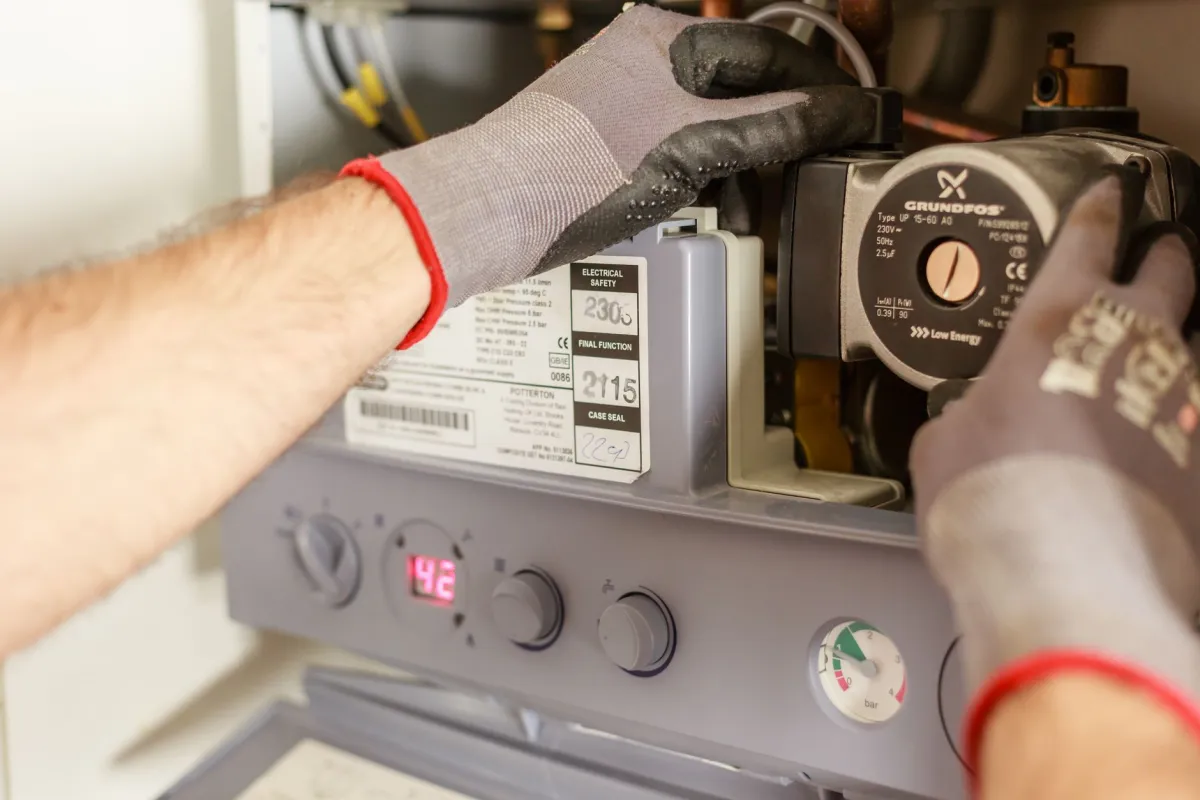
The single most important safety duty is gas. Under the Gas Safety (Installation and Use) Regulations 1998, a landlord must have every gas appliance, flue and fitting they provide checked for safety every 12 months by a Gas Safe registered engineer. The engineer issues a Landlord Gas Safety Record, still widely called a CP12. You must give a copy to each existing tenant within 28 days of the check, and to any new tenant before they move in, and keep records for at least two years. Skipping it is a criminal matter that can bring prosecution and heavy fines, and it undermines your ability to rely on a Section 21 notice.
Getting the annual check timed right saves trouble. You can carry out the gas safety check up to two months before the current certificate expires without losing the original anniversary date, which means you can stay ahead of the deadline rather than scrambling on the last day. Book it around the same point each year, keep the appliance list complete, and make sure the engineer can access the boiler, hob and any gas fire. If an appliance is found unsafe it must be made safe or disconnected, and you cannot let it stay in use.
Hot water and heating are not optional extras, they are part of the installations you must keep working. A let home needs a reliable supply of hot water and a means of heating the living space, and a total loss of heating or hot water is treated as an urgent repair, especially in winter or where a tenant is elderly, unwell or has young children. Chelsea's housing stock ranges from period conversions with older cylinders to modern combis in mansion flats, so size the system to the property and keep it serviced. An annual boiler service alongside the gas check reduces mid-winter breakdowns and protects the warranty.
When something does fail, respond within a reasonable time. The law does not set a fixed number of hours for every fault, but the standard is reasonableness judged against severity: a complete heating failure in a cold snap, a burst pipe or a blocked only-toilet is urgent and needs same-day or next-day attention, while a dripping tap can be scheduled. RBKC, like other councils, can serve improvement notices under the Housing Health and Safety Rating System where disrepair such as a lack of heating or damp from leaks poses a hazard, so leaving plumbing faults unfixed is a compliance risk as well as a tenant-relations one.
If your Chelsea property is a house in multiple occupation, the bar is higher and licensing comes into play. Mandatory HMO licensing applies to homes with five or more occupiers forming two or more households who share facilities. On top of that, RBKC operates an Additional HMO licensing scheme, which began on 1 June 2023 and runs borough-wide, capturing many smaller shared lets of three or more people in two or more households. Most shared houses and flats in the borough now need a licence of one kind or another, so check your property against both schemes with the council's HMO team.
HMO amenity standards put plumbing at the centre. A licensed HMO must provide an adequate number of bathrooms, WCs and wash-hand basins for the number of occupants, a constant supply of hot and cold water to each, and adequate heating in all occupied rooms. Larger HMOs often need a hot water system sized so several tenants are not left cold at once, plus thermostatic controls to reduce scald risk. Operating a licensable HMO without a licence can bring a civil penalty of up to £40,000 per property, rent repayment orders and problems serving a Section 21 notice, so the amenity work and the licence go hand in hand. Our guide to HMO plumbing and licensing in Kensington and Chelsea goes through the borough's schemes and the amenity standards in more detail.
Legionella awareness is a duty that many landlords overlook. You are expected to assess and control the risk of Legionella bacteria in the water system, which for most ordinary lets means a simple, proportionate risk assessment rather than expensive testing. The practical controls are straightforward: avoid dead legs in pipework where water can stagnate, keep hot water genuinely hot and cold water cold, remove or flush little-used outlets, and ask tenants to run showers and taps that have stood unused, for example after a void period. Larger or more complex systems, and many HMOs, warrant a more formal written assessment.
Water quality is part of the picture in Chelsea's older stock. Many Victorian and Georgian conversions still have some lead in the incoming supply pipe, and while there is no blanket legal deadline to remove it, lead is worth replacing for tenant health and it supports your duty to provide wholesome water. You own the private supply pipe from the outside stop valve into the property, and Thames Water may replace their communication pipe section free when you replace your side under their scheme. Where a full replacement is not yet done, ask tenants to run the kitchen tap briefly before drinking after the home has stood empty, and consider a lead-certified filter in the interim.
Records tie all of this together and protect you. Keep the Gas Safety Record for at least two years and share it on time, retain boiler service and installation certificates, hold onto any unvented cylinder commissioning paperwork, and file your Legionella risk assessment and HMO licence. Itemised invoices and dated photographs of repairs and make-safe work support insurance claims, satisfy a freeholder or managing agent, and give you evidence if a leak affects a neighbouring flat, which is common in Chelsea's stacked mansion blocks. Good paperwork also reassures a tenant that the property is being looked after properly. For night-time and weekend call-outs in a let property, see emergency plumbing for landlords out of hours.
For emergencies and planned compliance work, Emergency Plumber Chelsea helps landlords and agents across SW3, SW10 and nearby postcodes. We carry out gas-safe boiler work, size and service hot water systems, upgrade HMO bathrooms, replace ageing pipework and leave clear documentation for your records. If a tenant reports a leak, a loss of heating or no hot water, call 020 3002 6667 for a fast response, and if anyone smells gas they should leave the property and call the National Gas Emergency Service on 0800 111 999 first.
Quick tips
- Section 11 repairs (water, heating, hot water, sanitary fittings) stay with you as landlord, whatever the tenancy agreement says.
- Book the annual Gas Safety check with a Gas Safe engineer, issue the record within 28 days, and keep it for at least two years.
- You can do the gas check up to two months early without losing the original anniversary date, so you never miss the deadline.
- Check your Chelsea let against both mandatory and RBKC's additional HMO licensing (from 1 June 2023) before assuming you are exempt.
- Do a proportionate Legionella risk assessment: no dead legs, hot water hot, cold water cold, and flush outlets after a void.
FAQs
Who is responsible for plumbing repairs in a rented Chelsea flat?
The landlord. Section 11 of the Landlord and Tenant Act 1985 keeps the water supply, heating, hot water and sanitary installations as the landlord's duty to repair, and a tenancy clause cannot lawfully shift that onto the tenant. Tenants handle minor upkeep and must report faults promptly. Call 020 3002 6667 for landlord plumbing work.
How often does a landlord need a gas safety check?
Every 12 months. A Gas Safe registered engineer must check the gas appliances, flues and fittings you provide and issue a Landlord Gas Safety Record (CP12). Give tenants a copy within 28 days, and any new tenant a copy before they move in, and keep records for at least two years.
Does my Chelsea HMO need a licence, and what plumbing does it require?
Quite possibly. Mandatory licensing covers five or more occupiers in two or more households, and RBKC's additional scheme can cover smaller shared lets of three or more people. A licensed HMO needs enough bathrooms, WCs and basins, constant hot and cold water and adequate heating. Confirm your position with the council's HMO team.
Need an engineer in Chelsea?
Call 020 3002 6667 for 24/7 emergency dispatch across SW3, SW10 and nearby postcodes.