
— Chelsea advice
Galvanised Steel Pipe Problems in Older Chelsea Homes
Galvanised steel pipe is zinc-coated iron pipe used for water supply in many homes built or plumbed before the 1970s. In older Chelsea properties it corrodes from the inside out over decades, narrowing the bore and shedding rust, which shows up as falling pressure, discoloured water and eventual leaks. Once the corrosion is advanced, replacing the pipework rather than patching it is usually the sensible answer. Emergency Plumber Chelsea works on period homes across SW3 and SW10 on 020 3002 6667.
Updated July 2026 · Emergency Plumber Chelsea
Galvanised steel is iron or mild steel pipe dipped in molten zinc, and the zinc is there to protect the steel from rust. It was the standard material for domestic water supply in Britain for much of the twentieth century, before copper and later plastic took over. If your Chelsea house or mansion flat still has original or early pipework, particularly grey metal pipe with threaded joints rather than smooth copper or plastic, there is a good chance some of it is galvanised. The problem is simple: the zinc coating does not last forever, and once it wears through the steel underneath starts to corrode.
The reason galvanised pipe fails is that it rusts from the inside. Water sits against the pipe wall for years, the protective zinc gradually erodes, and then the exposed steel oxidises. Rust and mineral scale build up as a rough, flaky layer on the inside surface, so the bore that was once the full width of the pipe slowly closes in. London's hard water speeds this along, because limescale deposits combine with the corrosion to choke the pipe further. A run that started at 15mm internal diameter can end up with only a few millimetres of clear channel, and that is before you account for the roughness slowing the flow.
Reduced water flow and low pressure are the most common first symptoms. As the internal bore narrows, less water can pass, so taps and showers that once ran strongly begin to trickle, and the drop is often worse upstairs or at the fixtures furthest from the incoming main. In a tall Chelsea townhouse the top-floor bathroom usually suffers first. Hot pipes tend to corrode faster than cold, so weak hot water with acceptable cold flow at the same tap is a classic galvanised-pipe tell. If pressure has fallen gradually over years rather than suddenly, aged supply pipe is a strong suspect.
Discoloured water is the second warning sign. Corroding galvanised pipe releases rust into the supply, so water can run yellow, brown or reddish, especially first thing in the morning or after the house has been empty and the water has sat still in the pipes. You may see staining on white basins, baths and laundry, and a metallic taste. A brief brown tinge after mains work is normal, but water that regularly runs discoloured from the cold tap points to corrosion inside your own pipework. It is unpleasant rather than usually dangerous, but it is a clear indicator that the pipe is deteriorating.
Leaks and pinholes are the third stage, and the most costly. As corrosion eats through the pipe wall it eventually perforates, and threaded joints are especially vulnerable because the thread cutting removes metal and the zinc coating at the very point that carries stress. Galvanised leaks often start as weeping joints or damp patches rather than dramatic bursts, but once one section has failed the rest is usually the same age and condition. Patching a single joint on a corroded run tends to buy months, not years, because the next weak point is never far away.
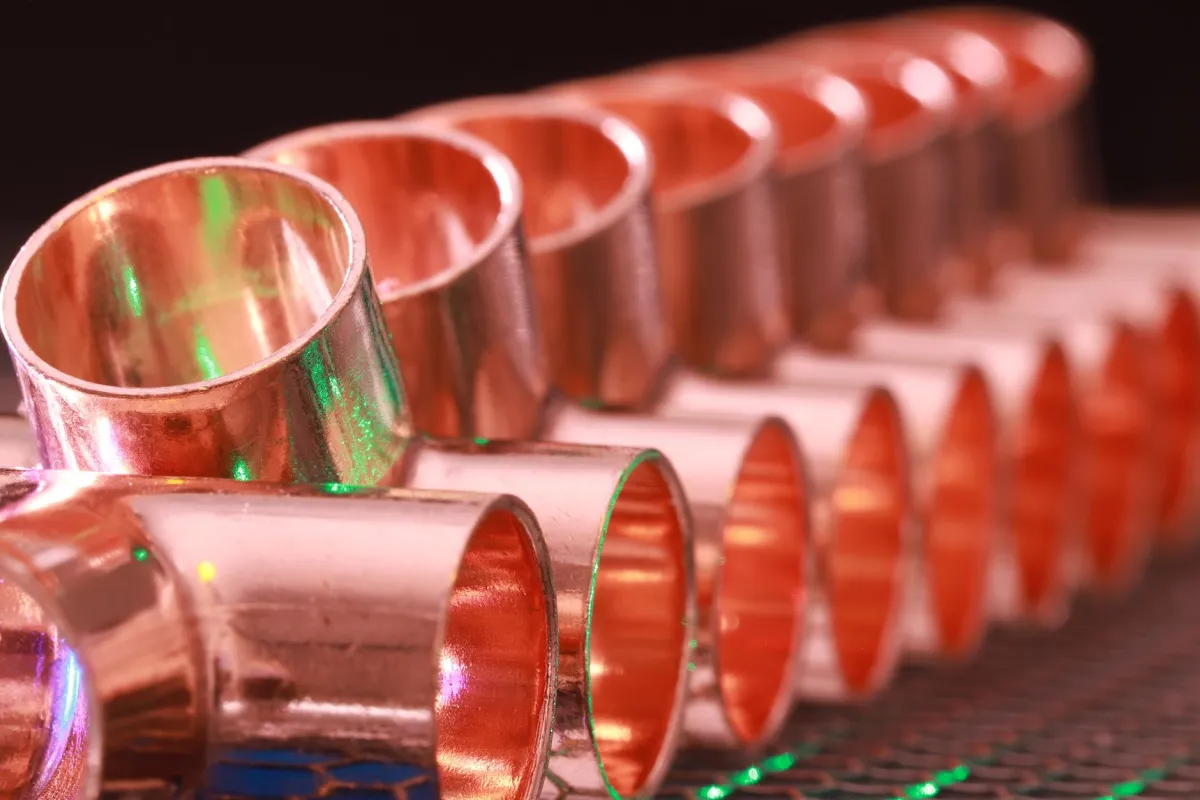
You can often identify galvanised pipe yourself with a simple check. Look at exposed pipework in the basement, under the kitchen sink, in an airing cupboard or where the main enters the property. Galvanised steel is dull grey, magnetic, and joined with screwed threaded fittings, so a fridge magnet will stick to it. Copper is that familiar reddish-brown metal, is not magnetic, and is usually soldered or has compression fittings. Plastic pipe is obvious. Scratch a hidden patch of the suspect pipe gently: bright silver-grey under grey is galvanised, while orange under green patina is copper. If joints are threaded and the metal is magnetic, you are almost certainly looking at galvanised steel.
Chelsea's housing stock makes this a common find. Much of SW3 and SW10 is Victorian and Edwardian terraces, townhouses and later mansion blocks, and plumbing installed or upgraded in the early and middle twentieth century frequently used galvanised supply pipe. Many of those homes have never had a full replumb, so original galvanised runs survive behind plaster, under floors and inside walls, often alongside old lead pipe from the same era. Hard water across London means the corrosion and scaling tend to be advanced by now. If you have bought or are buying a period property here, the age of the pipework is worth checking early.
The reason replacement usually beats repair is that galvanised corrosion is systemic, not local. The whole installation has aged together and is scaling and rusting throughout, so fixing one blocked or leaking section simply moves the problem to the next weakest point. Cleaning the pipe internally is not practical, and lining is rarely viable for narrow domestic supply pipe. Replacing corroded galvanised runs with modern copper or plastic restores the full bore, so pressure and flow come back, the discolouration stops because the new pipe does not shed rust, and the leak risk resets. That is why a repipe, in part or in full, is normally the lasting answer.
In practice you do not always have to do the whole house at once. A plumber can trace which runs are galvanised and which have already been changed to copper or plastic, and prioritise the worst sections, the hot runs, or the pipework serving the bathrooms that suffer most. Some owners replace the incoming main and the principal risers first, then complete the rest during a bathroom or kitchen refurbishment when walls and floors are already open. In a period Chelsea home, sequencing the work around access, decoration and any listed or conservation constraints keeps disruption and cost under control.
If you are seeing weak flow, brown water or damp patches in an older Chelsea property, get the pipework assessed before a slow decline turns into a burst. We can check what material your pipes are, confirm whether corrosion is the cause, and set out whether a targeted replacement or a full repipe makes more sense for your home and budget, with the price agreed before major work starts. Emergency Plumber Chelsea covers SW3, SW10 and nearby postcodes 24 hours a day. Call 020 3002 6667 to talk through what you are seeing and arrange a look.
Quick tips
- Test for galvanised pipe with a fridge magnet: galvanised steel is magnetic and grey with threaded joints, copper is reddish and not magnetic.
- Weak hot water flow with acceptable cold flow at the same tap often means corroded galvanised pipe, because hot runs scale up faster.
- Brown or yellow water that appears first thing in the morning points to rust shedding from your own supply pipes, not the mains.
- Do not keep patching individual joints on a corroded galvanised run; the rest of the pipe is the same age and will fail next.
- If you are buying a period Chelsea home, check the pipe material early so you can budget for a repipe before problems escalate.
FAQs
How long do galvanised steel water pipes last?
Typically around 40 to 70 years, though hard water and hot runs shorten that. Much of the galvanised pipe in older Chelsea homes is now well past its reliable life, which is why corrosion, low pressure and leaks are common in period properties here.
Is water from corroding galvanised pipes safe to drink?
The rust and discolouration are usually unpleasant rather than harmful, but old galvanised systems sometimes sit alongside lead pipe of the same era, which is a real health concern. If your water runs brown regularly, have the pipework checked and avoid drinking discoloured water until it clears. Call 020 3002 6667.
Can you just replace one corroded section instead of repiping?
You can, but it rarely lasts. Galvanised pipe corrodes throughout the installation, so fixing one blocked or leaking section pushes the failure to the next weak point. Replacing the affected runs with copper or plastic restores flow and stops the discolouration for good, which is why targeted or full repiping is usually the better value.
Need an engineer in Chelsea?
Call 020 3002 6667 for 24/7 emergency dispatch across SW3, SW10 and nearby postcodes.