
— Chelsea advice
The Most Common Emergency Plumbing Call-Outs in Chelsea
The most common emergency plumbing call-outs in Chelsea are burst or leaking pipes, boiler breakdowns, loss of hot water, blocked toilets and drains, overflowing cisterns, leaks coming through the ceiling from the flat above, and a total loss of water. This guide explains the typical cause of each in SW3 and SW10 homes and the quick action that limits the damage while you wait. For any of them, Emergency Plumber Chelsea covers SW3, SW10 and nearby postcodes 24 hours a day on 020 3002 6667.
Updated July 2026 · Emergency Plumber Chelsea
Chelsea's housing stock shapes the faults we attend. Period townhouses, converted flats and mansion blocks tend to have older pipework, concealed runs behind lath and plaster, shared risers, and hard London water that scales up boilers and valves over time. That mix means a handful of problems come up again and again. Knowing which is which, and what to do in the first few minutes, often decides whether you have a quick repair or a ruined ceiling. If you are unsure whether your situation counts as urgent at all, our guide on what counts as a plumbing emergency in Chelsea sets out where the line sits.
Burst and leaking pipes are the call-out we attend most, and the cause is usually age or cold. In older Chelsea properties, failed compression joints, corroded sections of copper, and remaining lengths of lead or galvanised pipe give way under normal pressure, while exposed runs in lofts, basements and outbuildings freeze and split in winter. The quick action is the same either way: turn off the water at the main stopcock, which in many Chelsea flats sits under the kitchen sink, in a hall cupboard or near the front door, then open a downstairs cold tap to drain the pressure and slow the flow. Keep water away from electrics, move belongings clear, and photograph the damage for insurance before you call.
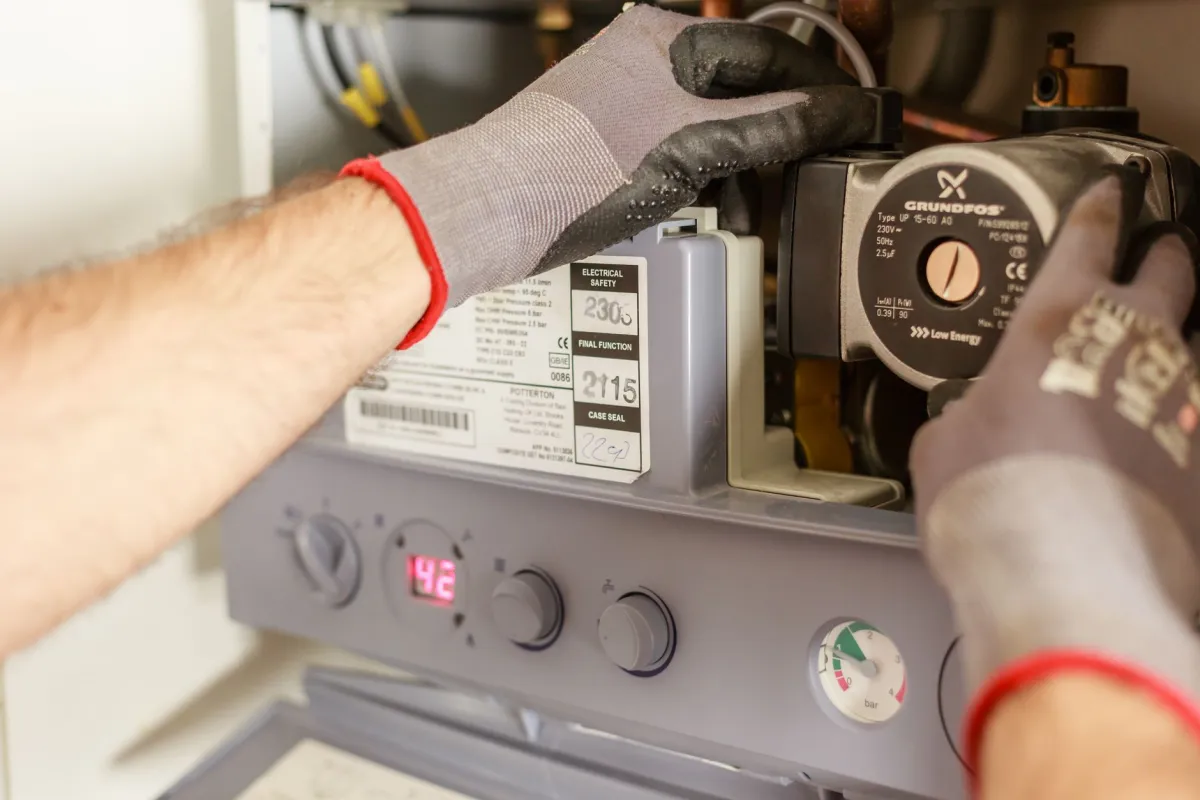
Boiler breakdowns are the next most frequent, and they cluster in the cold months when the system is working hardest. Typical causes in Chelsea homes are a locked-out boiler showing a fault code, a loss of pressure on a combi, a failed pump or diverter valve, and, on older installations, scale from London's hard water restricting the heat exchanger. The quick action is to note the make, model and any fault code on the display before you touch anything, check the boiler has power and that the programmer is calling for heat, and glance at the pressure gauge. Do not keep resetting a boiler that locks out repeatedly or keeps losing pressure, because that usually points to an underlying fault a Gas Safe engineer needs to find. If you ever smell gas, leave the property and call the National Gas Emergency Service on 0800 111 999 first.
No hot water is a distinct call-out from a full boiler breakdown, because the heating often still runs. The most common causes are a combi hot-water fault such as a stuck diverter valve or a scaled plate heat exchanger, a failed cylinder thermostat or motorised valve on a stored-hot-water system, or a burnt-out immersion heater. The quick action is to work out what has actually failed before you call: check whether cold water still runs, whether the heating is unaffected, and, on a cylinder system, whether the immersion heats the water when you switch it on. That distinction saves diagnostic time on arrival. In mansion blocks with shared plant, one flat can lose hot water while neighbours are fine, which points to a local fault rather than the building supply.
Blocked toilets and drains bring us out at all hours, and in Chelsea the cause is often a mix of old drainage and what goes down it. Wet wipes, cotton products, cooking fat and a build-up of scale narrow the pipes, while tree roots and collapsed or bellied Victorian clay drains cause repeat blockages in period streets. A blocked toilet that is close to overflowing needs the quick action of not flushing again, and turning off the isolation valve behind or beneath the cistern to stop it filling. For a blocked sink or gully, clear standing water and avoid tipping chemical drain cleaner into a fully blocked pipe, because it sits there and does little. If waste is backing up into more than one appliance, or into a ground-floor shower, the blockage is likely in the shared drain and needs clearing under pressure.
Overflowing cisterns and dripping overflow pipes are a common winter and hard-water call-out. The usual cause is a worn or scaled float valve in a toilet cistern or a cold-water storage tank that no longer shuts off, so water runs continuously into the overflow. Outside, that shows as a steady drip or run from an overflow pipe on the external wall; inside, it can quietly overfill a tank in the loft. The quick action is to isolate the supply to that cistern or tank, using the isolation valve on the feed or the main stopcock if there is no local valve, which stops the flow immediately. A running overflow is easy to ignore because it rarely floods straight away, but in a cold loft it can freeze, back up and cause far more damage, so it is worth acting on quickly.
Leaks coming through the ceiling from the flat above are almost a Chelsea speciality, given how many homes are flats and maisonettes in converted houses and mansion blocks. The cause is usually a leak in the flat overhead: an overflowing bath or basin, a failed washing-machine or dishwasher hose, a leaking waste trap, or a burst pipe under their floor. If water is coming through your ceiling, the quick action is to contain it, move belongings and electrics clear, and turn off your own electrics at the consumer unit if water is anywhere near lights or sockets. You cannot stop a leak that originates upstairs, so alert the flat above and the managing agent or freeholder as fast as you can, because the water needs isolating at its source. Keep photographs and notes, since escape-of-water claims between flats often need clear evidence of where the water came from and when.
A total loss of water is less common but alarming when it happens. The causes split into three: an isolation somewhere on your own supply, such as a stopcock that has been turned off or seized; a problem on a shared riser or the building's supply in a mansion block; or street works and mains issues on the Thames Water network. The quick action is to check the obvious first. Confirm your own stopcock is fully open, ask whether neighbours in the same block have water, and check Thames Water for reported outages in the SW3 or SW10 area. If neighbours are also dry, it is a building or mains matter rather than a fault inside your home. If only you are affected and the stopcock is open, the isolation or fault is on your supply and needs tracing.
Across all of these, the make-safe priority is the same: stop the water, protect the electrics, and limit the damage before the permanent repair. A little preparation makes the difference, and our checklist on what to do before you call an emergency plumber in Chelsea walks through the steps that keep a bad situation from getting worse. Knowing your stopcock location, testing it once a year so it is not seized, and keeping the number of a plumber you trust to hand all shorten the gap between the fault starting and the flow stopping.
Emergency Plumber Chelsea attends all of these faults across SW3, SW10 and nearby SW1W, SW1X, SW5 and SW7, with fully qualified, insured engineers and Gas Safe cover where gas work is involved. Call-outs start from £69 daytime and from £89 at night, on weekends and on bank holidays, with labour and parts quoted before major work begins. You can see the full range on our emergency plumber Chelsea service, and for a real arrival time on your specific fault, call 020 3002 6667 and describe what is happening.
Quick tips
- Find and test your main stopcock now, before an emergency, so it turns freely when you need it.
- For a toilet or cistern problem, use the small isolation valve on the feed to stop that unit filling without turning off the whole house.
- Note the boiler make, model and any fault code before resetting; it saves time and points the engineer to the fault.
- For a leak from the flat above, contain the water, protect electrics, then alert the upstairs flat and managing agent fast, as the leak has to be stopped at its source.
- Keep photographs and dated notes of any escape of water; insurers and freeholders usually want evidence of the make-safe work.
FAQs
What is the most common plumbing emergency in Chelsea?
Burst and leaking pipes are the most common, driven by ageing pipework in period properties and freezing of exposed runs in winter. Boiler breakdowns and blocked drains are close behind. For any of them, isolate the water at the stopcock first, then call 020 3002 6667.
Water is coming through my ceiling from the flat above. What do I do?
Contain the water and move belongings and electrics clear, and switch off your electrics at the consumer unit if water is near lights or sockets. You cannot stop a leak that starts upstairs, so alert the flat above and the managing agent immediately so it can be isolated at source. Keep photos for any insurance claim.
Do you cover all of these emergencies overnight in SW3 and SW10?
Yes. Emergency Plumber Chelsea provides 24/7 cover for genuine emergencies across SW3, SW10 and nearby postcodes, including bursts, boiler faults, no hot water, blockages and overflows. Call 020 3002 6667 for an arrival time and clear pricing before major work.
Need an engineer in Chelsea?
Call 020 3002 6667 for 24/7 emergency dispatch across SW3, SW10 and nearby postcodes.