
— Chelsea advice
Buying a Period Property in Chelsea? A Plumbing Checklist
Before you buy an older Chelsea home, check the plumbing you cannot see: the supply pipe material, the age and service history of the boiler, water pressure, the condition of the drains, and any signs of past leaks. A standard homebuyer survey rarely tests these properly, so a period house or mansion flat in SW3 or SW10 can look immaculate and still hide lead supply pipes, tired galvanised runs or a drain that needs a camera. This checklist covers what to look for and where a specialist inspection pays for itself. Emergency Plumber Chelsea works on period and protected homes across Chelsea on 020 3002 6667.
Updated July 2026 · Emergency Plumber Chelsea
Start with the incoming supply pipe, because lead is common in Chelsea's Victorian and Georgian stock and it affects water quality. Find the internal stop valve, usually near the front of the property, and look at the pipe feeding it. Lead pipe is dull grey, soft enough to mark with a coin, and its joints are rounded rather than threaded. If you see it, treat replacement as a planned cost rather than a deal-breaker. You own the private section from the outside stop valve to the inside stop valve, and Thames Water may replace their communication pipe up to the boundary free on an approved application once you replace your part, so the whole run ends up lead-free.
Next, check the rest of the internal pipework for age and material, because a period home may still run on galvanised steel or a patchwork of copper, lead and plastic. Galvanised pipe corrodes from the inside, which narrows the bore and drops flow to upstairs bathrooms over the decades; the giveaway is discoloured or brown water when a tap is first opened, especially after the home has stood empty. Look under sinks, in airing cupboards and along basement runs for a mix of old and new fittings, green corrosion on copper, or bodged compression joints. Widespread old pipework points towards a repipe at some stage, so factor it into your offer.
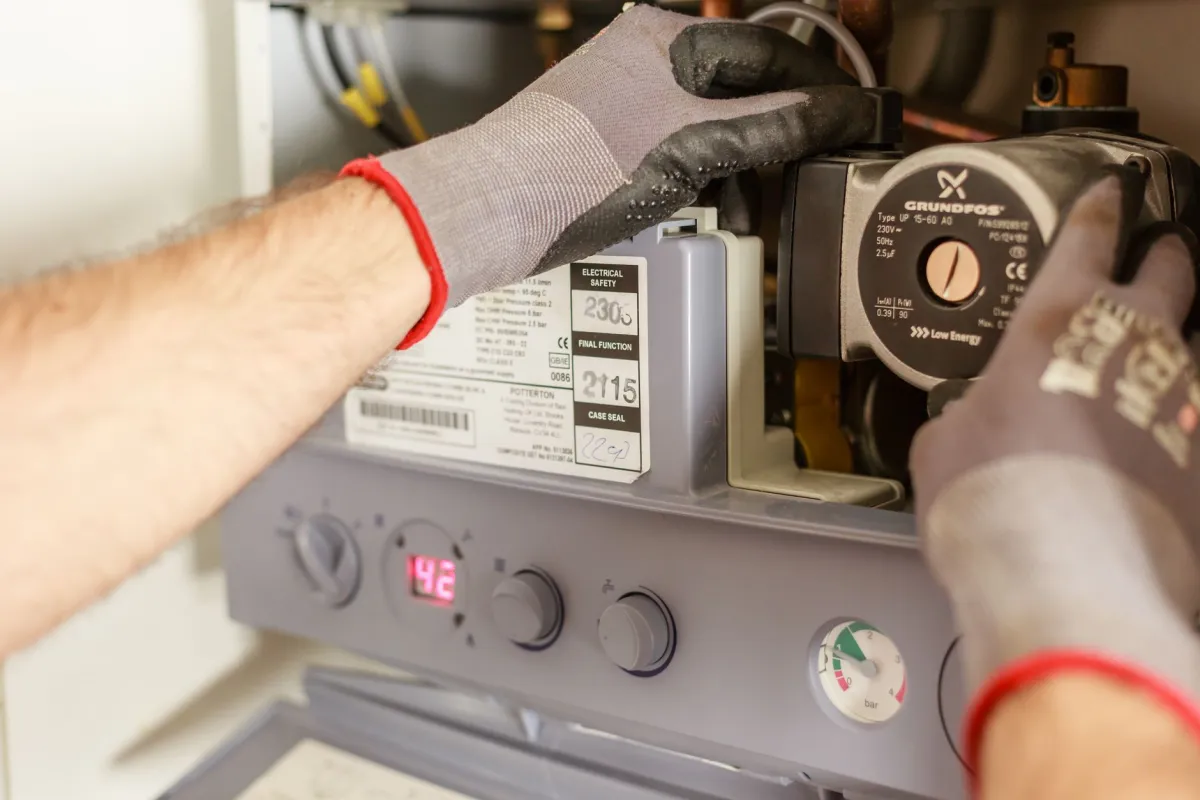
Establish the age and service history of the boiler, because a heating system is one of the most expensive things to replace after you move in. Ask the seller for the make, model, installation date and, crucially, the annual service records and the Gas Safe or Building Regulations compliance certificate from when it was fitted. A boiler over ten to twelve years old with no paperwork should be priced as a system near the end of its life. Look at the flue, the condensate route and whether the boiler suits the property; an undersized boiler in a large Chelsea house will struggle to run several bathrooms at once. Check where the boiler sits too, because a unit buried in a cupboard on a listed frontage can be awkward and costly to replace or reflue later. If the property has an unvented hot water cylinder, ask for its installation and annual service records as well, since that is notifiable work and a buyer's solicitor may ask for the certificate.
Test the water pressure and flow properly, not just by glancing at one tap. Run the kitchen tap, then a bathroom tap and a shower at the same time, and watch whether the flow collapses. Weak pressure in a period home can come from corroded galvanised pipe, a partly closed or seized valve, a shared mains supply feeding several flats in a mansion block, or a gravity-fed tank system that simply cannot deliver a strong shower upstairs. Note whether the property is on a combi, a cylinder or a cold-water storage tank in the loft, as that decides how any pressure problem gets solved and what it costs.
Assess the drainage, and for an older or extended property seriously consider a CCTV drain survey before you exchange. Chelsea terraces and blocks often sit on Victorian clay drains that can crack, sink at the joints or suffer root ingress, and none of that shows on a walk-round. Warning signs are slow or gurgling drains, a smell from gullies, damp patches near the base of external walls, and previous patch repairs to paths or the garden. A survey pushes a camera through the runs and gives you a recorded condition report; finding a collapsed section before you buy is far cheaper than discovering it as a backed-up drain months later.
Look hard for signs of past and present leaks, because water damage is the defect most often painted over before a viewing. Check ceilings and the tops of walls for staining, fresh isolated patches of new paint, blown or bubbling plaster, and a musty smell in cupboards and basements. In a flat, water travels down through service voids, so a stain from a leak above may sit in a bathroom or hallway ceiling. Open the airing cupboard, look behind the bath panel if you can, and check under the kitchen units. Damp at skirting level near a bathroom or kitchen usually means a slow leak that has been running for a while. A damp meter reading taken during the survey helps separate a live leak from historic staining that has already dried out, and it is worth asking the seller directly whether any leak has been repaired and whether an insurance claim was made, as that tells you what has already gone wrong.
Check the radiators and heating for condition and reach, because a period house is easy to under-heat. Turn the heating on during the viewing if you can and feel each radiator top and bottom. Cold at the bottom points to sludge in the system; cold at the top points to trapped air. Rusty valves, weeping unions and cold rooms far from the boiler all hint at a tired system that may need a power flush, new radiators or better balancing. Ask whether the heating reaches the top floor and any basement conversion, as extended period homes often have rooms the original system was never sized for. If the house has original cast iron radiators, our guide to cast iron radiators explains when they are worth restoring.
Factor in listed-building and conservation constraints before you plan any changes, because much of Chelsea's best housing is protected and that limits what you can do to the plumbing. If the building is listed, the protection covers the interior as well as the facade, so moving a bathroom, running new soil stacks, chasing pipes into historic plaster or relocating a boiler and flue can need listed building consent from the Royal Borough of Kensington and Chelsea. In a conservation area, a visible new flue or external pipe on the frontage may also need permission. Like-for-like repair is usually fine, but a renovation that moves services is not, so price and plan the work accordingly.
Do not rely on the mortgage valuation or a basic condition survey to catch these things, because they are not designed to. A valuation protects the lender, and a standard homebuyer report will flag obvious damp but will not test flow, trace the supply pipe material, or inspect the drains with a camera. For a period Chelsea property it is worth commissioning a specific plumbing and heating inspection alongside your building survey, ideally before you exchange while you still have room to renegotiate or walk away.
Turn the checklist into a costed plan once you have the findings. Group the results into safety and compliance first (lead supply, gas and boiler certificates, any unvented cylinder paperwork), then reliability (pressure, pipework, drainage), then improvement (a new bathroom, better heating). Get guide figures for the bigger items so you can negotiate or budget: a repipe, a boiler replacement and a drain repair are the usual large numbers in an older home. Emergency Plumber Chelsea can inspect the plumbing on a property you are buying, explain what is urgent versus what can wait, and give clear guide pricing before any work. Call 020 3002 6667 for advice on a period home in SW3, SW10 or nearby.
Quick tips
- Find the internal stop valve and check the incoming pipe: dull grey metal you can mark with a coin is lead, and worth replacing.
- Run several taps and a shower at once to test real flow, not just one tap in isolation.
- Ask for the boiler's age, service records and installation certificate; no paperwork on a boiler over ten years old means budget for replacement.
- Commission a CCTV drain survey before exchange on an older or extended property; Victorian clay drains crack and root out of sight.
- If the home is listed or in a conservation area, confirm what plumbing changes need consent before you plan a renovation.
FAQs
Do I need a separate plumbing survey when buying a period home in Chelsea?
It is strongly worth it. A mortgage valuation protects the lender and a standard homebuyer report will not test water pressure, identify lead supply pipes or inspect the drains with a camera. A dedicated plumbing and heating inspection before you exchange can save far more than it costs. Call 020 3002 6667.
How do I know if an older Chelsea property still has lead pipes?
Look at the pipe feeding the internal stop valve. Lead is dull grey, soft enough to dent with a coin, and has rounded rather than threaded joints. It is common in pre-1970s homes. Replacement improves water quality, and Thames Water may replace their section free on an approved application when you replace yours.
Is a CCTV drain survey really necessary before buying?
For an older or extended property in Chelsea, yes. Many sit on Victorian clay drains that can crack, sink or suffer root ingress, and none of that shows on a viewing. A recorded survey lets you find a collapsed or blocked run before you commit, when you can still renegotiate rather than pay for it later.
Need an engineer in Chelsea?
Call 020 3002 6667 for 24/7 emergency dispatch across SW3, SW10 and nearby postcodes.